

Stainless Steel Alloy Selection for High-Temperature Applications
Stainless Steel Alloy Selection for High-Temperature Applications
Industrial buyers, OEMs, and fabricators working with thermal processing equipment—such as furnaces, kilns, heat exchangers, and exhaust systems—face a consistent challenge: choosing a stainless steel grade that maintains structural integrity and corrosion resistance at elevated temperatures. Unlike ambient-temperature applications, high-temperature service introduces distinct failure modes—oxidation scaling, sigma phase embrittlement, grain boundary carbide precipitation, and creep deformation. This article outlines key technical criteria and real-world selection logic for stainless steels operating continuously between 500°C and 1100°C.
Thermal Stability vs. Mechanical Retention
Not all stainless steels perform equally under sustained heat. Austenitic grades (e.g., 304, 316) retain strength better than ferritics above ~600°C but are prone to sensitization if held in the 425–850°C range. Ferritic grades (e.g., 430, 446) offer superior thermal fatigue resistance and lower thermal expansion—but lose tensile strength rapidly above 700°C. Duplex steels (e.g., 2205) are generally unsuitable above 300°C due to embrittlement risks. For long-term structural support above 800°C, high-alloy austenitics like 310S (25% Cr, 20% Ni) or 253MA (11% Ni, 1.8% N, Ce + N microalloying) provide reliable thermal stability and creep resistance up to 1100°C.
Oxidation Resistance: Chromium, Silicon, and Rare Earth Additions
Oxidation is the dominant degradation mechanism above 500°C. Chromium forms a protective Cr₂O₃ scale—but only when content exceeds ~18 wt%. Grades below this threshold (e.g., 409, 430) scale heavily beyond 700°C. Silicon (≥1.5%) enhances scale adhesion; 309S and 310S contain 0.8–1.5% Si for improved spallation resistance. More advanced alloys like 253MA and RA330 include rare earth elements (e.g., cerium) that anchor the oxide layer to the substrate, reducing scaling by up to 40% in cyclic heating environments. Buyers specifying furnace components should verify Si and Ce content—not just Cr/Ni ratios—when comparing quotes.
Creep Strength and Long-Term Microstructural Integrity
Creep—the time-dependent plastic deformation under constant load at high temperature—is often overlooked during procurement. Standard tensile strength values (e.g., UTS, YS) measured at room temperature bear little relevance above 600°C. Instead, consult published creep-rupture data (e.g., ASTM E139, ISO 204) at the intended service temperature and stress level. For example, at 900°C and 10 MPa stress, 310S retains usable life (~10,000 h), while 304 fails in under 1,000 h. Fabricators welding high-temperature parts must also consider post-weld heat treatment: some grades (e.g., 310S) require no solution annealing after welding; others (e.g., 253MA) benefit from rapid cooling to avoid sigma phase formation.
Fabrication Considerations Beyond Composition
Material selection impacts downstream processes. High-nickel alloys like 310S and 253MA have higher hot yield strength, requiring increased forging force and slower rolling speeds. Their thermal conductivity is ~30% lower than carbon steel—leading to uneven heating during bending or forming unless furnace soak times are adjusted. Machinability drops significantly above 20% Ni content; tool wear increases 2–3× versus 304. Importers should confirm mill certifications include actual heat analysis—not just grade designation—and request intergranular corrosion test reports (ASTM A262 Practice E) for any material intended for >600°C cyclic service.
Cost-Performance Tradeoffs in Procurement
Premium alloys command higher prices—but total cost of ownership may favor them. A 304 tube failing after 18 months in a ceramic kiln costs more over five years than a 253MA tube lasting 12+ years—even at 2.5× the unit price. Buyers should request lifecycle cost estimates from suppliers, including expected replacement frequency, downtime per incident, and labor for refractory repair caused by tube failure. Also, note that minimum order quantities (MOQs) for specialty grades like 310S or 253MA are typically higher (≥500 kg); lead times average 8–12 weeks versus 3–4 for standard 304/316. Planning procurement cycles accordingly avoids production delays.
Conclusion
Selecting stainless steel for high-temperature service demands going beyond generic grade names. Prioritize verified chromium and silicon content, review creep-rupture curves at your operational temperature and stress, assess fabrication constraints early, and factor in lifecycle cost—not just upfront material cost. When sourcing, insist on mill test reports showing actual chemistry, grain size, and heat treatment history. For applications above 800°C, 310S remains the baseline workhorse; for demanding cyclic or high-stress conditions, 253MA or RA330 deliver measurable reliability gains. Work closely with your supplier’s metallurgical team—not just sales—to align material properties with your thermal profile and duty cycle.
Ready to source stainless steel?
Talk to a manufacturer that replies within 24 hours.
Get factory-direct pricing, export packing support, and application guidance for sheets, coils, and pipes from Ruixing.
المنتجات المميزة
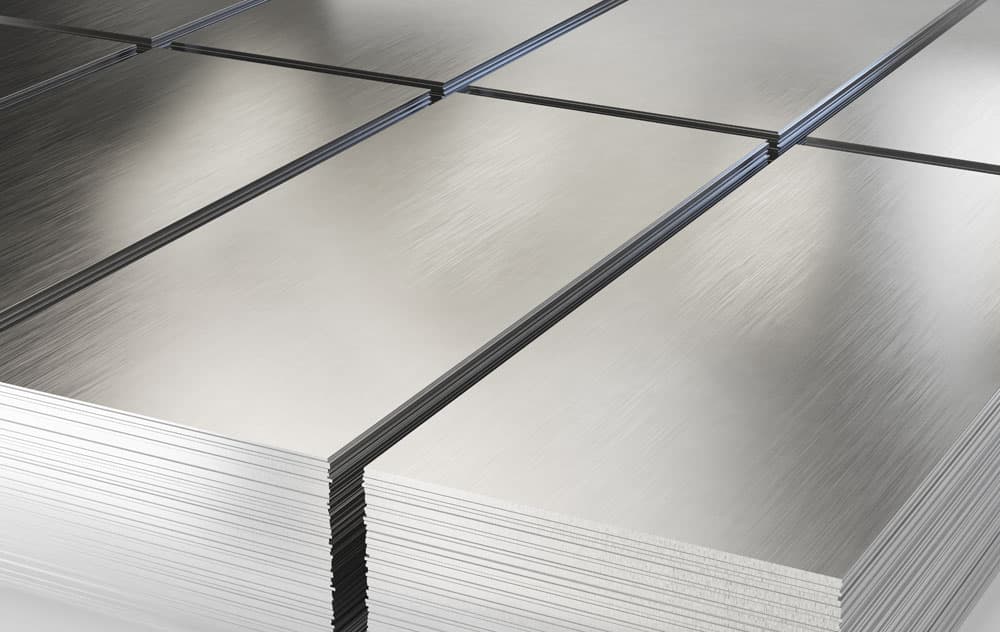
صفائح ستانلس ستيل 304/304L
أكثر الدرجات استخدامًا وتنوعًا، مع مقاومة ممتازة للتآكل وقابلية جيدة للتشكيل.
لفائف ستانلس ستيل 316/316L
درجة تحتوي على الموليبدينوم وتوفر مقاومة أعلى للتآكل خاصة في البيئات المحتوية على الكلوريد.
أنابيب دائرية ستانلس ستيل 201/304
أنابيب دائرية متعددة الاستخدامات مناسبة للتطبيقات الإنشائية والزخرفية.