

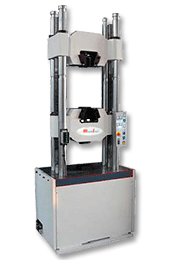
Stainless Steel Cold Rolling: Process, Tolerances, and Specification Tips
Stainless Steel Cold Rolling: Process, Tolerances, and Specification Tips
Cold rolling is a foundational metalworking process for stainless steel—especially when dimensional accuracy, surface integrity, and consistent mechanical response are non-negotiable. Unlike hot rolling, which shapes steel above its recrystallization temperature, cold rolling occurs at or near ambient temperature. This distinction has tangible implications for buyers, fabricators, and OEMs sourcing flat-rolled stainless products such as coils, sheets, and strips.
For industrial suppliers and their customers, understanding how cold rolling affects material behavior—and what to specify upfront—reduces rework, avoids costly delays, and ensures compatibility with downstream processes like laser cutting, bending, or deep drawing.
How Cold Rolling Works—and Why It Matters
Cold rolling compresses stainless steel between hardened rolls under high pressure, reducing thickness while increasing density and yield strength. The process work-hardens the material, improving tensile strength and hardness—but also reducing ductility. As a result, most cold-rolled stainless (e.g., 304, 316, 430) is supplied in annealed condition unless specified otherwise. Annealing restores formability by relieving internal stresses and recrystallizing the grain structure.
Crucially, cold rolling enables tighter thickness tolerances than hot-rolled equivalents—often ±0.005 mm for thin gauges (<1.0 mm)—and delivers smoother, more uniform surfaces suitable for applications where appearance or coating adhesion matters (e.g., architectural panels, food-grade conveyors).
Key Tolerances Beyond Thickness
While thickness tolerance is the most commonly referenced spec, cold-rolled stainless requires attention to three interrelated dimensions:
-
Flatness: Measured in I-Units (inches per foot), flatness deviations affect laser cutting accuracy and press brake setup. Typical cold-rolled 304 sheet (0.8 mm) may range from 20–40 I-Units; tighter specs (≤15 I-Units) require additional leveling—adding cost and lead time.
-
Width tolerance: Typically ±0.2 mm for slit coil, but wider slitting (e.g., >1,200 mm) may widen this to ±0.4 mm. Width variance impacts nesting efficiency and edge trimming requirements.
-
Edge condition: Cold-rolled coil is often supplied with slit edges (sheared), which may exhibit burrs or micro-tears. For deep-drawing applications, a skived or milled edge reduces cracking risk—and should be explicitly called out in purchase orders.
Failure to specify these parameters can lead to scrap during stamping or inconsistent weld penetration due to variable edge geometry.
Surface Finish Considerations Linked to Rolling
Cold rolling itself does not determine final surface finish (e.g., 2B, BA, No. 4), but it sets the baseline. A well-polished roll surface yields a smoother starting condition—critical when producing bright-annealed (BA) or mirror-finish grades. Conversely, inconsistent roll wear or inadequate cleaning between passes may cause periodic marks (“roll chatter”) that persist through subsequent polishing.
Buyers specifying BA finishes should confirm whether the supplier uses continuous annealing lines (CAL) with hydrogen/nitrogen atmospheres—and whether the cold-rolling pass immediately precedes annealing. Interrupted processing increases oxidation risk and compromises reflectivity.
Also note: Surface roughness (Ra) values are not inherent to cold rolling alone. A 2B finish typically measures Ra 0.1–0.3 µm, but this results from controlled pickling after cold rolling—not the rolling itself. Always reference ASTM A683 or EN 10088-2 for test methods and acceptance criteria.
Mechanical Property Variability and Certification
Cold-rolled stainless exhibits property gradients across width and length due to non-uniform deformation and cooling rates post-anneal. Yield strength can vary ±15 MPa within a single coil—enough to affect bend allowance calculations or springback in formed parts.
Reputable suppliers provide mill test reports (MTRs) per EN 10204 Type 3.1 or 3.2, including tensile test data from representative samples—not just chemistry. For critical applications (e.g., medical device housings or aerospace brackets), request tensile specimens taken transversely and longitudinally from the same heat/lot.
Avoid accepting generic “typical” property tables. Real-world performance depends on actual processing history—not nominal grade designation alone.
Specifying Cold-Rolled Stainless: A Practical Checklist
When issuing RFQs or POs for cold-rolled stainless, include the following minimum details to avoid ambiguity:
- Base grade and standard (e.g., AISI 316 per ASTM A240)
- Temper designation (e.g., 1/4H, 1/2H, H, or annealed—do not rely on “soft” or “hard”)
- Thickness, width, and length/coil weight—with explicit tolerances per ASTM A480 or EN 10051
- Flatness requirement (e.g., “≤25 I-Units, measured per ASTM A929”)
- Edge type (slit, skived, milled, or trimmed)
- Surface finish and roughness target (e.g., “2B, Ra ≤ 0.25 µm, per EN 10088-2”)
- MTR requirements (Type 3.1 minimum; state if transverse/longitudinal tensile tests needed)
Omitting any of these invites assumptions—and assumptions rarely align across supplier and customer expectations.
Conclusion
Cold rolling is more than a thickness-reduction step—it’s a decisive factor in how stainless steel performs in fabrication and service. For buyers managing tight-tolerance assemblies, importers verifying incoming shipments, or fabricators optimizing yield, clarity around process intent, tolerances, and documentation directly influences part quality and production throughput. When sourcing cold-rolled stainless, treat the specification sheet not as a formality, but as the first operational control point. Precision begins before the first cut—and it starts with knowing what to ask for.
Ready to source stainless steel?
Talk to a manufacturer that replies within 24 hours.
Get factory-direct pricing, export packing support, and application guidance for sheets, coils, and pipes from Ruixing.
المنتجات المميزة
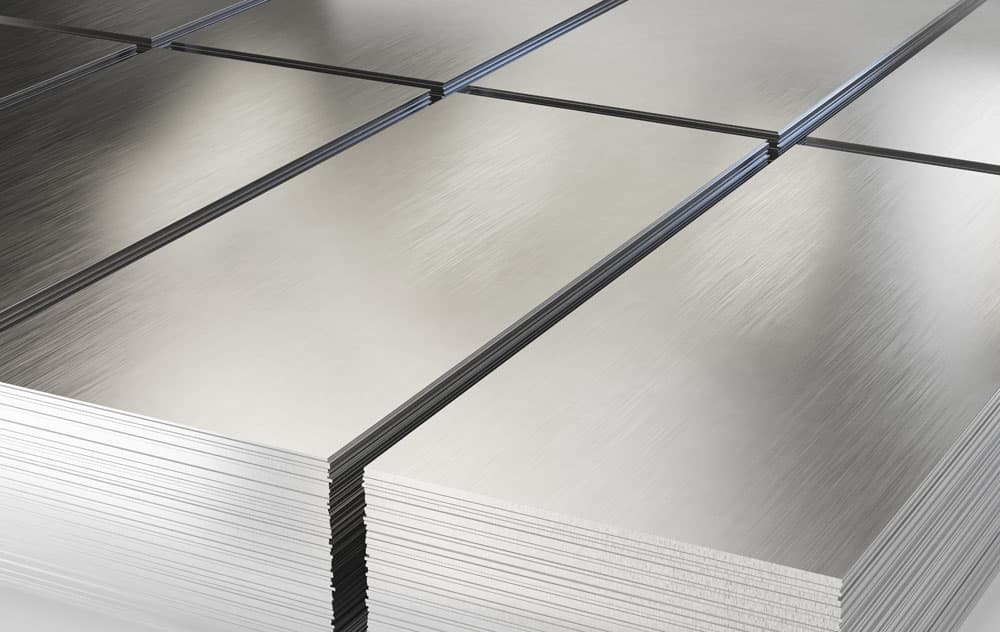
صفائح ستانلس ستيل 304/304L
أكثر الدرجات استخدامًا وتنوعًا، مع مقاومة ممتازة للتآكل وقابلية جيدة للتشكيل.
لفائف ستانلس ستيل 316/316L
درجة تحتوي على الموليبدينوم وتوفر مقاومة أعلى للتآكل خاصة في البيئات المحتوية على الكلوريد.
أنابيب دائرية ستانلس ستيل 201/304
أنابيب دائرية متعددة الاستخدامات مناسبة للتطبيقات الإنشائية والزخرفية.