

Stainless Steel Corrosion Resistance: What Buyers Need to Know
Why Corrosion Resistance Matters Beyond the Datasheet
Stainless steel is often chosen for its corrosion resistance—but that resistance isn’t universal, automatic, or guaranteed. For industrial buyers, importers, fabricators, and OEMs, misjudging real-world corrosion behavior leads to field failures, costly rework, unplanned downtime, and liability exposure. Unlike carbon steel or aluminum, stainless relies on a thin, self-repairing chromium oxide layer—its passive layer. Its effectiveness depends not only on alloy composition but also on service environment, fabrication practices, and maintenance history.
This post clarifies what drives stainless steel corrosion resistance in practice—not just theory—and how procurement and specification decisions directly influence long-term performance.
The Four Key Drivers of Real-World Corrosion Performance
Corrosion resistance emerges from the interaction of four interdependent factors:
-
Alloy Composition (Grade): Chromium (≥10.5%) enables passivation; molybdenum (e.g., 316 vs. 304) improves resistance to chlorides; nitrogen enhances pitting resistance in duplex grades like 2205. But composition alone doesn’t define behavior—it sets the potential under ideal conditions.
-
Environment: pH, chloride concentration, temperature, presence of oxidizers or reducing agents, and stagnant vs. flowing conditions all shift electrochemical stability. A 316 pipe may perform well in seawater-cooled heat exchangers—but fail rapidly if exposed to wet, chloride-laden insulation or crevices where oxygen is depleted.
-
Surface Condition: Mill scale, embedded iron particles (from cutting or grinding with carbon steel tools), weld discoloration, or roughness >0.8 µm Ra can locally inhibit passivation or create galvanic cells. Even high-grade material becomes vulnerable if surface integrity is compromised during handling or fabrication.
-
Design & Fabrication Practices: Crevices, poor drainage, dissimilar metal contact (e.g., stainless bolts on aluminum flanges), and residual stresses from cold working or welding all accelerate localized attack. Design choices—like avoiding lap joints or specifying full-penetration welds—often matter more than grade selection alone.
Common Failure Modes—and How to Prevent Them
Three failure types dominate industrial field reports:
-
Pitting: Localized penetration caused by chloride breakdown of the passive layer. Most frequent in stagnant, warm, chloride-containing environments (e.g., cooling water systems, coastal atmospheres). Prevention includes selecting higher-molybdenum grades (e.g., 316L over 304), ensuring continuous flow, and avoiding deposits or biofilm buildup.
-
Crevice Corrosion: Similar mechanism to pitting but initiated in shielded zones—gaskets, bolt heads, lap joints, or under insulation. It occurs at lower chloride levels than pitting. Mitigation requires design review (e.g., using welded instead of bolted joints), specifying crevice-resistant alloys (e.g., 2205 or super austenitics), and applying sealants where appropriate.
-
Stress Corrosion Cracking (SCC): Brittle, catastrophic cracking under tensile stress + corrosive environment (e.g., chlorides + residual weld stress). Highly sensitive to temperature and chloride concentration. Austenitic grades (304, 316) are susceptible above ~60°C in even low-chloride water. Duplex and super duplex steels offer significantly higher SCC resistance and should be specified where risk exists—even if initial cost is higher.
Note: General corrosion (uniform thinning) is rare in properly selected stainless steels in typical industrial environments. When observed, it usually signals incorrect grade selection or severe contamination (e.g., hydrochloric acid exposure).
Specification Best Practices for Buyers and OEMs
To reduce corrosion-related risk at the procurement stage:
-
Define the actual service environment—not just ‘industrial’. Specify maximum chloride ppm, pH range, operating temperature, fluid velocity, and whether surfaces will be cleaned or insulated. Share this with your supplier early.
-
Require mill test reports (MTRs) confirming chemical composition—including Mo, Cr, Ni, and N content—and mechanical properties. For critical applications, request ASTM A959 compliance and verify heat number traceability.
-
Specify surface condition explicitly: e.g., “2B finish, free of visible mill scale and embedded iron,” or “pickled and passivated per ASTM A967, nitric acid method.” Avoid vague terms like ‘standard finish’ or ‘as rolled.’
-
Clarify fabrication responsibilities: If you’re sourcing raw material for downstream welding or forming, state whether descaling, passivation, or post-fabrication cleaning is required—and who bears responsibility.
-
Consider life-cycle cost, not just unit price: A 2205 duplex pipe may cost 1.8× more than 304—but eliminate replacement every 5 years in a chloride-rich wastewater line. Quantify expected service life and maintenance frequency in your evaluation criteria.
Beyond Grade Charts: Collaboration Is Critical
Grade selection charts are useful starting points—but they cannot replace dialogue between buyer, supplier, and end-user. A reputable industrial supplier should ask about operating conditions, review drawings for crevice-prone details, and flag potential red flags (e.g., use of 304 in a steam condensate line with trace chlorides). Likewise, buyers benefit from requesting corrosion test data relevant to their specific environment—not generic lab results.
For importers managing global supply chains, verify that mill certifications align with EN 10088-2 or ASTM A240, and confirm that heat treatment and surface processing were performed in controlled, documented facilities—not outsourced to uncertified subcontractors.
Conclusion
Stainless steel’s corrosion resistance is a system property—not an intrinsic, fixed value. It emerges from the alignment of correct grade, appropriate surface condition, suitable design, and compatible environment. Buyers who treat corrosion resistance as a specification parameter—not just a marketing claim—gain reliability, reduce total cost of ownership, and strengthen supplier accountability. Start by documenting your real operating conditions, then work backward to material and process requirements. That approach delivers performance—not just paperwork.
Ready to source stainless steel?
Talk to a manufacturer that replies within 24 hours.
Get factory-direct pricing, export packing support, and application guidance for sheets, coils, and pipes from Ruixing.
المنتجات المميزة
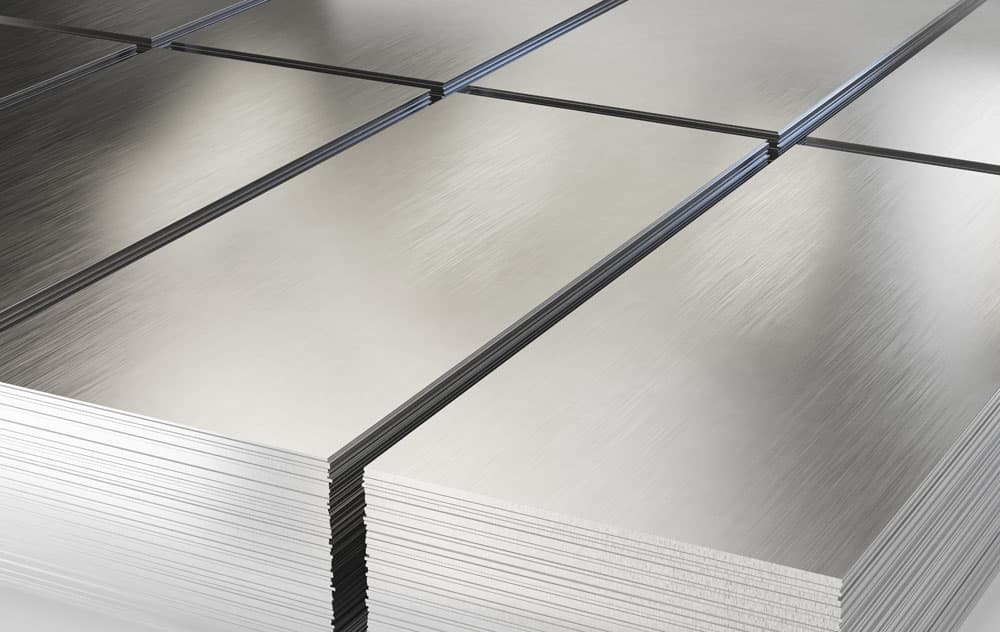
صفائح ستانلس ستيل 304/304L
أكثر الدرجات استخدامًا وتنوعًا، مع مقاومة ممتازة للتآكل وقابلية جيدة للتشكيل.
لفائف ستانلس ستيل 316/316L
درجة تحتوي على الموليبدينوم وتوفر مقاومة أعلى للتآكل خاصة في البيئات المحتوية على الكلوريد.
أنابيب دائرية ستانلس ستيل 201/304
أنابيب دائرية متعددة الاستخدامات مناسبة للتطبيقات الإنشائية والزخرفية.