

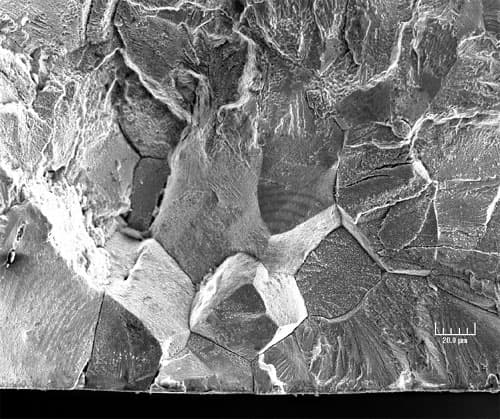
Stainless Steel Heat Treatment: Practical Guidance for OEMs
Stainless Steel Heat Treatment: Practical Guidance for OEMs
Heat treatment is often overlooked—or misunderstood—by OEMs specifying stainless steel components. Unlike carbon steels, most stainless grades respond differently to thermal processes: some require specific treatments to achieve target properties; others degrade if heated incorrectly. This post cuts through the ambiguity with practical, specification-level guidance tailored for buyers, importers, and fabricators who source or integrate stainless parts into machinery, pressure vessels, or precision assemblies.
Why Heat Treatment Matters Beyond Hardness
Heat treatment in stainless steel isn’t primarily about increasing hardness—it’s about controlling microstructure, relieving stresses, optimizing corrosion resistance, and ensuring dimensional predictability. For example, annealing austenitic grades (e.g., 304, 316) restores ductility after cold working and dissolves carbides that could compromise intergranular corrosion resistance. In contrast, precipitation-hardening (PH) grades like 17-4 PH rely on precise aging cycles to develop strength without sacrificing weldability or toughness. Misapplying a standard carbon steel tempering schedule to a martensitic stainless (e.g., 420 or 440C) can lead to embrittlement or excessive distortion—costly errors at scale.
Key Processes by Stainless Steel Family
Austenitic (300 series)
- Solution annealing: Typically performed at 1010–1120°C followed by rapid quenching. Required after cold forming or welding to restore full corrosion resistance and ductility. Critical for food-grade or pharmaceutical equipment where passivation alone won’t suffice.
- Stress relieving: Rarely recommended below 900°C; low-temperature stress relief (<450°C) may precipitate chromium carbides, reducing corrosion performance. Use only when absolutely necessary—and document temperature/time rigorously.
Ferritic (400 series)
- Annealing: Done at 750–850°C with air cooling. Improves ductility and reduces brittleness in welded joints. Avoid prolonged holding above 950°C to prevent grain coarsening.
- Tempering: Not applicable—ferritics cannot be hardened by heat treatment. Mechanical properties depend largely on composition and cold work level.
Martensitic (e.g., 410, 420, 440C)
- Hardening: Austenitize at 980–1050°C (grade-dependent), then quench in oil, air, or polymer. Final hardness depends on tempering temperature—lower temp yields higher hardness but reduced impact strength.
- Tempering: Must follow hardening within 24 hours to avoid cracking. Tempering between 150–700°C balances hardness, toughness, and dimensional stability. For high-precision shafts or bearings, double tempering improves consistency.
Duplex & Super Duplex (e.g., 2205, 2507)
- Solution annealing: 1020–1100°C with rapid water quench. Critical to preserve balanced ferrite-austenite phase ratio (~40–60%). Under- or over-heating shifts phase balance, risking reduced stress corrosion cracking (SCC) resistance or impact toughness.
- Hot forming: Requires strict temperature control (1050–1150°C). Reheating below 950°C risks sigma phase formation—brittle and detrimental to corrosion performance.
Specifying Heat Treatment in Procurement
When writing purchase specifications, avoid vague terms like “heat treated” or “annealed as required.” Instead:
- Define the process explicitly (e.g., “solution annealed at 1050 ± 10°C, held for 30 minutes per 25 mm thickness, water quenched”);
- Require mill test reports (MTRs) showing actual time/temperature profiles;
- Specify post-treatment surface condition (e.g., pickled, descaled, or mechanically finished);
- State acceptance criteria: hardness range (Rockwell or Vickers), ferrite content (for duplex), or bend test results where applicable.
Importers should verify that overseas mills use calibrated, logged furnaces—not batch ovens without real-time monitoring. For critical applications, request third-party verification of thermal cycle records.
Dimensional Stability and Post-Treatment Handling
Thermal expansion and residual stress redistribution during heat treatment affect final dimensions. Parts with asymmetric geometry, thin sections, or tight tolerance requirements (e.g., ±0.05 mm) benefit from:
- Pre-straightening before heat treatment;
- Fixture-assisted heating/cooling to minimize warpage;
- Stress-relieving before final machining—not after—as a corrective step.
Note: Some grades (e.g., 304L, 316L) exhibit minimal distortion under proper solution annealing. Others—especially heavily cold-worked martensitics—may require re-machining after hardening and tempering. Factor this into lead time and cost planning.
When to Skip or Modify Standard Protocols
Not all stainless components require heat treatment—and some shouldn’t undergo it at all:
- Seamless tubing used in hydraulic systems is typically delivered solution-annealed and passivated; additional annealing adds cost and risk of oxide scale.
- Fasteners made from cold-headed 304 or 316 are usually strain-hardened—not heat-treated—to maintain thread integrity and clamp load.
- Thin-gauge strip (<0.5 mm) used in sensors or springs may lose shape or tension if subjected to conventional annealing; low-temperature stabilization (e.g., 250–350°C) is often preferred.
Always consult material datasheets and mill recommendations—not generic handbooks—before mandating or omitting thermal processing.
Conclusion
Heat treatment isn’t a one-size-fits-all operation for stainless steel. Its impact spans mechanical performance, corrosion resistance, dimensional fidelity, and long-term reliability. OEMs and fabricators gain measurable value—not just compliance—by specifying precise thermal protocols aligned with grade, geometry, and end-use environment. The strongest procurement advantage lies not in demanding ‘more’ heat treatment, but in demanding the right one—documented, traceable, and validated. Work closely with your supplier to align thermal process parameters with functional requirements early in design, not after first-article review.
Ready to source stainless steel?
Talk to a manufacturer that replies within 24 hours.
Get factory-direct pricing, export packing support, and application guidance for sheets, coils, and pipes from Ruixing.
المنتجات المميزة
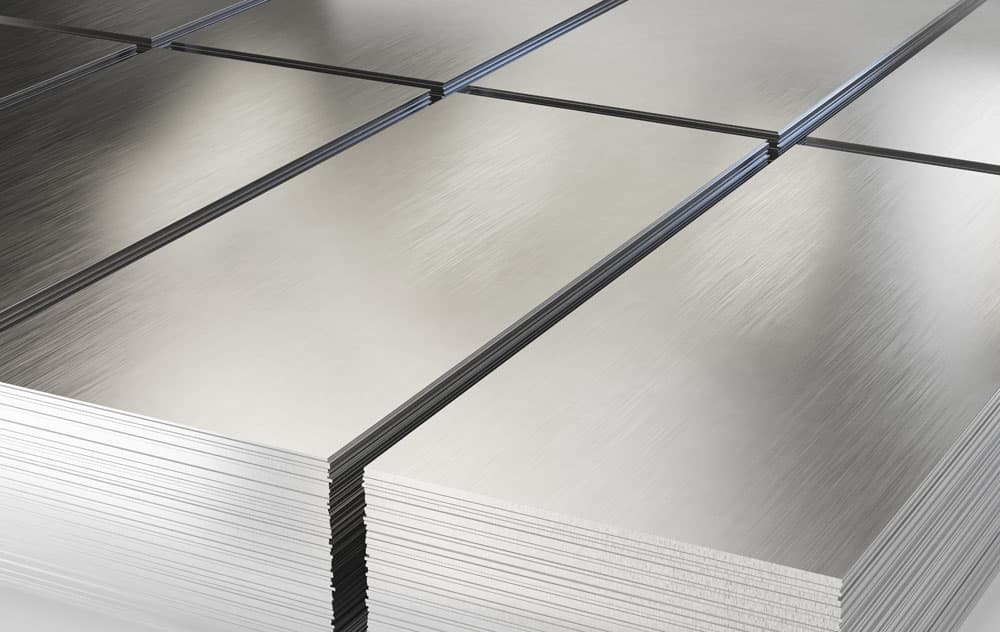
صفائح ستانلس ستيل 304/304L
أكثر الدرجات استخدامًا وتنوعًا، مع مقاومة ممتازة للتآكل وقابلية جيدة للتشكيل.
لفائف ستانلس ستيل 316/316L
درجة تحتوي على الموليبدينوم وتوفر مقاومة أعلى للتآكل خاصة في البيئات المحتوية على الكلوريد.
أنابيب دائرية ستانلس ستيل 201/304
أنابيب دائرية متعددة الاستخدامات مناسبة للتطبيقات الإنشائية والزخرفية.