

Stainless Steel Surface Finishes: What Fabricators Need to Know
Stainless Steel Surface Finishes: What Fabricators Need to Know
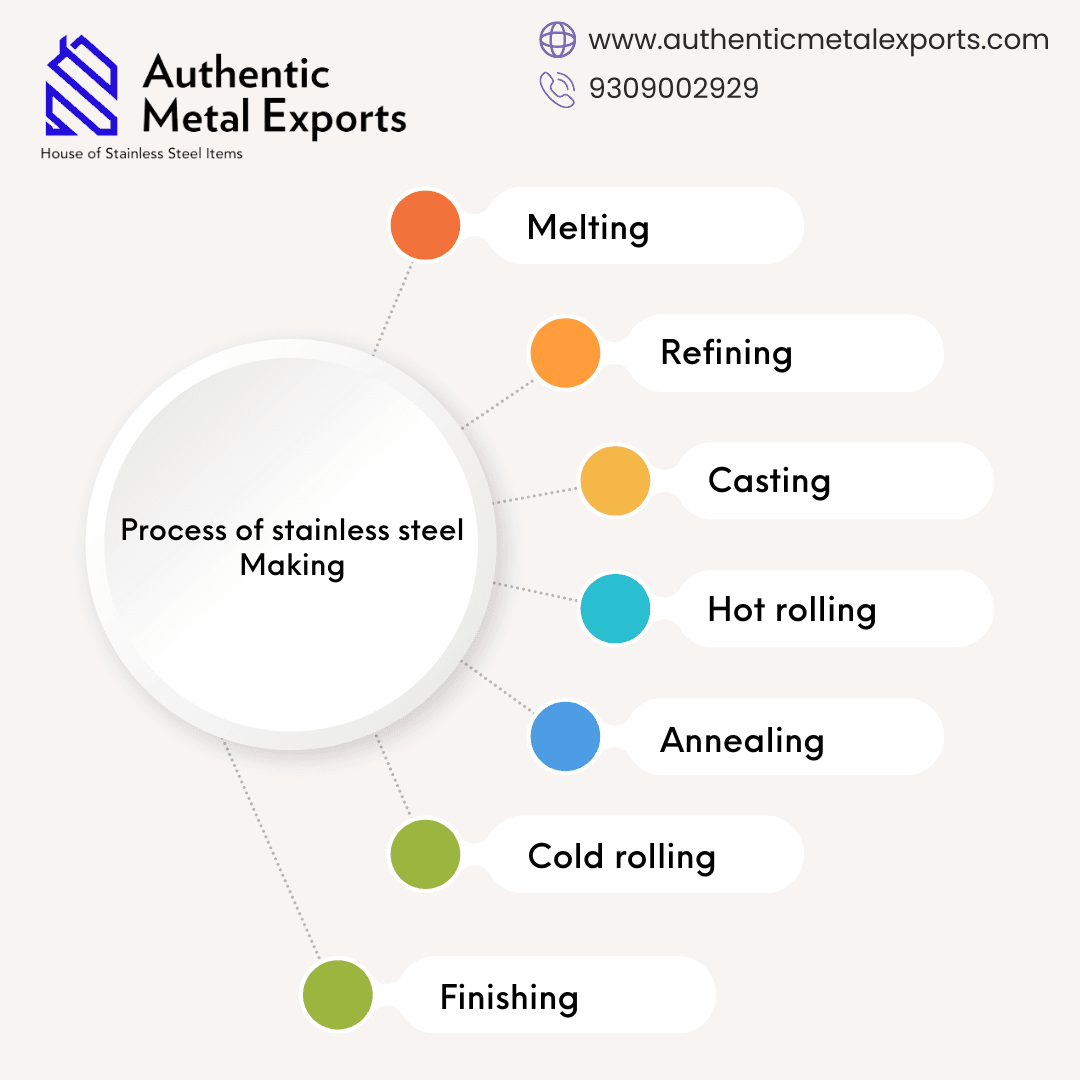
Selecting the right stainless steel surface finish is rarely just about aesthetics—it directly affects corrosion resistance, cleanability, weld appearance, forming behavior, and compatibility with downstream processes like coating or bonding. For fabricators, OEMs, and importers sourcing material for industrial equipment, architectural cladding, food processing lines, or medical devices, specifying the correct finish early avoids rework, delays, and field failures.
This article outlines five widely used stainless steel finishes—how they’re produced, where they perform best, and what to watch for when reviewing mill test reports or quoting jobs.
1. Mill Finish (No. 1 and 2D)
Mill finish refers to the as-rolled or hot-rolled surface condition, typically followed by pickling to remove scale. No. 1 finish is hot-rolled, annealed, and pickled—common in thick plates (≥6 mm) used for tanks, structural supports, or furnace components. It has a dull, matte, slightly rough texture with visible rolling marks.
2D finish is cold-rolled, annealed, and pickled—used for thinner sheet and coil (0.3–6 mm). It’s smoother than No. 1 but still non-reflective, with uniform dull gray appearance. Both finishes provide adequate corrosion resistance in general service environments, but lack the enhanced passive layer stability of polished surfaces. They’re cost-effective starting points when subsequent grinding, blasting, or polishing will be performed in-house.
Key considerations: Verify pickling method (nitric-hydrofluoric vs. citric-based) if parts go into pharmaceutical or semiconductor applications. Residual iron contamination from inadequate pickling can compromise passivation later.
2. No. 4 Brushed Finish
The most widely specified mechanical finish, No. 4 combines durability with moderate reflectivity. Produced by abrasive belt grinding with 120–180 grit, it features uniform linear grain parallel to the rolling direction. It’s standard on kitchen appliances, elevator panels, and process piping—especially where frequent cleaning or abrasion resistance matters.
Unlike mirror finishes, No. 4 hides minor scratches and tolerates light fabrication marks. Its micro-roughness also improves adhesion for powder coating or vinyl lamination. However, grain direction must be consistent across assemblies; mismatched orientation causes visible contrast under directional lighting—a critical detail for architectural projects.
Fabrication note: When bending or welding No. 4 material, plan for post-fabrication blending. Weld discoloration and heat-affected zones require mechanical re-finishing (e.g., non-woven pads matched to original grit) to restore uniformity.
3. BA (Bright Annealed) and 2B Finishes
BA finish results from annealing in a controlled-atmosphere furnace followed by tension leveling—yielding a reflective, smooth, non-directional surface with high brightness (typically >250 gloss units at 60°). It’s common in thin-gauge strip for deep-drawn components (e.g., filter housings, diaphragms) and decorative trim.
2B is similar but less reflective: cold-rolled, annealed, pickled, and skin-passed. It offers better flatness control and improved drawability than BA, making it preferred for precision stamping. Neither finish is suitable for high-touch architectural use without additional protection—fingerprints and light scratches show readily.
Procurement tip: BA/2B are tightly controlled for surface defect limits (e.g., roll marks, pits, scratches per ASTM A480). Request surface inspection reports—not just mill certs—when ordering for optical or vacuum applications.
4. Mirror (No. 8) and Electropolished Surfaces
No. 8 is produced by progressively finer polishing (up to 320+ grit) and buffing, yielding a true mirror reflection. It’s used where hygiene or visual integrity is paramount: pharmaceutical tanks, cleanroom ductwork, and high-end instrumentation enclosures.
Electropolishing goes further: an electrochemical process that removes ~5–20 µm of surface metal, smoothing micro-peaks and enriching chromium at the oxide layer. It improves corrosion resistance, reduces bacterial adhesion, and eliminates embedded iron. Unlike mechanical polishing, electropolishing doesn’t introduce directional grain or subsurface deformation.
Critical distinction: Electropolishing is a post-fabrication treatment—not a mill finish. Specify it after welding, grinding, and deburring. Parts with sharp edges or blind holes may experience uneven current density, requiring fixturing review.
5. Custom & Functional Finishes
Beyond standard designations, several engineered options serve specific operational needs:
- Blasted finishes (e.g., glass bead, alumina): Provide controlled Ra values (0.4–3.2 µm) for grip, paint adhesion, or matte appearance. Specify media type, pressure, and coverage to avoid over-peening.
- Patterned rolls (e.g., leather, linen, diamond plate): Add slip resistance or branding while maintaining base alloy properties. Confirm pattern depth doesn’t reduce section thickness below design minimums.
- Passivated-only surfaces: Not a finish per se—but mandatory after any mechanical finishing. Verify passivation complies with ASTM A967 (Method A for nitric acid, Method F for citric) and includes free-iron testing (e.g., copper sulfate spot test per ASTM A380).
Conclusion
Surface finish is a functional specification—not a cosmetic afterthought. Misalignment between finish selection and application requirements leads to premature maintenance, regulatory non-conformance (e.g., FDA 21 CFR 111.42 for food equipment), or customer rejection. When sourcing stainless steel, clarify whether the finish is applied pre- or post-delivery, confirm dimensional allowances for material removal, and align inspection criteria with industry standards—not just visual tolerance. Work with suppliers who document finish parameters (grit size, Ra measurement, passivation method) on mill test reports, and treat finish specifications with the same rigor as grade or thickness.
For technical support on finish selection or custom finish validation, contact our metallurgical team directly—we offer free finish compatibility reviews for qualified OEM and fabricator projects.
Ready to source stainless steel?
Talk to a manufacturer that replies within 24 hours.
Get factory-direct pricing, export packing support, and application guidance for sheets, coils, and pipes from Ruixing.
المنتجات المميزة
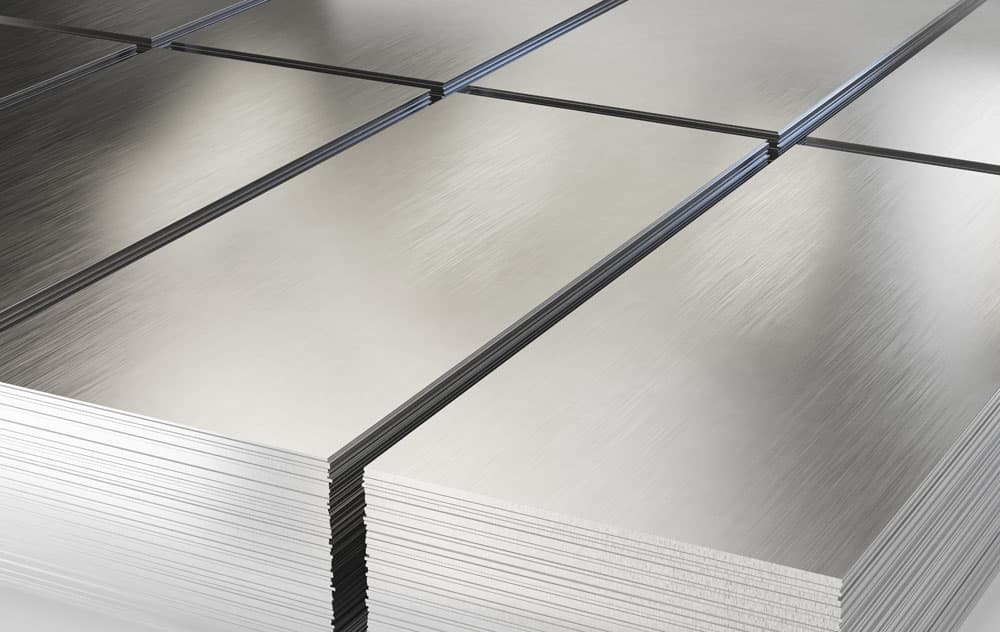
صفائح ستانلس ستيل 304/304L
أكثر الدرجات استخدامًا وتنوعًا، مع مقاومة ممتازة للتآكل وقابلية جيدة للتشكيل.
لفائف ستانلس ستيل 316/316L
درجة تحتوي على الموليبدينوم وتوفر مقاومة أعلى للتآكل خاصة في البيئات المحتوية على الكلوريد.
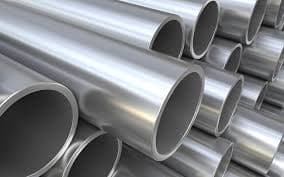
أنابيب دائرية ستانلس ستيل 201/304
أنابيب دائرية متعددة الاستخدامات مناسبة للتطبيقات الإنشائية والزخرفية.