

Stainless Steel Welding: Key Considerations for Fabricators
Stainless Steel Welding: Key Considerations for Fabricators
Welding stainless steel differs meaningfully from carbon steel welding—not just in technique, but in how process choices affect corrosion resistance, mechanical integrity, and long-term performance. For fabricators, OEMs, and procurement teams sourcing welded components, understanding the metallurgical and procedural constraints is essential to avoid rework, field failures, or costly material rejection.
This guide focuses on actionable considerations—not theory alone—for buyers and fabricators who specify, inspect, or execute stainless steel welding in industrial settings (e.g., food processing equipment, chemical piping, pharmaceutical vessels, or HVAC ductwork).
1. Why Stainless Steel Welding Demands Special Attention
Stainless steels rely on a stable chromium oxide layer for corrosion resistance. Excessive heat input, improper shielding, or contamination during welding can disrupt this layer locally—leading to sensitization (in austenitics), intergranular attack, or preferential pitting at the heat-affected zone (HAZ). Unlike carbon steel, where visual weld quality often correlates with strength, stainless welds must be evaluated for both structural soundness and surface integrity.
Key risk factors include:
- Carbon migration in the HAZ (especially in 304/316 above 425–850°C),
- Iron contamination from shared tools or grinding debris,
- Inadequate inert gas coverage (leading to oxidation or nitride formation),
- Residual stress-induced stress corrosion cracking in chloride environments.
These aren’t hypothetical concerns—they’re root causes behind documented field failures in sanitary process lines and offshore instrumentation housings.
2. Joint Design and Fit-Up: Preventing Hidden Defects
Poor fit-up is the leading contributor to incomplete fusion, porosity, and excessive dilution—particularly in thin-wall tubing or sheet applications. Stainless steels have lower thermal conductivity than carbon steel, so heat doesn’t dissipate as readily. That makes tight, consistent root gaps (typically 0.5–1.5 mm) and uniform bevel angles critical.
- For butt joints under 3 mm thickness: Use square-groove joints with controlled backing (copper or ceramic) to minimize heat input and avoid burn-through.
- For thicker sections (>6 mm): Employ a single-V groove with 30–35° included angle and a 1–2 mm root face. Avoid excessive reinforcement—it traps crevices that harbor moisture and chlorides.
- Never use sulfur-bearing anti-spatter compounds. They introduce sulfides that compromise pitting resistance.
Fabricators should verify fit-up before tacking—and reject assemblies with misalignment exceeding ±0.5 mm for precision applications like hygienic welds (ASME BPE).
3. Filler Metal Selection: Match, Over-Alloy, or Avoid Duplex?
Filler choice affects not only strength and ductility but also corrosion performance and post-weld behavior.
- Matching fillers (e.g., ER308L for 304L, ER316L for 316L) are standard for general service. The "L" grade (≤0.03% C) reduces sensitization risk.
- Over-alloyed fillers, such as ER309L, are appropriate for joining stainless to carbon steel—or when higher ferrite content is needed to suppress hot cracking in austenitics. Note: ER309L introduces ~12% nickel and ~25% chromium, which may alter galvanic compatibility in mixed-material systems.
- Duplex fillers (e.g., ER2209) require strict heat input control (<1.5 kJ/mm) and preheat/post-heat management. They’re unsuitable for shop environments lacking real-time interpass temperature monitoring.
Avoid generic “stainless” fillers without UNS designation—trace elements like nitrogen, molybdenum, or silicon significantly impact corrosion resistance and weld metal toughness.
4. Shielding Gas and Heat Management
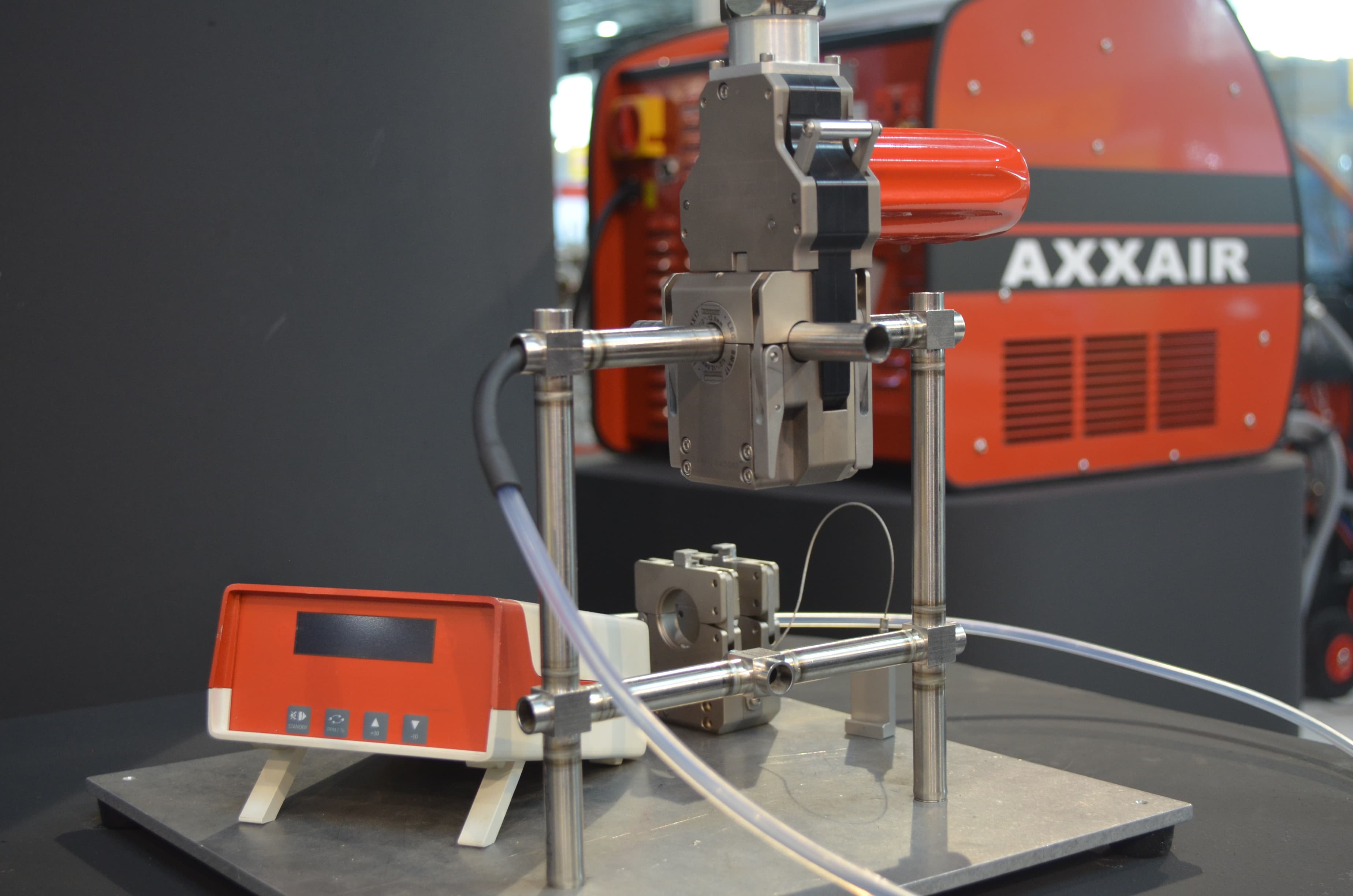
Argon remains the baseline shielding gas—but adding 1–2% nitrogen improves arc stability and ferrite control in duplex grades. For orbital GTAW of sanitary tubing, pure argon with internal trailing shields is non-negotiable; even brief air exposure creates visible oxide (‘rainbow tint’) that signals compromised passivity.
Heat input must stay within validated ranges:
- GTAW: 0.5–1.2 kJ/mm,
- GMAW short-circuit: ≤1.0 kJ/mm (with pulse capability preferred),
- SMAW: Strict electrode drying (250°C for 1 hour minimum) and low-hydrogen practice.
Interpass temperature should not exceed 150°C for austenitics and 100°C for duplex—measured with contact thermocouples, not IR guns (which read surface oxide, not base metal temp).
5. Post-Weld Verification: Beyond Visual Inspection
Visual inspection alone misses microstructural risks. At minimum, fabricators and buyers should require:
- Surface cleanliness verification: Swab test per ASTM A967 (Method A) to confirm absence of free iron,
- Ferrite measurement: For duplex and super duplex welds, verify ferrite number (FN) between 35–65 using calibrated Feritscope® or similar,
- Pickling/passivation documentation: If performed off-site, request full test reports—not just “passivated” stamps.
Non-destructive testing (e.g., dye penetrant per ASTM E165) is mandatory for pressure-containing welds. Radiography is rarely needed unless specified by ASME Section VIII or PED.
Conclusion
Stainless steel welding success hinges less on operator skill alone and more on disciplined process control—from joint prep through final verification. For buyers, specifying weld procedure specifications (WPS) aligned with AWS D18.1 or ISO 15614-1 is necessary but insufficient without enforceable inspection criteria. For fabricators, investing in calibrated thermal monitoring, certified filler traceability, and surface integrity validation pays back in reduced warranty claims and longer service life. When sourcing welded stainless components, ask for weld maps, interpass logs, and post-weld test reports—not just compliance statements.
Stainless steel’s value lies in its durability. But that durability isn’t inherent—it’s earned, weld by weld.
Ready to source stainless steel?
Talk to a manufacturer that replies within 24 hours.
Get factory-direct pricing, export packing support, and application guidance for sheets, coils, and pipes from Ruixing.
المنتجات المميزة
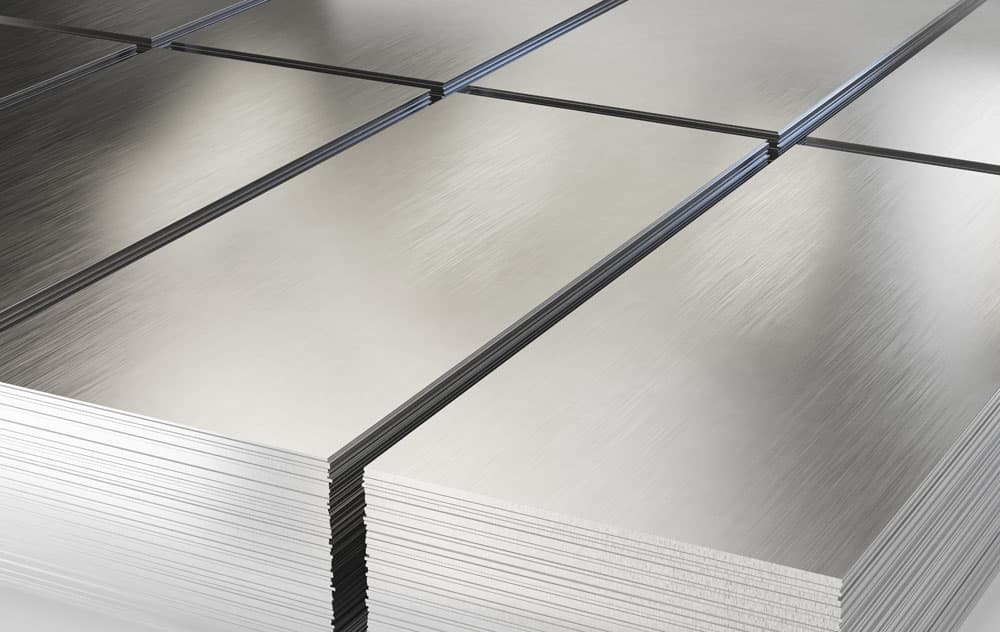
صفائح ستانلس ستيل 304/304L
أكثر الدرجات استخدامًا وتنوعًا، مع مقاومة ممتازة للتآكل وقابلية جيدة للتشكيل.
لفائف ستانلس ستيل 316/316L
درجة تحتوي على الموليبدينوم وتوفر مقاومة أعلى للتآكل خاصة في البيئات المحتوية على الكلوريد.
أنابيب دائرية ستانلس ستيل 201/304
أنابيب دائرية متعددة الاستخدامات مناسبة للتطبيقات الإنشائية والزخرفية.