

Stainless Steel Cold Rolling: Process, Tolerances, and Supply Considerations
Stainless Steel Cold Rolling: Process, Tolerances, and Supply Considerations
Cold rolling is a critical secondary manufacturing step for many stainless steel flat products—especially when tight thickness tolerances, superior surface quality, or tailored mechanical properties are required. Unlike hot rolling, which shapes metal above its recrystallization temperature, cold rolling occurs at or near room temperature. This process imparts work hardening, improves strength and hardness, and enables tighter dimensional control. For industrial buyers, importers, fabricators, and OEMs, understanding the practical implications of cold rolling isn’t just technical—it directly affects procurement planning, fabrication readiness, and part performance.
How Cold Rolling Works—and Why It Matters
In cold rolling, stainless steel coils (typically hot-rolled and pickled) pass through high-pressure roller stands. Each pass reduces thickness incrementally—often by 10–30%—while increasing yield and tensile strength and improving surface finish. The process also enhances grain structure uniformity and dimensional stability. Because no heat is added, residual stresses develop; these may require subsequent annealing or stress-relief treatments depending on end-use requirements.
Crucially, cold rolling allows manufacturers to achieve thickness tolerances as tight as ±0.005 mm (±0.0002 in) for precision grades—far beyond typical hot-rolled tolerances (±0.05 mm or more). That level of precision matters when feeding material into laser cutting lines, progressive die stamping, or precision tube forming.
Key Specifications Buyers Must Define Upfront
Ambiguity in purchase orders is a leading cause of delays and rework. When sourcing cold-rolled stainless steel, clearly specify:
- Base grade and condition: e.g., AISI 304, full-hard (H11/4), quarter-hard (H1/4), or soft-annealed (A)
- Final thickness and tolerance class: Reference ASTM A666 (for austenitic) or EN 10088-2 where applicable; avoid generic terms like “tight tolerance”
- Width and edge condition: Slit edge (with burr height limits) vs. mill edge, and whether edge trimming is required
- Surface finish: 2B (standard mill finish), BA (bright annealed), or custom matte/polished finishes—each requiring distinct post-rolling treatment
- Coil weight and ID/OD constraints: Especially important for automated uncoilers or space-limited facilities
Omitting any of these can trigger engineering reviews, extended lead times, or unplanned surcharges.
Real-World Tolerance Trade-Offs
Tighter tolerances demand more passes, slower speeds, and rigorous roll maintenance—increasing cost and lead time. For example:
- A standard 2B finish coil in 304, 0.8 mm thick, ±0.015 mm tolerance typically ships in 4–6 weeks.
- The same grade and thickness at ±0.007 mm (Class 1 per ASTM A666) may require 10–12 weeks—and could incur a 12–18% premium.
Also consider flatness: cold-rolled material is prone to camber (lateral curvature) and bow if not properly tension-leveled post-rolling. Specify flatness requirements using units like mm/m (e.g., ≤0.5 mm/m) rather than subjective terms like “good flatness.” If your application involves high-speed blanking or fine-pitch bending, request certified flatness reports per EN 10131 or ASTM A666 Annex A.
Coordination with Fabrication and Quality Control
Cold-rolled stainless is often delivered in full-hard or half-hard conditions—meaning it’s not readily formable without intermediate annealing or controlled bending. Fabricators should confirm whether incoming material has been solution-annealed and descaled after cold rolling (common for BA or soft-annealed grades), or whether it remains in a work-hardened state (e.g., H1/2, H1/4). Using full-hard material for deep drawing without proper lubrication or tooling can cause cracking or excessive springback.
From a quality standpoint, cold-rolled coils are highly susceptible to handling damage—scratches, edge nicks, and coil set distortion affect downstream processes. Require protective packaging (e.g., interleaving paper or plastic film) and verify that coils are wound with consistent tension. Reject coils showing visible waviness, slippage marks, or surface discoloration inconsistent with the specified finish.
Supplier Selection: Beyond Price and Lead Time
When evaluating suppliers, prioritize those who:
- Maintain traceability from melt batch to final coil (including heat number, chemical analysis, and mechanical test reports)
- Offer pre-shipment inspection options—including dimensional verification and surface defect mapping
- Support collaborative tolerance review early in the quoting phase, especially for non-standard gauges or widths
- Provide clear documentation on residual stress levels (where relevant for welding or precision machining)
Avoid suppliers who cannot provide mill test reports (MTRs) matching the actual coil lot or who bundle cold rolling with annealing without clarifying sequence and parameters.
Conclusion
Cold rolling transforms stainless steel into a precision-engineered input—not just raw material. Its benefits in dimensional accuracy, strength, and surface integrity come with specific specification, handling, and supply chain considerations. By defining requirements rigorously, aligning with capable suppliers, and coordinating closely with internal fabrication teams, industrial buyers can reduce scrap, avoid costly rework, and ensure consistency across production batches. As automation and tighter assembly tolerances become standard, cold-rolled stainless will remain indispensable—but only when sourced with technical clarity and operational discipline.
Ready to source stainless steel?
Talk to a manufacturer that replies within 24 hours.
Get factory-direct pricing, export packing support, and application guidance for sheets, coils, and pipes from Ruixing.
Featured Products
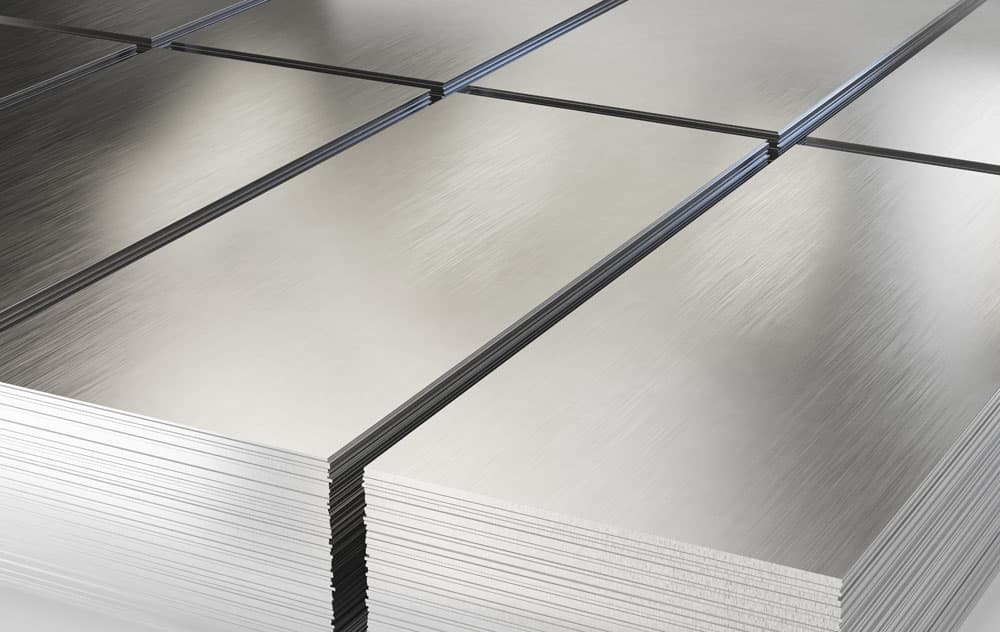
304/304L Stainless Steel Sheet
The most versatile and widely used alloy in the stainless steel family. Excellent corrosion resistance and formability.
316/316L Stainless Steel Coil
Molybdenum-bearing grade, second most sought after grade next to 304. Higher resistance to corrosion in chloride environments.
201/304 Stainless Steel Round Pipe
Versatile 201/304 stainless round pipe with solid corrosion resistance and formability for structural and decorative applications.