

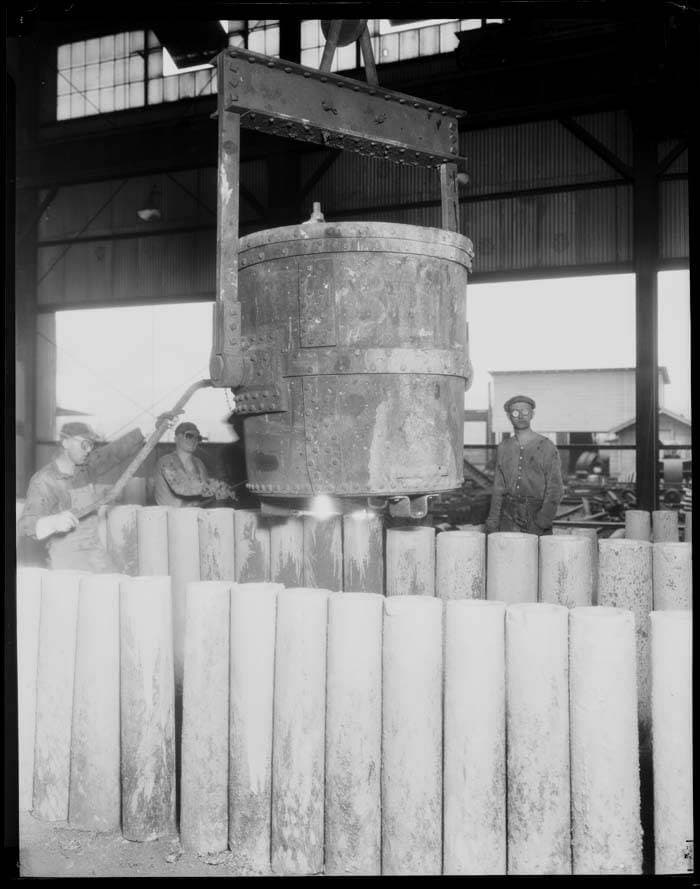
Stainless Steel Cold Rolling: Process, Tolerances & Industrial Use
Stainless Steel Cold Rolling: Process, Tolerances & Industrial Use
Cold rolling is a foundational metalworking process that transforms hot-rolled stainless steel into products with tighter tolerances, improved surface quality, and superior mechanical performance. For industrial buyers, fabricators, and OEMs sourcing components for demanding applications—from medical device housings to aerospace brackets—understanding cold rolling isn’t optional. It directly affects part consistency, downstream processing efficiency, and long-term service reliability.
Unlike hot rolling, which occurs above the recrystallization temperature, cold rolling takes place at or near room temperature. This introduces work hardening, refines grain structure, and enables repeatable thickness control down to ±0.005 mm in some cases. In this post, we break down what matters most to procurement and engineering teams—not theory, but practical considerations tied to specification, supply, and performance.
How Cold Rolling Works—and Why Temperature Matters
Cold rolling involves passing stainless steel strip or coil through a series of precisely aligned rolls under high pressure. No external heat is applied; instead, deformation energy increases dislocation density in the austenitic or ferritic lattice. The result? Higher yield strength, better surface finish (Ra 0.1–0.8 µm typical), and reduced thickness variation across width and length.
Key operational facts:
- Entry material is typically hot-rolled annealed (HRA) coil, descaled and pickled.
- Reduction per pass ranges from 10% to 40%, depending on grade and target thickness.
- Lubrication (mineral oil or synthetic emulsions) is essential to reduce friction, prevent galling, and dissipate heat generated by deformation.
- Tension control between stands is critical—too low causes looping; too high risks edge fracture or center buckle.
For buyers, the takeaway is clear: cold-rolled material isn’t just ‘thinner’—it’s structurally distinct from hot-rolled equivalents. That distinction shows up in bending consistency, springback behavior, and even tool wear during stamping or laser cutting.
Tolerance Realities: Thickness, Flatness, and Width Control
Tight tolerances are often cited—but not all suppliers deliver them consistently. Here’s what to verify before placing an order:
- Thickness tolerance: Standard EN 10088-2 allows ±6% for hot-rolled, but cold-rolled grades fall under EN 10149-2 or ASTM A480, where ±3% is common—and ±0.5% is achievable for precision grades (e.g., 0.3 mm 301 full-hard). Ask for mill test reports showing actual measured values across coil length, not just averages.
- Flatness: Measured in I-Units (IU), cold-rolled strip typically achieves ≤20 IU for general-purpose grades. High-precision applications (e.g., thin-gauge sensor substrates) require ≤5 IU—attained via tension leveling or temper rolling post-cold reduction.
- Width tolerance: ±0.2 mm is standard for slit coil; ±0.05 mm requires laser-guided slitting and real-time width monitoring.
Fabricators should align their tooling and programming with the supplier’s certified tolerance bands—not generic catalog specs. A 0.02 mm thickness deviation may be negligible in structural brackets but can cause stacking interference in multi-layer battery enclosures.
Grade-Specific Behavior During Cold Rolling
Not all stainless steels respond identically. Austenitic grades (e.g., 304, 316L) work-harden rapidly, limiting single-pass reduction and increasing roll force requirements. Ferritic grades like 430 exhibit lower work hardening but higher springback—requiring careful temper pass calibration. Duplex 2205 sits in between: moderate hardening with excellent strength retention after rolling.
Practical implications:
- 301 full-hard reaches yield strengths >1,200 MPa after cold rolling—ideal for spring components, but challenging to form without annealing.
- 304 in quarter-hard (0.25 mm) offers balanced formability and strength for deep-drawn enclosures.
- 430 in soft-annealed condition is preferred for decorative trim where surface uniformity outweighs strength needs.
Always request the supplier’s rolling schedule and final temper designation (e.g., 1/4H, 1/2H, FH) rather than relying solely on nominal thickness or grade.
Surface Integrity & Downstream Readiness
Cold rolling imparts more than dimensional accuracy—it influences how the material behaves in subsequent processes. A well-executed cold-rolled surface minimizes micro-scratches, oxide remnants, and residual lubricant film, reducing cleaning steps before welding or coating. Conversely, poor roll maintenance or improper tension can leave periodic marks (“roll chatter”), affecting optical clarity in reflector panels or causing premature fatigue in cyclic loading.
To assess surface readiness:
- Request visual inspection reports under controlled lighting (ASTM E376).
- Confirm final cleaning method (electrolytic cleaning vs. solvent wipe) and residual chloride limits (<2 ppm for medical-grade parts).
- Verify whether the material has undergone skin-pass rolling—a light final pass (0.5–2% reduction) that improves flatness and yields a uniform matte finish without altering mechanical properties significantly.
OEMs specifying tight cosmetic or functional surface requirements should define acceptance criteria for roughness, cleanliness, and defect frequency—not just ‘as rolled’.
Conclusion: Specifying Cold-Rolled Stainless with Purpose
Cold rolling transforms stainless steel from a structural material into a precision engineering component. Its value lies not in novelty, but in repeatability: consistent thickness, predictable formability, and reliable surface integrity across thousands of meters of coil. When sourcing, prioritize suppliers who document their rolling parameters, publish verified tolerance data per lot, and understand your end-use constraints—not just those offering the lowest price per ton.
If you’re evaluating cold-rolled stainless for high-volume fabrication or integrating it into safety-critical assemblies, ask for sample coils with full mill documentation—including thickness profile scans, flatness maps, and tensile test results. That transparency separates production partners from commodity vendors.
Published on 2026-03-24.
Ready to source stainless steel?
Talk to a manufacturer that replies within 24 hours.
Get factory-direct pricing, export packing support, and application guidance for sheets, coils, and pipes from Ruixing.
Featured Products
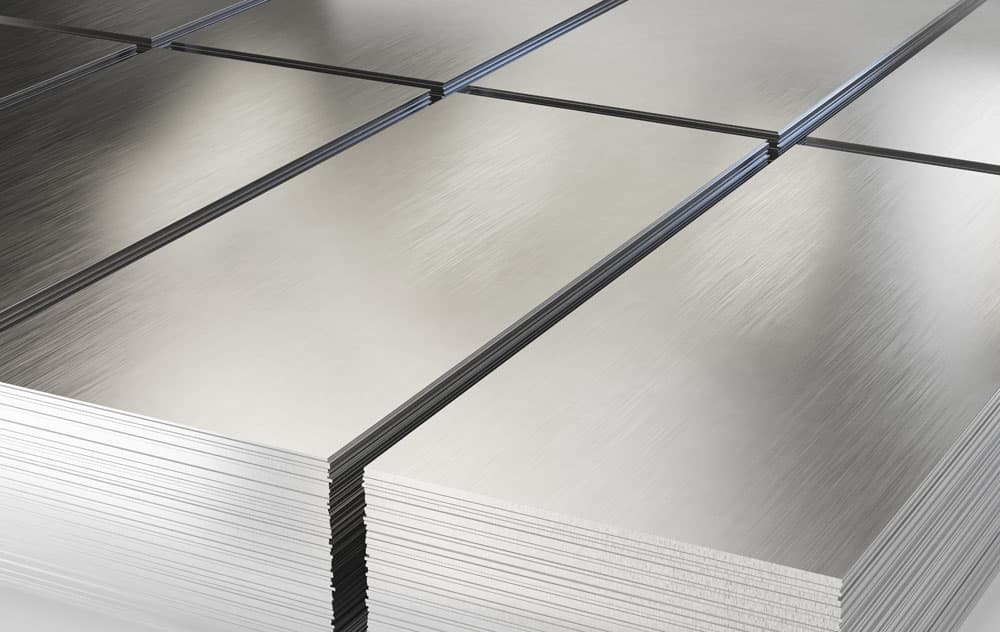
304/304L Stainless Steel Sheet
The most versatile and widely used alloy in the stainless steel family. Excellent corrosion resistance and formability.
316/316L Stainless Steel Coil
Molybdenum-bearing grade, second most sought after grade next to 304. Higher resistance to corrosion in chloride environments.
201/304 Stainless Steel Round Pipe
Versatile 201/304 stainless round pipe with solid corrosion resistance and formability for structural and decorative applications.