

Stainless Steel Machinability: Practical Guidance for Fabricators
Stainless Steel Machinability: Practical Guidance for Fabricators
Machining stainless steel is routine in precision fabrication shops—but it’s rarely straightforward. Unlike carbon steels or aluminum, stainless grades respond differently to cutting forces, heat, and tool wear. For fabricators and OEMs running high-mix, low-to-medium volume jobs, poor machinability assumptions lead to unplanned downtime, inconsistent surface finishes, scrapped parts, and inflated labor costs. This post cuts through generalizations and delivers actionable insights—based on real shop-floor experience—on selecting, preparing, and machining stainless steel effectively.
Why Stainless Steel Is More Demanding to Machine
Stainless steels are inherently tougher and more work-hardening than many common metals. Austenitic grades like 304 and 316, for example, exhibit rapid strain hardening at the shear zone: the material hardens as it’s being cut, increasing resistance to subsequent passes and accelerating tool wear. Their low thermal conductivity further compounds the issue—heat doesn’t dissipate quickly from the cutting zone, concentrating stress on inserts and promoting built-up edge (BUE). Martensitic and duplex grades present their own challenges: higher hardness requires more rigid setups, while ferritic grades can suffer from poor chip control and vibration sensitivity. These aren’t theoretical concerns—they translate directly into spindle load spikes, premature insert failure, and dimensional drift across long production runs.
Grade Selection Has Direct Machining Consequences
Not all stainless steels are created equal for machining. While 304 remains the default for corrosion resistance, its poor machinability often makes it a suboptimal choice for high-precision turning or milling unless throughput is secondary to material cost. Consider alternatives:
-
303: Contains sulfur additions that break up chips and reduce friction. Ideal for high-volume, bar-fed CNC turning—especially for fittings, valves, and fasteners. Note: Sulfur reduces weldability and corrosion resistance in aggressive environments.
-
416 and 420F: Free-machining martensitic grades offering better hardness retention and surface finish in threaded components and shafts. Suitable where moderate corrosion resistance and post-machining heat treatment are acceptable.
-
1.4404 (316L): Lower carbon improves weldability but slightly worsens machinability versus standard 316. Still preferred when chloride exposure is expected—just expect ~15–20% lower metal removal rates than 303 under identical conditions.
Always confirm the mill-supplied condition: annealed material machines more predictably than cold-drawn or hot-finished bars, which may have variable hardness and residual stress affecting runout and chatter.
Critical Process Parameters—Beyond Feed and Speed
Tool life and part accuracy hinge on consistent process control—not just initial setup. Key parameters include:
-
Cutting speed (SFM): Austenitics typically perform best between 80–180 SFM depending on grade and tool geometry. Running too fast causes rapid flank wear; too slow increases work hardening. Use manufacturer-recommended speeds as starting points—and log actual spindle load during first-article runs.
-
Chip control: Continuous, stringy chips impede coolant delivery and cause re-cutting. Optimize feed rate and depth of cut to generate broken, compact chips. For turning, use positive-rake inserts with chipbreakers designed specifically for stainless (e.g., ISO code SNMG with ‘M’ or ‘P’ chipbreaker geometry).
-
Coolant application: Flood coolant is strongly recommended—not mist. Use high-pressure (70–100 bar), through-tool delivery where possible to penetrate the heat-affected zone and flush chips away from the cut. Water-soluble coolants with >8% concentration and rust inhibitors perform reliably; avoid straight oils unless required for specific finishing requirements.
-
Rigidity matters: Deflection in tooling or workholding directly affects surface integrity and tolerance hold. Use short-overhang toolholders, carbide-shanked collets, and minimize unsupported length—especially for deep drilling or threading operations.
Tooling Strategy: Matching Geometry and Coating
Standard HSS or uncoated carbide tools will degrade rapidly on stainless. Prioritize:
-
Substrate: Fine-grain, high-cobalt carbide (e.g., C-2 or C-3 class) offers toughness and thermal stability.
-
Coating: TiAlN (titanium aluminum nitride) provides excellent oxidation resistance above 800°C and reduces friction. Newer AlCrN coatings show promise in reducing BUE on austenitics during continuous cutting.
-
Geometry: Positive rake angles (6°–12°) reduce cutting force and heat generation. Sharp, honed edges improve surface finish but require stable setups; for interrupted cuts, consider a slight hone or T-land for edge durability.
Avoid excessive nose radius on finishing passes—it increases heat and can cause smearing. A 0.4–0.8 mm radius balances strength and finish for most applications.
Post-Machining Considerations That Affect Final Quality
Machining isn’t complete when the part leaves the machine. Residual stresses from uneven cutting forces or inadequate support can cause distortion during storage or secondary operations. Stress-relieving via low-temperature annealing (e.g., 1050°C for 304, followed by rapid quench) is rarely needed for most fabricator-level work—but if parts consistently warp after cleaning or passivation, residual stress should be investigated.
Also verify final surface integrity: stainless surfaces compromised by grinding burns, smeared layers, or embedded iron particles won’t achieve full passive film formation—even after chemical passivation. Use ferroxyl testing or water-break tests post-cleaning to validate cleanliness before final inspection.
Conclusion
Stainless steel machinability isn’t about finding a single “best” grade or tool—it’s about aligning material condition, process parameters, and tooling strategy to your specific part geometry, volume, and functional requirements. Start with free-machining variants where permitted by service environment. Monitor spindle load and chip morphology—not just dimensional output—to catch deviations early. And treat coolant not as an accessory, but as a critical process fluid requiring regular concentration checks and filtration. With disciplined attention to these fundamentals, stainless steel machining shifts from a reliability risk to a repeatable, cost-controlled operation.
Ready to source stainless steel?
Talk to a manufacturer that replies within 24 hours.
Get factory-direct pricing, export packing support, and application guidance for sheets, coils, and pipes from Ruixing.
Featured Products
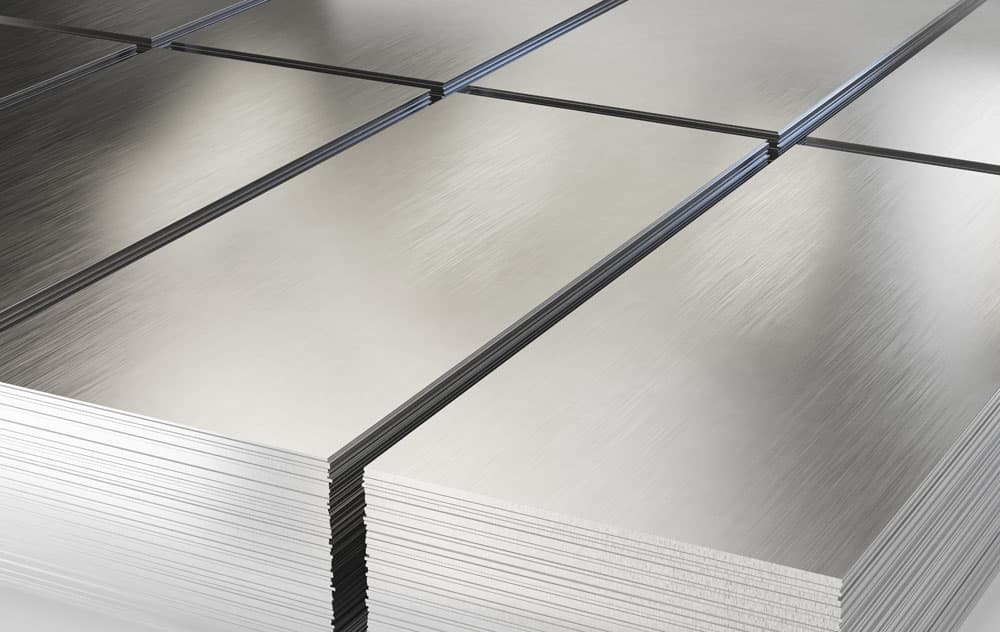
304/304L Stainless Steel Sheet
The most versatile and widely used alloy in the stainless steel family. Excellent corrosion resistance and formability.
316/316L Stainless Steel Coil
Molybdenum-bearing grade, second most sought after grade next to 304. Higher resistance to corrosion in chloride environments.
201/304 Stainless Steel Round Pipe
Versatile 201/304 stainless round pipe with solid corrosion resistance and formability for structural and decorative applications.