


Stainless Steel Mechanical Properties: Strength, Ductility, and Fabrication Limits
Stainless Steel Mechanical Properties: Strength, Ductility, and Fabrication Limits
For industrial buyers, importers, fabricators, and OEMs, mechanical properties are the bridge between material specification and real-world performance. While corrosion resistance or surface finish often dominate early conversations, it’s tensile strength, yield behavior, ductility, and hardness that determine whether a stainless steel component survives stamping, bending, high-pressure service, or thermal cycling — without cracking, springback, or premature fatigue.
This post outlines key mechanical properties relevant to procurement and fabrication decisions — grounded in ASTM A240, A276, and EN 10088-2 standards — and explains how they interact across common austenitic, ferritic, and duplex families.
Tensile Strength vs. Yield Strength: Why Both Matter
Tensile strength (UTS) is the maximum stress a material withstands before fracture. Yield strength (YS) marks the onset of permanent plastic deformation. In stainless steel, the ratio of YS to UTS — known as the yield-to-tensile ratio — affects formability and structural reliability.
- Austenitic grades (e.g., 304, 316) typically have YS/UTS ratios of 0.45–0.60. Their relatively low yield point allows deep drawing and cold forming but requires careful tooling design to control springback.
- Ferritic grades (e.g., 430, 444) exhibit higher YS/UTS ratios (0.70–0.85), limiting elongation during bending but improving dimensional stability after forming.
- Duplex steels (e.g., UNS S32205/S32202) combine high YS (~450–550 MPa) with good UTS (~620–750 MPa), enabling thinner-section designs in pressure vessels or offshore components — provided welding and heat input are tightly controlled.
Note: Cold work significantly elevates both YS and UTS in austenitics (e.g., 304 in 1/4H temper gains ~200 MPa YS over annealed condition), but at the cost of reduced ductility. Buyers specifying cold-rolled strip must confirm temper designation and verify elongation values for their intended bending radius.
Elongation and Reduction of Area: Predicting Formability Limits
Elongation (%) measures uniform strain before necking; reduction of area (%) reflects localized ductility at fracture. These values are critical for stretch-forming, roll-bending, or hydroforming applications.
- Standard annealed 304 plate (ASTM A240) shows ~40% elongation in 50 mm; thin gauge cold-rolled 304 may drop to 15–25%, depending on reduction level.
- Grade 441 ferritic offers only ~20–22% elongation — acceptable for simple flanging but risky for complex draw operations.
- Super duplex (S32750) maintains ~25% elongation despite high strength, thanks to its dual-phase microstructure — making it viable for high-integrity forged fittings where both strength and limited cold work are required.
Fabricators should cross-check elongation data against minimum bend radii per EN 10052 or ASTM A480. For example, 316L sheet at 1.5 mm thickness with 35% elongation generally supports an inside bend radius ≥ 0.8× material thickness; below that, edge cracking risk rises sharply unless annealing is scheduled post-forming.
Hardness: A Proxy for Process Suitability
Hardness (measured in HB, HRB, or HV) correlates with machinability, wear resistance, and susceptibility to galling during threading or fastening. It’s also used to verify proper solution annealing — especially after welding or cold work.
- Annealed 304 typically reads 180–200 HB; cold-worked variants can exceed 280 HB.
- Ferritic 430 ranges from 140–190 HB — softer than austenitics but more prone to galling under sliding contact.
- Duplex 2205 sits near 220–250 HB — requiring carbide tooling and lower feed rates versus carbon steel, but offering better chip breakability than 316.
Importantly, hardness alone doesn’t indicate strength class. A 316 part heat-treated to 1050°C + water quench will show similar hardness to one aged at 475°C — but the latter suffers severe embrittlement. Always verify full heat treatment history alongside hardness reports.
Impact Toughness: Not Just for Low-Temperature Service
Charpy V-notch impact energy (J at specified temperature) reflects resistance to brittle fracture — essential for equipment exposed to shock loading, cyclic stress, or sub-zero environments. Unlike carbon steels, most stainless grades retain toughness down to −196°C if properly processed.
- Annealed 304 and 316 achieve >100 J at −196°C when grain size is controlled and delta ferrite minimized.
- Ferritic 444 shows reduced low-temperature toughness (<30 J at −40°C) due to body-centered cubic lattice limitations — limiting use in cryogenic piping or LNG components.
- Duplex grades meet ASTM A923 requirements for toughness only if solution annealing is followed by rapid cooling (≤10°C/s) to suppress sigma phase formation. Buyers ordering duplex forgings or weldments should require Charpy verification at −46°C minimum.
Practical Selection Guidance for Buyers and Fabricators
- For deep-drawn enclosures: Prioritize 304 or 316 with documented minimum 38% elongation and <200 HB — and confirm mill anneal cycle includes full re-solutionizing, not just stress relief.
- For structural frames requiring high stiffness-to-weight: Consider lean duplex (S32101) with guaranteed YS ≥ 450 MPa and elongation ≥ 25%. Confirm tensile test reports include both transverse and longitudinal samples.
- For threaded fasteners: Specify hardness limits aligned with ISO 3506 (e.g., A2-70 = 200–250 HV). Avoid uncontrolled cold heading of 304 — it invites hydrogen-assisted cracking in chloride-rich settings.
- When substituting grades: Never assume mechanical equivalence across families. Re-validate bending tests, torque-tension curves, and fatigue life — even for chemically similar alternatives.
Mechanical property data is not static. It depends on melt practice, hot/cold working parameters, heat treatment consistency, and sampling location. Always request certified test reports with lot-specific tensile, hardness, and impact results — not generic datasheet values.
Conclusion
Mechanical properties define how stainless steel behaves under force — from initial tool contact through end-use service. Relying solely on grade designation or nominal composition overlooks critical variances introduced during production. Buyers who engage suppliers on specific mechanical requirements — and verify them with traceable test data — reduce fabrication scrap, avoid field failures, and optimize lifecycle cost. In 2026’s tighter supply environment, precision in specification is no longer optional — it’s foundational to reliability.
Ready to source stainless steel?
Talk to a manufacturer that replies within 24 hours.
Get factory-direct pricing, export packing support, and application guidance for sheets, coils, and pipes from Ruixing.
Featured Products
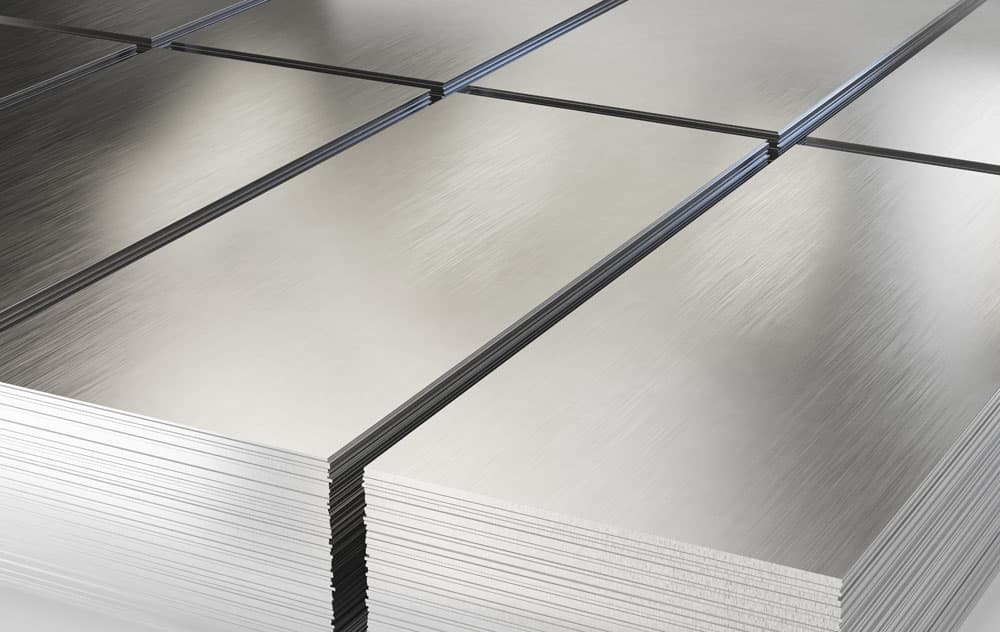
304/304L Stainless Steel Sheet
The most versatile and widely used alloy in the stainless steel family. Excellent corrosion resistance and formability.
316/316L Stainless Steel Coil
Molybdenum-bearing grade, second most sought after grade next to 304. Higher resistance to corrosion in chloride environments.
201/304 Stainless Steel Round Pipe
Versatile 201/304 stainless round pipe with solid corrosion resistance and formability for structural and decorative applications.