

Stainless Steel Mill Certifications: What Buyers Must Verify
When sourcing stainless steel for critical industrial applications—pressure vessels, food processing equipment, pharmaceutical systems, or offshore components—material certification isn’t optional. It’s the foundational proof that the supplied coil, plate, or bar meets specified chemical composition, mechanical properties, and manufacturing history. Yet many procurement teams treat mill certificates as routine paperwork rather than actionable quality documentation. This post clarifies what mill certifications are, which types matter most for B2B buyers, how to verify their validity, and what to do when discrepancies arise.
What Is a Mill Certificate—and Why It’s Not Just Paperwork
A mill certificate (also called a mill test report or MTR) is an official document issued by the stainless steel producer at the time of final heat treatment and testing. It certifies conformance to a specific standard (e.g., ASTM A240, EN 10088-2) and includes:
- Heat number (unique identifier for the molten batch)
- Grade designation (e.g., 304, 316L, 2205)
- Chemical composition (verified via spectrographic analysis)
- Mechanical properties (tensile strength, yield strength, elongation, hardness)
- Dimensional verification (thickness, width, length where applicable)
- Heat treatment condition (e.g., annealed, solution-annealed, pickled)
- Applicable standard(s) and revision year
Crucially, the heat number links physical material to its documented history—enabling full traceability through fabrication, welding, and service life. For regulated sectors (ASME BPVC, PED, FDA, or ISO 13485), missing or incomplete mill certs can invalidate inspection records or halt project approval.
Type 3.1 vs. Type 3.2: Know the Difference Before You Specify
EN 10204 defines four certificate types; for stainless steel, Types 3.1 and 3.2 are most common in industrial supply. Their distinction affects accountability and verification rigor:
-
Type 3.1: Issued by the manufacturer’s authorized inspection representative—not necessarily independent. Confirms compliance based on the producer’s own test results. Accepted for most non-safety-critical applications.
-
Type 3.2: Includes results from both the manufacturer and an independent third-party inspector (e.g., TÜV, Bureau Veritas, SGS). Required for ASME Section VIII Div. 1 pressure parts, nuclear components, and certain aerospace or marine uses.
Buyers must specify the required type in the purchase order, not after delivery. Adding Type 3.2 retroactively is rarely possible—third-party verification occurs during production, not post-facto.
Key Data Points to Validate—Not Just Read
A mill certificate may look complete but still conceal inconsistencies. Industrial buyers should cross-check three core elements before accepting material:
-
Heat Number Consistency: Verify it matches the marking on the coil tag, bundle label, or plate stamp. Discrepancies indicate potential mix-ups—especially common with multi-heat shipments or cut-to-length orders.
-
Chemical Composition Against Grade Requirements: Don’t just scan percentages. Confirm carbon, chromium, nickel, molybdenum, and nitrogen values meet the minimum and maximum limits in the referenced standard. For example, 316L requires ≤0.03% C—exceeding this invalidates the “L” designation and may compromise weld corrosion resistance.
-
Mechanical Properties at Specified Condition: Yield strength listed for annealed 304 must reflect the typical range (≥205 MPa); if reported as 350 MPa, the material may have been cold-worked unintentionally—or the test was misreported.
If any element fails verification, request retesting or reject the lot. Reputable suppliers will provide clarification or replacement without delay.
When Certs Are Missing, Incomplete, or Non-Compliant
Occasionally, shipments arrive with no mill certificate, an unsigned copy, or one referencing obsolete standards (e.g., ASTM A240-04 instead of -23). Here’s how to respond:
-
No certificate: Treat as non-conforming. Do not proceed to fabrication. Request immediate issuance—or initiate a deviation process only if your QA system permits and risk assessment supports it.
-
Unsigned or unsealed: Not legally valid. Require original, stamped, and signed documentation. Scans or PDFs without digital signatures are insufficient for audit purposes.
-
Outdated standard reference: Confirm whether the material was actually produced to current requirements. Some mills use legacy certs for older stock. Ask for a supplemental statement confirming equivalency to the latest revision.
Maintain a log of certificate issues per supplier—this informs future vendor scorecards and contract negotiations.
Integrating Cert Verification into Procurement Workflow
To avoid delays and rework, embed certification checks early:
- Include required certificate type and standard revision in RFQs and PO terms.
- Assign responsibility for initial review (e.g., QA engineer or materials planner) before goods receipt.
- Store digital copies with metadata (heat number, PO#, date received) in a searchable archive—linked to inventory records.
- Audit a sample of certs quarterly for consistency, especially after supplier changes or new grade introductions.
For high-volume fabricators, consider requiring electronic MTRs (e-MTRs) with machine-readable heat numbers—enabling automated validation against ERP or MES systems.
Conclusion
Mill certifications are not administrative overhead—they’re evidence of material integrity and contractual compliance. For buyers managing complex supply chains or delivering to regulated end markets, verifying these documents protects against costly rework, project delays, and compliance failures. Focus on heat traceability, correct certificate type, and data-level validation—not just presence. Partner with suppliers who issue accurate, timely, and auditable MTRs—and make certification verification a non-negotiable step in every stainless steel procurement cycle.
Ready to source stainless steel?
Talk to a manufacturer that replies within 24 hours.
Get factory-direct pricing, export packing support, and application guidance for sheets, coils, and pipes from Ruixing.
Featured Products
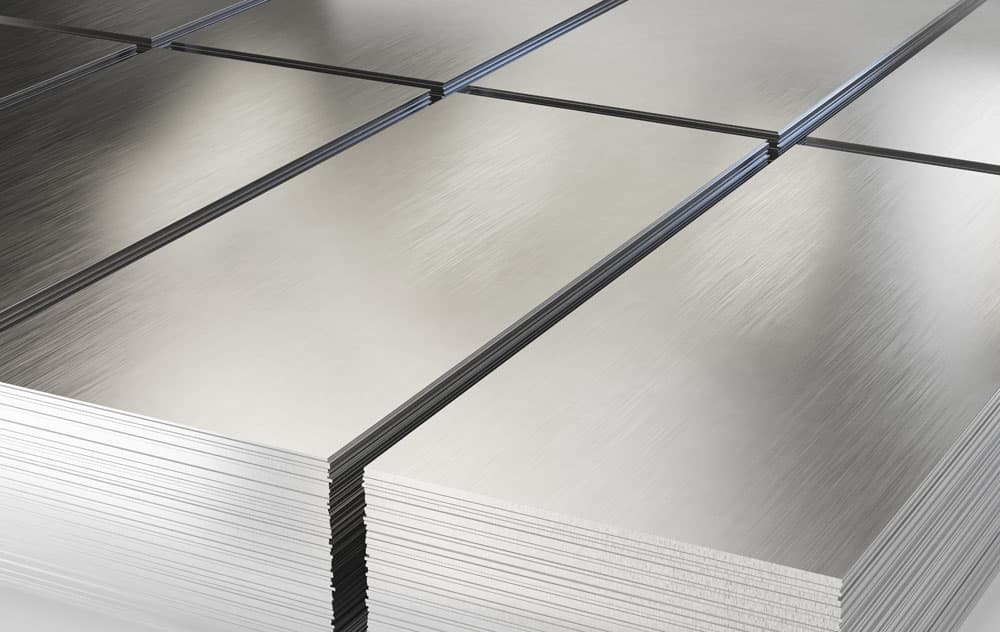
304/304L Stainless Steel Sheet
The most versatile and widely used alloy in the stainless steel family. Excellent corrosion resistance and formability.
316/316L Stainless Steel Coil
Molybdenum-bearing grade, second most sought after grade next to 304. Higher resistance to corrosion in chloride environments.
201/304 Stainless Steel Round Pipe
Versatile 201/304 stainless round pipe with solid corrosion resistance and formability for structural and decorative applications.