

Stainless Steel Passivation: A Practical Guide for Buyers and Fabricators
Stainless Steel Passivation: A Practical Guide for Buyers and Fabricators
Passivation is not optional finishing — it’s essential quality assurance. For industrial buyers, importers, fabricators, and OEMs, understanding when, how, and what to verify about passivation directly impacts product longevity, compliance, and field performance. Unlike surface coatings or plating, passivation is a chemical treatment that enhances the natural oxide layer on stainless steel. Yet many procurement specs omit verification criteria, leading to premature rust, rejection at customer sites, or costly rework.
This guide focuses on practical implementation — grounded in ASTM A967 and AMS 2700 — and addresses real-world gaps between specification language and shop-floor execution.
Why Passivation Matters Beyond the Spec Sheet
Stainless steel relies on a chromium-rich passive film (typically 1–3 nm thick) for corrosion resistance. But machining, grinding, welding, handling, and even stamping can embed free iron, disrupt the oxide layer, or leave scale and contaminants. These defects create localized galvanic cells, initiating pitting or rust — especially in humid, saline, or chloride-rich environments.
A part may meet all dimensional, material grade, and tensile requirements but still fail corrosion testing if passivated improperly or not at all. In pharmaceutical, food processing, and semiconductor applications, non-compliant passivation can trigger full batch rejection under FDA, ASME BPE, or SEMI standards.
When Passivation Is Required — and When It’s Not
Passivation is mandatory after any operation that:
- Introduces free iron (e.g., carbon steel tool contact, abrasive blasting with contaminated media)
- Disrupts the surface (e.g., grinding, milling, plasma cutting, mechanical polishing)
- Leaves heat tint or oxide scale (e.g., welding without proper shielding or post-weld cleaning)
It is not required for newly purchased, mill-finished bar, sheet, or plate — provided it hasn’t been handled with ferrous tools or exposed to contamination. However, many fabricators apply passivation as a standard step regardless; buyers should clarify whether it’s included — and whether it’s verified — in their purchase order.
Note: Electropolishing provides both surface smoothing and passivation, but it’s not interchangeable with chemical passivation for all applications. Electropolishing removes more material and alters tolerances — making it unsuitable where tight dimensional control is critical.
Two Main Methods: Nitric vs. Citric Acid
ASTM A967 permits several passivation methods, but two dominate industrial practice:
Nitric Acid (Types I, II, VI)
- Traditional method, widely accepted in aerospace (AMS 2700) and regulated industries
- Effective at removing free iron and enhancing Cr/Fe ratio
- Requires strict fume control, neutralization, and wastewater treatment
- Not suitable for high-copper or high-sulfur alloys (e.g., 303, 416) due to intergranular attack risk
Citric Acid (Type VII)
- Increasingly preferred for environmental, safety, and operational reasons
- Lower toxicity, biodegradable, no nitrogen oxide emissions
- Better selectivity: removes free iron without significant base metal dissolution
- Validated for most austenitic (304, 316), ferritic (430), and duplex (2205) grades
- Requires precise concentration (4–10% wt), temperature (60–70°C), and time (10–60 min) control
Buyers specifying citric passivation must define concentration, temperature, immersion time, and rinse protocol — vague references like “citric acid passivation per ASTM” are insufficient for consistent results.
What to Verify Before Acceptance
Specifying passivation isn’t enough. Verification ensures it was performed correctly. Key checkpoints:
- Pre-cleaning validation: Parts must be grease-, oil-, and particle-free before immersion. Request evidence of alkaline soak or vapor degreasing logs.
- Solution monitoring: Citric baths degrade with use; suppliers should track pH, concentration (via titration), and total dissolved solids. Nitric baths require heavy metal and iron content checks.
- Post-passivation testing: At minimum, perform water-break-free (WBF) testing per ASTM A380 to confirm hydrophilic, contaminant-free surfaces. For critical applications, add copper sulfate or high-humidity salt spray (ASTM B117) testing.
- Documentation: Require a signed certificate listing lot numbers, process parameters, test methods, and results. Digital records with timestamps are preferable to handwritten logs.
Avoid accepting ‘passivation certificates’ that only state “per ASTM A967” without parameter details. That’s not verification — it’s a placeholder.
Common Pitfalls — and How to Avoid Them
- Overlooking heat tint: Weld discoloration (straw to blue) indicates chromium depletion. Passivation alone won’t restore corrosion resistance. Specify post-weld cleaning (e.g., pickling gel or electrochemical removal) before passivation.
- Using contaminated racking: Wire hangers or baskets made from carbon steel introduce free iron during immersion. Confirm racking is non-ferrous (e.g., titanium or passivated 316).
- Inadequate rinsing: Residual acid trapped in crevices or blind holes leads to flash rust within hours. Specify multiple deionized water rinses with conductivity <10 µS/cm.
- Assuming ‘stainless’ = ‘self-passivating’: While stainless steel reforms its oxide layer in air, that process is slow and incomplete on contaminated or damaged surfaces. Relying on atmospheric re-passivation invites early failure.
Conclusion
Passivation is a small process step with outsized consequences. For buyers, it’s a quality gate — not a checkbox. For fabricators, it’s a value-add that reduces warranty claims and strengthens OEM relationships. The key is specificity: define the method, parameters, pre-treatment, and verification — then hold suppliers accountable with auditable data. When procuring stainless components, treat passivation like tensile testing: non-negotiable, traceable, and validated.
If your current supplier cannot provide time-stamped bath logs, WBF test photos, or rinse water conductivity reports, it’s time to revisit your quality requirements — before corrosion appears on the production floor.
Ready to source stainless steel?
Talk to a manufacturer that replies within 24 hours.
Get factory-direct pricing, export packing support, and application guidance for sheets, coils, and pipes from Ruixing.
Featured Products
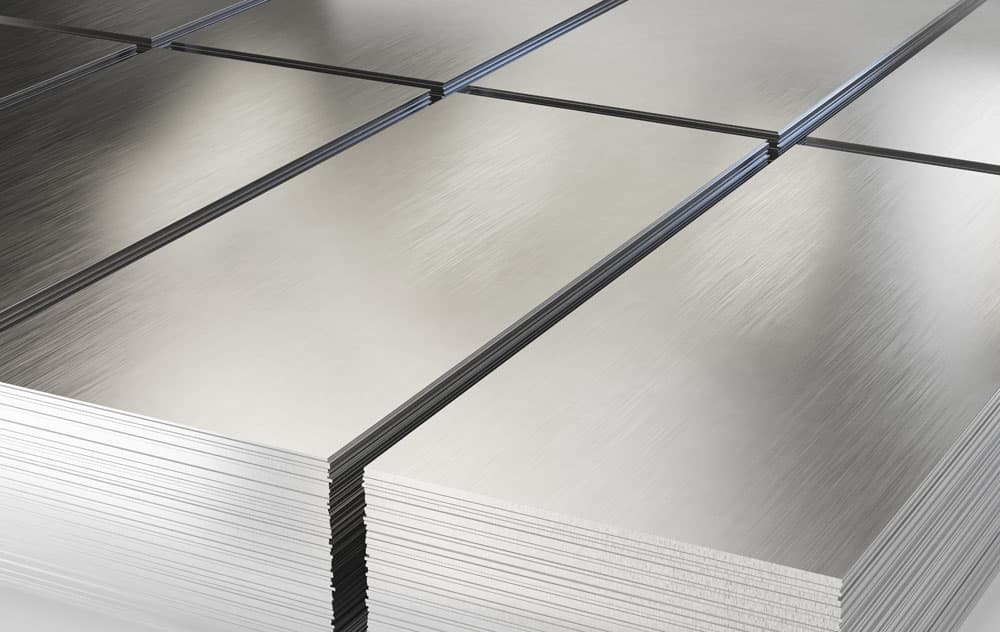
304/304L Stainless Steel Sheet
The most versatile and widely used alloy in the stainless steel family. Excellent corrosion resistance and formability.
316/316L Stainless Steel Coil
Molybdenum-bearing grade, second most sought after grade next to 304. Higher resistance to corrosion in chloride environments.
201/304 Stainless Steel Round Pipe
Versatile 201/304 stainless round pipe with solid corrosion resistance and formability for structural and decorative applications.