

Stainless Steel Machinability: What Fabricators Need to Know
Stainless Steel Machinability: What Fabricators Need to Know
Selecting the right stainless steel grade is only half the battle — how that material behaves under cutting tools determines real-world productivity, cost, and part integrity. Unlike carbon steels or aluminum, stainless steels vary widely in machinability due to differences in alloy composition, microstructure, work hardening rate, and thermal conductivity. For fabricators running high-mix, low-to-medium volume production — especially those serving OEMs in food processing, medical device, and fluid control sectors — misjudging machinability can lead to premature tool wear, inconsistent tolerances, poor surface finish, or unplanned downtime.
This post outlines practical, evidence-based considerations for evaluating and managing stainless steel machinability — not theoretical metrics, but factors that directly impact shop-floor decisions on tooling, feeds/speeds, coolant strategy, and grade selection.
Why Stainless Steel Machinability Isn’t One-Size-Fits-All
Machinability is commonly expressed as a relative percentage compared to free-machining B1112 steel (100%). But this number alone is misleading without context. For example:
- Austenitic grades (e.g., 304, 316) typically range from 30–40% machinability. Their high ductility and rapid work hardening cause built-up edge, galling, and heat retention — especially problematic in turning and threading.
- Ferritic grades (e.g., 430) sit around 60–70%, benefiting from lower work hardening and better thermal conductivity than austenitics — though brittleness can cause chipping in interrupted cuts.
- Martensitic grades (e.g., 410, 420) reach 50–65% when annealed, but drop significantly after hardening. Machining is usually done in the soft condition; post-heat-treat grinding becomes necessary for precision features.
- Duplex (e.g., 2205) and super duplex (e.g., 2507) fall between 20–35%. Their high strength and abrasive sigma phase accelerate tool wear — particularly in drilling and milling.
- Free-machining variants (e.g., 303, 416, 430F) improve chip breakability via sulfur or selenium additions. While machinability jumps to 70–85%, these elements reduce corrosion resistance and weldability — making them unsuitable where pitting or crevice corrosion is a concern.
Crucially, machinability isn’t fixed. It shifts with heat treatment condition, cold work level, and even lot-to-lot variation in inclusion morphology.
Key Physical Drivers of Machining Performance
Three interrelated properties dominate stainless steel’s response to machining:
- Work Hardening Rate: Austenitics harden rapidly at the shear zone, increasing local hardness by up to 50% in one pass. This raises cutting forces, accelerates flank wear, and risks dimensional drift in multi-pass operations.
- Thermal Conductivity: Stainless steels conduct heat poorly (15–20 W/m·K vs. ~50 for carbon steel). Heat concentrates at the tool tip rather than dissipating into the chip or workpiece — accelerating diffusion wear and cratering.
- Chip Formation & Breakage: Long, stringy chips (common in 304/316) obstruct coolant delivery, increase tangling risk, and interfere with automated handling. Free-machining grades promote segmented chips — but their non-metallic inclusions can erode carbide edges over time.
These traits compound: poor heat dissipation + rapid work hardening = higher cutting temperatures, which further degrade tool coatings and substrate integrity.
Practical Strategies for Consistent Results
Fabricators who achieve repeatable outcomes apply a tiered approach:
- Tooling Selection: Use fine-grain, cobalt-enhanced carbide inserts with PVD TiAlN or AlCrN coatings. Avoid uncoated or older TiN tools. For drilling, opt for parabolic-flute or through-coolant drills with optimized point geometry — especially for deep holes in 316 or duplex.
- Cutting Parameters: Prioritize moderate speeds (60–120 m/min for turning, depending on grade and tool) with higher feed rates (0.15–0.3 mm/rev) over aggressive depth-of-cut. Lighter, faster passes reduce heat buildup and mitigate work hardening effects.
- Coolant Application: Flood coolant remains effective, but high-pressure (70+ bar), directed-through-tool delivery improves chip evacuation and localized cooling — particularly for milling and internal turning. Avoid soluble oils with high chlorine content on high-Mo grades (e.g., 316, 2205) to prevent stress corrosion cracking in residual films.
- Fixturing & Rigidity: Minimize vibration with short tool overhangs, rigid setups, and balanced chucks. Vibration amplifies chatter in austenitics and promotes premature insert fracture in duplex.
When to Consider Grade Substitution — and When Not To
If a part design permits, substituting 304 with 303 may cut cycle time by 25–40% and extend tool life 2–3× — but only if corrosion exposure is limited (e.g., interior brackets, non-sanitary housings). Similarly, using 2205 instead of 316 in high-pressure valve bodies justifies its lower machinability because its yield strength allows thinner walls — reducing total material removal volume.
However, avoid substitution in applications involving welding, cyclic loading, or aggressive chemical environments unless validated per ASTM A967 (passivation) and ASTM G48 (pitting resistance). Never replace a corrosion-resistant grade with a free-machining variant for parts exposed to chlorides or sterilization cycles.
Conclusion
Stainless steel machinability is a systems property — not a spec sheet footnote. It emerges from interactions between metallurgy, tooling, machine capability, and process control. Fabricators who treat it as such — aligning grade choice with actual shop-floor constraints, validating parameters on first-article runs, and tracking tool wear trends by grade and lot — gain measurable advantages in throughput, scrap reduction, and quoting accuracy. For buyers and OEMs, specifying machinability requirements (e.g., “must be suitable for high-volume CNC turning with standard carbide tooling”) alongside mechanical and corrosion specs provides suppliers clearer direction — and avoids downstream surprises during production ramp-up.
As automation expands in mid-tier fabrication shops, consistent machinability will increasingly define supply chain resilience — not just material availability.
¿Listo para abastecerte de acero inoxidable?
Habla con un fabricante que responde en 24 horas.
Obtén precio directo de fábrica, soporte de embalaje de exportación y orientación técnica para láminas, bobinas y tuberías.
Productos destacados
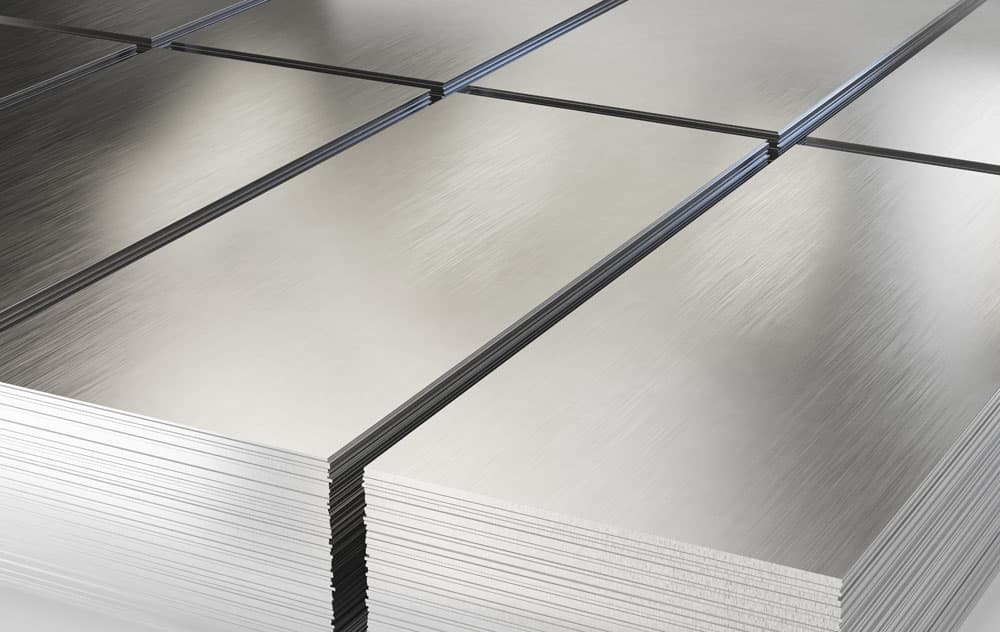
Lámina de acero inoxidable 304/304L
La aleación más versátil y utilizada. Excelente resistencia a la corrosión y formabilidad.
Bobina de acero inoxidable 316/316L
Grado con molibdeno y mayor resistencia a la corrosión en ambientes con cloruros.
Tubería redonda de acero inoxidable 201/304
Tubería redonda versátil en 201/304 con buena resistencia a la corrosión y formabilidad para usos estructurales y decorativos.