


Stainless Steel Mechanical Properties: A Buyer's Specification Guide
Stainless Steel Mechanical Properties: A Buyer's Specification Guide
When sourcing stainless steel for industrial applications—whether for pressure vessels, structural supports, food processing equipment, or OEM components—mechanical properties are often the decisive factor in material selection. Unlike aesthetic or corrosion-related considerations, mechanical properties directly impact manufacturability, load-bearing capacity, fatigue resistance, and long-term service reliability. Yet many buyers rely on generic grade names (e.g., “304” or “316”) without verifying how condition (annealed, cold-worked, solution-treated), thickness, or heat treatment affects actual performance.
This guide clarifies the core mechanical properties relevant to procurement decisions—and explains how to interpret mill test reports (MTRs), align specs with fabrication needs, and avoid costly mismatches between purchase order language and delivered material.
Tensile Strength vs. Yield Strength: Why Both Matter
Tensile strength (UTS) is the maximum stress a material withstands before fracture. Yield strength (YS) is the stress at which permanent deformation begins. For stainless steel, the ratio of YS to UTS is typically higher than in carbon steels—especially in cold-worked grades—meaning less ductility reserve after yielding.
- Annealed austenitic grades (e.g., 304 Annealed): YS ≈ 205 MPa, UTS ≈ 515 MPa → YS/UTS ≈ 0.40
- Cold-drawn 304: YS ≈ 700 MPa, UTS ≈ 850 MPa → YS/UTS ≈ 0.82
A buyer specifying only “304 stainless” without condition may receive annealed plate unsuitable for high-strength fasteners—or cold-worked bar that’s too brittle for deep drawing. Always pair grade with condition (e.g., “304, ASTM A240, 2B finish, Annealed”) and reference the applicable standard’s minimum mechanical requirements.
Elongation: The Ductility Indicator
Elongation (measured as % increase in length at fracture) reflects formability and crack tolerance under dynamic or thermal cycling loads. It decreases significantly with cold work and varies by thickness: thinner gauges often show higher elongation due to reduced centerline segregation.
- Per ASTM A240, 304 sheet (≤ 3 mm) requires ≥ 40% elongation in 50 mm; thicker plate (≥ 25 mm) only requires ≥ 30%.
- Duplex grades (e.g., UNS S32205) have lower elongation (≥ 25%) but higher strength—making them appropriate for weight-sensitive, high-pressure applications where some ductility trade-off is acceptable.
If your process involves bending, roll forming, or expansion joint fabrication, confirm elongation values match the bend radius and strain level—not just the nominal grade.
Hardness: Beyond Surface Feel
Hardness (measured in HB, HRB, or HV) correlates with wear resistance, machinability, and resistance to galling—but isn’t interchangeable with strength. Two batches of 316L can meet identical tensile specs yet differ in hardness due to cooling rate variations or minor composition shifts.
- Annealed 316L typically reads 90–100 HB; cold-worked variants range from 150–220 HB.
- Excessive hardness (>230 HB) in austenitic grades may indicate unintended sensitization or improper solution annealing—raising corrosion risk in welded assemblies.
For OEMs specifying parts requiring post-machining surface integrity (e.g., hydraulic manifolds), include hardness limits in purchase orders—and verify they’re reported on MTRs alongside tensile data.
Impact Toughness: Critical for Low-Temperature Use
Unlike tensile or hardness data, impact toughness (measured via Charpy V-notch tests) is rarely listed on standard MTRs unless explicitly required. Yet it’s essential for cryogenic systems, offshore platforms, or any application below –20°C.
- Standard 304 shows sharp ductile-to-brittle transition near –196°C (liquid nitrogen), but with proper solution annealing and low interstitial content, it retains >50 J at –196°C.
- ASTM A351 CF8M castings require minimum 20 J at –46°C for API 602 compliance.
If your application operates below ambient, define impact temperature and minimum absorbed energy in technical specifications—and request certified Charpy reports, not just “impact tested” statements.
How to Read and Use Mill Test Reports Effectively
An MTR is not a certificate of conformance—it’s a data snapshot. Buyers should:
- Cross-check reported values against the exact specification cited (e.g., ASTM A240 Table 2 for 304, not Table 1 for 316).
- Confirm test method (e.g., ASTM E8 for tension, E10 for Brinell) and specimen orientation (longitudinal vs. transverse).
- Flag discrepancies >5% from specified minima—even if “within tolerance”—as they may indicate batch inconsistency affecting downstream processing.
- Retain MTRs for traceability: Fabricators welding ASME-coded vessels must archive these with weld procedure specifications.
Avoid vague terms like “commercially available properties” or “typical values.” Require certified, test-specific results tied to heat number and lot identification.
Conclusion
Mechanical properties are not abstract metrics—they’re functional constraints that shape design margins, fabrication feasibility, and field reliability. Buyers who engage with tensile strength, yield strength, elongation, hardness, and impact data at the specification stage reduce rework, avoid non-conforming shipments, and strengthen technical alignment with suppliers. Start by reviewing your next stainless steel PO: does it name the grade, condition, standard, and key mechanical thresholds—not just chemistry? That small step closes a critical gap between material receipt and successful application.
Published 2026-08-16.
¿Listo para abastecerte de acero inoxidable?
Habla con un fabricante que responde en 24 horas.
Obtén precio directo de fábrica, soporte de embalaje de exportación y orientación técnica para láminas, bobinas y tuberías.
Productos destacados
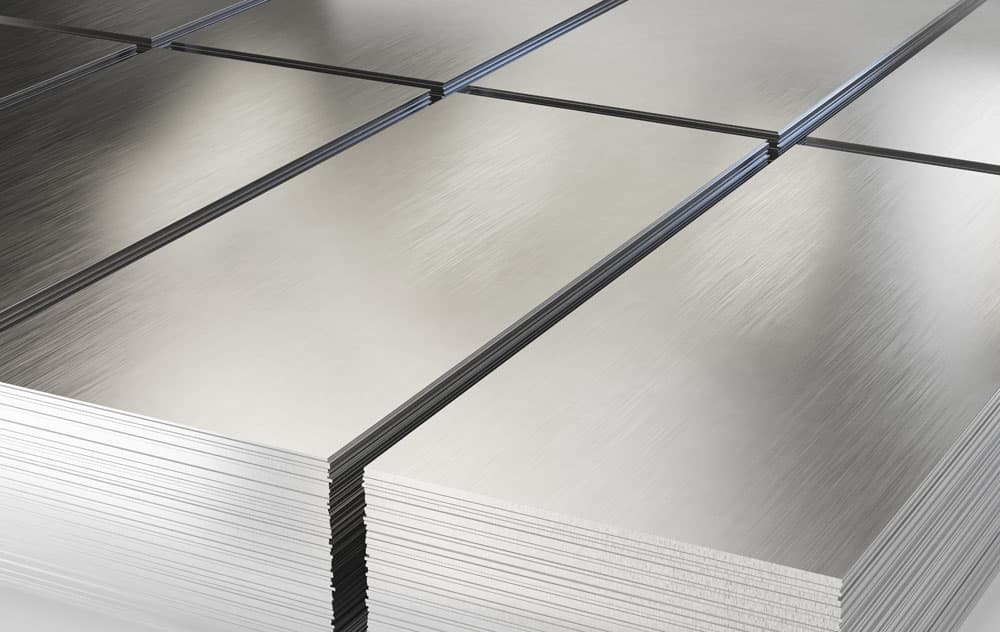
Lámina de acero inoxidable 304/304L
La aleación más versátil y utilizada. Excelente resistencia a la corrosión y formabilidad.
Bobina de acero inoxidable 316/316L
Grado con molibdeno y mayor resistencia a la corrosión en ambientes con cloruros.
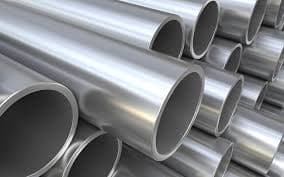
Tubería redonda de acero inoxidable 201/304
Tubería redonda versátil en 201/304 con buena resistencia a la corrosión y formabilidad para usos estructurales y decorativos.