


Stainless Steel Surface Roughness: Measuring and Specifying for Function
Why Surface Roughness Matters Beyond Aesthetics
Surface roughness is not merely a cosmetic concern—it directly affects performance in industrial applications. For food processing equipment, pharmaceutical tanks, or semiconductor tooling, a surface that’s too rough can trap contaminants or promote microbial adhesion; one that’s overly polished may increase cost without added benefit—or even reduce grip or coating adhesion. Yet many procurement and engineering teams still rely on vague finish descriptions like "2B" or "No. 4" without quantifying actual roughness values. This ambiguity leads to rework, rejection at inspection, or premature failure in service.
This post clarifies how to measure, specify, and verify stainless steel surface roughness—especially for buyers, importers, and OEMs who rely on consistent material behavior across fabrication, cleaning, and end-use.
Key Parameters: Ra vs. Rz—and Why Context Determines Which to Use
Two parameters dominate industrial specifications:
-
Ra (Arithmetic Average Roughness): The most widely used metric. It calculates the average absolute deviation of the surface profile from its mean line over a defined sampling length. Units are micrometers (µm) or microinches (µin). Ra is practical for general-purpose evaluation and aligns with most ISO and ASTM standards (e.g., ASTM E1056, ISO 4287).
-
Rz (Average Maximum Height): Measures the average distance between the five highest peaks and five lowest valleys within five sampling lengths. It’s more sensitive to outliers—like scratches or embedded particles—and is often preferred where surface integrity under mechanical stress matters (e.g., hydraulic manifolds or bearing housings).
Neither metric alone tells the full story. A low-Ra surface can still contain deep, isolated valleys missed by averaging. Conversely, a moderate-Ra value may conceal periodic waviness from improper polishing. Always pair Ra or Rz with the sampling length, cutoff length, and number of sampling lengths—all required for reproducible measurement per ISO 4288.
Typical Roughness Ranges by Common Stainless Finishes
| Finish | Typical Ra Range (µm) | Common Applications | Notes |
|---|---|---|---|
| Mill Annealed (2B) | 0.1–0.3 | General fabrication, enclosures | Baseline cold-rolled finish; minimal post-mill treatment. Variability depends on mill practice and batch. |
| No. 4 (Brushed) | 0.4–0.9 | Architectural cladding, food equipment | Achieved via abrasive belt finishing. Ra increases with coarser grit; consistency requires tight control of belt speed, pressure, and pass count. |
| BA (Bright Annealed) | 0.03–0.1 | Heat exchanger tubes, medical components | Mirror-like; requires inert-atmosphere annealing and tension leveling. Sensitive to handling damage. |
| Electropolished | 0.1–0.4 (post-EP) | Pharmaceutical vessels, bioreactors | Removes ~5–20 µm of surface layer, reducing Ra and eliminating micro-crevices. Final Ra depends on starting condition and EP duration. |
Note: These are representative ranges—not guarantees. Actual values must be verified per lot using calibrated profilometry—not visual comparison or supplier declarations alone.
How to Specify Roughness in Purchase Orders and Drawings
Vague language like "smooth finish" or "hygienic polish" invites misinterpretation. Instead, include:
- Explicit parameter: e.g., "Ra ≤ 0.6 µm, measured per ISO 4288, cutoff length 2.5 mm, sampling length 12.5 mm"
- Measurement location: Specify whether reading is taken from the center of the sheet (avoiding edge effects) or from a finished part after fabrication (where bending or welding may alter topography)
- Tolerance band: Allow ±0.1 µm for mill finishes; tighter bands (±0.05 µm) require post-process verification and carry premium cost
- Acceptance method: Require third-party certified test reports for critical applications—or define in-house verification frequency (e.g., "100% Ra check on first piece of each heat")
Avoid conflating finish type and roughness. A "No. 4 finish" does not equal "Ra = 0.6 µm"—it’s a process descriptor, not a metrology specification.
Measurement Pitfalls to Avoid
- Using portable stylus devices on curved or thin-gauge parts: Tip radius and part rigidity affect accuracy. Flat, ≥1 mm thick samples yield reliable data.
- Measuring over weld seams or grinding marks: These introduce localized anomalies. Define measurement zones away from heat-affected areas unless seam performance is the focus.
- Ignoring environmental conditions: Temperature gradients and vibration during measurement skew results. Perform tests in controlled environments (20 ± 2°C, low vibration).
- Assuming consistency across coil width or length: Roughness can vary ±15% across a wide coil due to roll wear or coolant flow differences. Sample at least three locations: center, ¼-width, and edge.
Conclusion
Specifying stainless steel surface roughness is a precision task—not a box to tick. For buyers and OEMs, defining Ra or Rz with metrological rigor reduces risk in validation, cleaning validation (e.g., ATP swabbing), and regulatory audits (FDA 21 CFR Part 117, EHEDG Doc. 8). Fabricators benefit from unambiguous specs that prevent disputes over acceptability. And suppliers gain clarity on what testing and documentation to provide—not just what finish to apply.
Start by auditing current specs: replace qualitative terms with quantitative limits, reference relevant standards, and require traceable measurement data. Small changes here yield measurable gains in performance, compliance, and total cost of ownership.
Published: 2026-05-16
¿Listo para abastecerte de acero inoxidable?
Habla con un fabricante que responde en 24 horas.
Obtén precio directo de fábrica, soporte de embalaje de exportación y orientación técnica para láminas, bobinas y tuberías.
Productos destacados
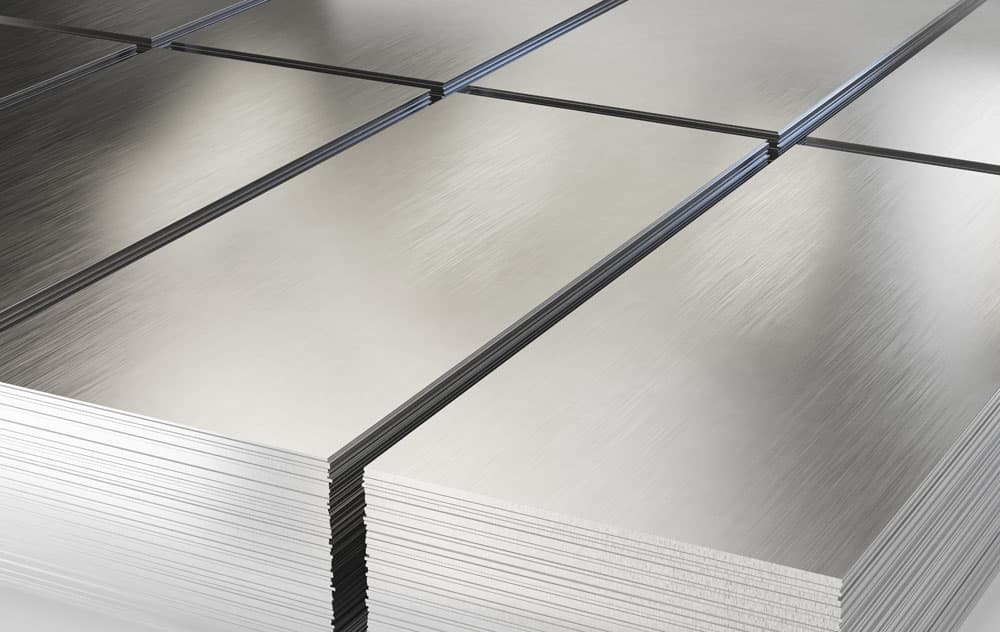
Lámina de acero inoxidable 304/304L
La aleación más versátil y utilizada. Excelente resistencia a la corrosión y formabilidad.
Bobina de acero inoxidable 316/316L
Grado con molibdeno y mayor resistencia a la corrosión en ambientes con cloruros.
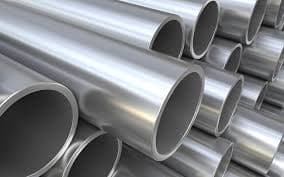
Tubería redonda de acero inoxidable 201/304
Tubería redonda versátil en 201/304 con buena resistencia a la corrosión y formabilidad para usos estructurales y decorativos.