


Stainless Steel Surface Roughness: Specifying Ra for Industrial Applications
Stainless Steel Surface Roughness: Specifying Ra for Industrial Applications
Surface roughness — quantified as Ra (arithmetic average deviation) — is a foundational yet frequently under-specified parameter in stainless steel procurement. While finishes like No. 4 or HL are widely referenced, Ra values provide objective, measurable data essential for functional performance: sealing integrity, fluid flow resistance, cleanability, wear behavior, and coating adhesion. This post addresses what industrial buyers, importers, fabricators, and OEMs need to know when defining Ra requirements — not as an aesthetic footnote, but as an engineering specification.
Why Ra Matters Beyond Appearance
Aesthetic finish codes (e.g., ASTM A1082 No. 4, EN 10088-2 2B) describe general appearance but lack numerical precision. Two sheets both labeled "No. 4" can differ significantly in Ra — one measuring 0.4–0.6 µm, another 0.7–0.9 µm — due to variations in abrasive grit, belt tension, or pass count. In applications where hygiene or friction is critical — such as pharmaceutical piping, food processing conveyors, or hydraulic cylinder rods — even 0.2 µm differences affect bacterial retention, lubricant film stability, or gasket compression. Ra directly correlates with real-world function; specifying it eliminates ambiguity between supplier capability, inspection criteria, and end-use validation.
Common Ra Ranges & Their Industrial Uses
| Ra Range (µm) | Typical Finish | Key Applications |
|---|---|---|
| 0.05–0.10 | Electro-polished, mirror | Bioreactors, semiconductor process chambers, medical implants |
| 0.15–0.30 | Fine cold-rolled (2B) | Pharmaceutical tanks, high-purity tubing, optical enclosures |
| 0.4–0.6 | Standard No. 4 brush | Architectural cladding, commercial kitchen equipment |
| 0.8–1.2 | Coarse mill finish (1D) | Structural supports, non-critical enclosures, heavy-duty frames |
| >1.6 | As-rolled or blasted | Sandblasted substrates for painting, thermal spray prep |
Note: Ra alone does not define texture geometry. A low Ra value may mask deep, narrow valleys harmful to fatigue life — hence the importance of also considering Rz (maximum height) or Rq (RMS) where applicable. For most industrial procurement, however, Ra remains the primary and sufficient metric.
How Ra Is Measured — And What to Verify in Inspection Reports
Ra is measured using contact profilometers (stylus-based) or non-contact optical systems (e.g., white light interferometry). For production lots, suppliers should report Ra values per ASTM E1055 or ISO 4288, including:
- Measurement length (cut-off length, typically 0.8 mm for stainless)
- Evaluation length (usually 4–5 cut-offs)
- Number and location of readings (e.g., minimum 3 readings per sheet, spaced ≥50 mm from edges)
- Instrument calibration certificate traceable to NIST or equivalent national standard
Buyers should require raw data — not just “meets spec” statements — and confirm whether measurements were taken parallel or perpendicular to the grain. On brushed or directional finishes, Ra varies by orientation: values taken perpendicular to the grain are typically 10–25% higher. Specify directionality if functionally relevant (e.g., flow-aligned brushing in pipe interiors).
Integrating Ra into Procurement & Fabrication Workflows
- Procurement: Define Ra explicitly in purchase orders — e.g., “304 stainless, 2.0 mm thick, 2B finish, Ra ≤ 0.25 µm, measured perpendicular to rolling direction, per ISO 4288.” Avoid vague terms like “smooth” or “standard mill finish.”
- Fabrication: Communicate Ra tolerances to subcontractors — especially for post-fabrication operations like grinding, polishing, or welding. Heat tint removal via pickling or electro-polishing will alter Ra; confirm final Ra post-treatment.
- Import Compliance: EU Machinery Directive (2006/42/EC) and FDA 21 CFR Part 110 require documented surface smoothness for food-contact parts. Ra ≤ 0.8 µm is commonly cited for equipment surfaces; Ra ≤ 0.4 µm for product-contact zones. Retain third-party Ra verification reports for audits.
- Cost Implications: Achieving Ra < 0.1 µm adds 15–30% to base material cost versus standard 2B. Tighter Ra tolerances (< ±0.03 µm) require dedicated finishing lines and increase scrap risk. Balance functional need against cost — specify only what the application demands.
Avoiding Common Specification Pitfalls
- Confusing finish grade with Ra: A supplier quoting “No. 8 mirror” without Ra is offering subjective appearance, not functional data.
- Over-specifying: Requiring Ra ≤ 0.1 µm for a structural bracket provides no benefit and increases lead time and price.
- Omitting sampling protocol: Without defined locations and counts, Ra testing is statistically meaningless.
- Ignoring environmental impact: Electropolishing achieves low Ra but uses hazardous electrolytes; verify supplier’s waste treatment compliance, especially for EU or North American imports.
Conclusion
Surface roughness is not merely a finish descriptor — it is a functional property that influences safety, longevity, regulatory compliance, and total cost of ownership. Industrial buyers who treat Ra as a mandatory engineering parameter — defined clearly, verified objectively, and aligned with application requirements — gain greater supply chain control, reduce rework risk, and ensure consistent performance across fabrication and assembly. When sourcing stainless steel, ask for Ra data before approving samples. If your supplier cannot provide it, they likely cannot control it.
Published 2026-04-08.
¿Listo para abastecerte de acero inoxidable?
Habla con un fabricante que responde en 24 horas.
Obtén precio directo de fábrica, soporte de embalaje de exportación y orientación técnica para láminas, bobinas y tuberías.
Productos destacados
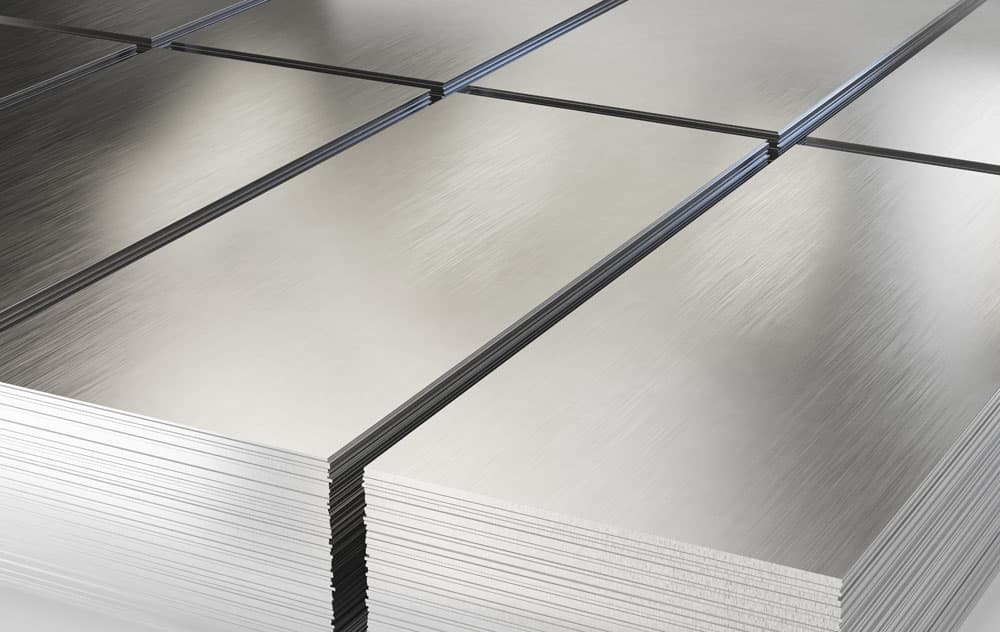
Lámina de acero inoxidable 304/304L
La aleación más versátil y utilizada. Excelente resistencia a la corrosión y formabilidad.
Bobina de acero inoxidable 316/316L
Grado con molibdeno y mayor resistencia a la corrosión en ambientes con cloruros.
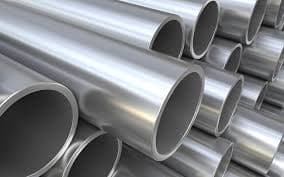
Tubería redonda de acero inoxidable 201/304
Tubería redonda versátil en 201/304 con buena resistencia a la corrosión y formabilidad para usos estructurales y decorativos.