

Stainless Steel Cold Rolling: Process, Tolerances, and Supply Implications
Stainless Steel Cold Rolling: Process, Tolerances, and Supply Implications
Cold rolling is a foundational metallurgical process that transforms hot-rolled stainless steel coils into precisely dimensioned, high-surface-quality flat products. For industrial buyers, importers, fabricators, and OEMs, understanding how cold rolling works—and how its outcomes impact downstream operations—is essential to specifying correctly, avoiding rework, and managing supply chain expectations.
Unlike hot rolling, which occurs above the recrystallization temperature (~1000°C for austenitic grades), cold rolling takes place at or near ambient temperature. This introduces work hardening, tighter thickness control, improved surface finish, and enhanced mechanical properties—but also imposes constraints on achievable reduction per pass, edge condition, and residual stress distribution.
This post outlines key technical and commercial considerations related to cold-rolled stainless steel, based on real-world production practices and common specification pain points observed across our customer base.
How Cold Rolling Works—And Why It Matters for Your Spec
Cold rolling compresses stainless steel strip between hardened steel rollers under high pressure. Typical reductions range from 10% to 60% per pass, depending on grade, annealing condition, and desired final thickness. Austenitic grades (e.g., 304, 316) are more ductile and tolerate higher reductions than ferritic (e.g., 430) or duplex (e.g., 2205) grades, which require more intermediate annealing steps.
The process directly influences three critical attributes:
- Thickness tolerance: Cold rolling enables ±0.005 mm tolerance on strips ≤0.5 mm thick, but achieving this consistently requires tight process control and calibrated gauging. Buyers specifying ‘±0.003 mm’ without confirming supplier capability often face extended lead times or premium pricing.
- Surface roughness (Ra): Measured in micrometers, Ra values typically range from 0.05 µm (bright annealed) to 0.35 µm (2B finish). Surface requirements must align with functional needs—not just aesthetics. For example, deep-drawn components benefit from lower Ra to reduce die wear; laser-cut parts may require slightly higher Ra to avoid burr formation.
- Residual stress: Cold working introduces non-uniform internal stresses. If not relieved via subsequent annealing or temper rolling, these can cause part distortion during machining or forming. Fabricators reporting unexpected warpage after blanking or bending should verify whether material was supplied in a stress-relieved condition.
Thickness Variation Across Width and Length
Cold-rolled coil exhibits measurable variation—not just in absolute thickness, but in profile (cross-sectional shape) and longitudinal thickness consistency. Profile is expressed as crown (center-thickness deviation relative to edges) and wedge (thickness gradient across width). Industry-standard tolerances (per ASTM A480/A480M) allow up to ±3% crown for 1.0 mm 304 strip, but many precision applications demand ≤±1%.
Longitudinal variation—measured over 1 m or 10 m lengths—reflects mill speed stability, roll wear, and tension control. Suppliers with automated thickness control (AGC) systems typically achieve <±0.5% variation over 10 m. When quoting tight-tolerance parts (e.g., heat exchanger plates or sensor shims), confirm whether the quoted tolerance applies to point measurement only—or includes profile and longitudinal consistency.
Surface Defects: What’s Acceptable, What’s Not
Minor surface imperfections are inherent to cold rolling. Common features include:
- Pickling marks: Faint parallel lines from acid bath contact—usually harmless unless specified as ‘mirror finish’.
- Roll marks: Repetitive indentations from damaged or contaminated work rolls. These are rejectable if deeper than 0.002 mm or spaced <100 mm apart.
- Edge wave or center buckle: Indicative of improper tension or roll camber settings. Visible edge waviness >0.5 mm amplitude generally triggers rejection for precision stamping.
ASTM A480 defines acceptance criteria for visual defects based on grade, finish, and end use. However, many buyers omit defect clauses from purchase orders—then dispute shipments later. Include clear, testable language (e.g., “no roll marks detectable at 1 m distance under 500 lux illumination”) to avoid ambiguity.
Annealing and Temper Rolling: Clarifying the Post-Cold-Roll Steps
Most cold-rolled stainless is either:
- Annealed and pickled (AP): Fully softened, corrosion-resistant surface, suitable for forming or welding.
- Temper rolled: Lightly cold-worked post-anneal to improve stiffness and surface uniformity (e.g., 2B, BA finishes).
Temper rolling adds ~5–15% yield strength but reduces elongation. Grade 304 temper-rolled to 0.8 mm typically has YS ≈ 350 MPa vs. ~205 MPa for full-annealed. This difference matters when calculating bend radii or press-brake tonnage. OEMs designing brackets or enclosures must account for it—or risk cracking during fabrication.
Note: ‘Quarter-hard’, ‘half-hard’, and ‘full-hard’ designations refer to temper level—not standardized mechanical property ranges. Always specify minimum/maximum tensile or yield values instead.
Procurement Considerations for Buyers and Importers
Cold-rolled stainless is traded globally with lead times ranging from 4–12 weeks, depending on grade, thickness, and finish availability. Key procurement actions:
- Confirm whether coil IDs include mill test reports (MTRs) with hardness, tensile, and grain size data—not just chemistry.
- Require slitting certification if material will be slit prior to delivery: edge condition degrades significantly without proper tooling and tension control.
- Specify packaging requirements explicitly—especially for thin gauges (<0.3 mm). Edge protection, interleaving, and moisture barriers prevent handling damage that manifests as scratches or oxidation streaks.
Finally, treat cold-rolled stainless as a process-dependent product, not just a grade-and-thickness combination. Engage your supplier early on finish requirements, tolerance bands, and intended fabrication steps. Doing so avoids costly delays, requalification, or field failures.
Conclusion
Cold rolling shapes stainless steel’s dimensional integrity, surface fidelity, and mechanical response—factors that cascade through every stage of fabrication and assembly. By aligning specifications with actual process capabilities—and distinguishing between nominal values and statistical process limits—buyers, fabricators, and OEMs gain greater predictability, lower total cost of ownership, and fewer surprises at the press brake or weld station. When sourcing cold-rolled stainless, prioritize clarity over brevity, and collaboration over assumption.
Готовы заказать нержавеющую сталь?
Свяжитесь с производителем, который отвечает в течение 24 часов.
Получите заводской расчет цены, экспортную упаковку и консультацию по листам, рулонам и трубам.
Избранные продукты
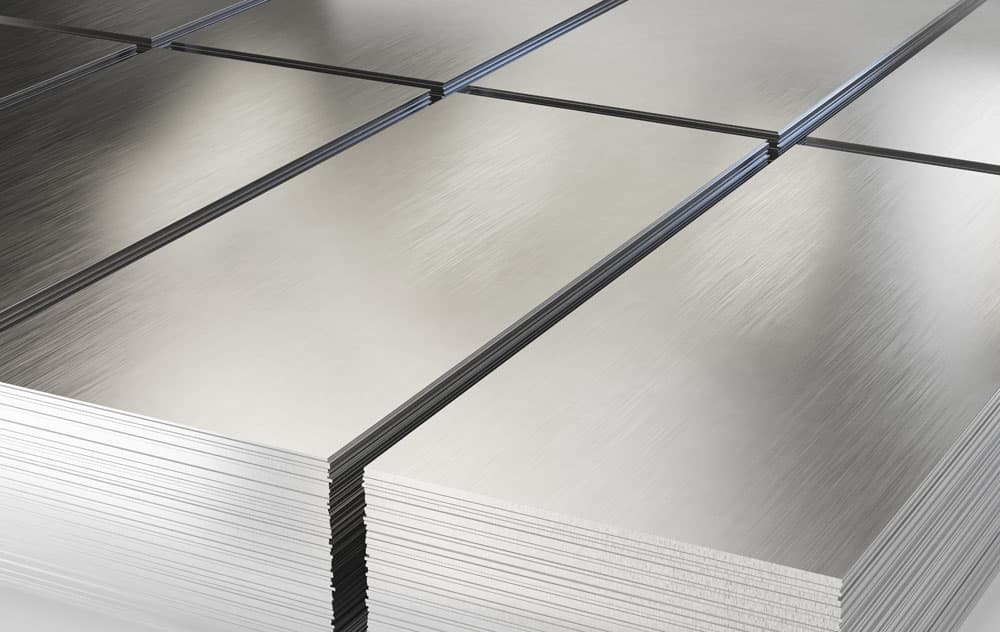
Лист из нержавеющей стали 304/304L
Самый популярный сплав в семействе нержавеющих сталей. Отличная коррозионная стойкость и формуемость.
Рулон нержавеющей стали 316/316L
Сплав с молибденом и повышенной стойкостью к хлоридам.
Круглая труба из нержавеющей стали 201/304
Универсальная круглая труба из сталей 201/304 с хорошей коррозионной стойкостью и формуемостью для конструкционных и декоративных задач.