

Stainless Steel for High-Temperature Industrial Applications
Stainless Steel for High-Temperature Industrial Applications
Selecting stainless steel for environments above 500°C requires more than nominal grade identification. Temperature exposure changes metallurgical behavior—oxidation resistance, creep strength, and microstructural stability all diverge significantly across grades, especially beyond 600°C. For OEMs, fabricators, and plant engineers sourcing components for thermal processing, power generation, or emissions control, incorrect assumptions about high-temperature capability can lead to premature failure, unplanned downtime, or non-compliant installations.
This post outlines key technical considerations—not marketing claims—for specifying stainless steel where sustained heat is the dominant service condition.
Thermal Stability vs. Oxidation Resistance Are Not the Same
Two distinct performance criteria govern high-temperature suitability: oxidation resistance (surface-scale formation) and thermal stability (retention of mechanical integrity over time). A grade like 304 may resist scaling up to ~800°C in clean, dry air—but its yield strength drops by over 60% at 700°C, making it unsuitable for load-bearing structural parts. Conversely, 310S offers superior scale resistance above 1000°C and retains usable creep strength up to 950°C due to higher chromium (25%) and nickel (20%) content. Buyers must separate surface durability from structural adequacy—specifying based solely on maximum oxidation temperature risks under-engineering critical supports or ductwork.
Creep and Stress Rupture Data Are Essential—Not Optional
Unlike room-temperature tensile testing, high-temperature component life depends on creep behavior: gradual, time-dependent deformation under constant stress. ASTM E139 and ISO 204 define standardized creep testing protocols, but published data varies widely by heat treatment, grain size, and lot-to-lot chemistry. For example, a normalized 310S plate may show 10,000-hour rupture strength of 15 MPa at 850°C—but solution-annealed, hot-rolled bar of the same grade can fall below 10 MPa at the same conditions. Fabricators sourcing material for refractory anchors or burner tubes must request certified creep-rupture curves specific to the product form and heat treatment—not generic datasheet values.
Carbon Content and Precipitation Risks Demand Close Scrutiny
Carbon plays a dual role: it strengthens austenitic grades at elevated temperatures but also enables carbide precipitation during slow cooling through 425–850°C. In grades like 304H (0.04–0.10% C), that precipitation improves creep resistance—but if welded without post-weld heat treatment, sensitization can occur in the heat-affected zone, accelerating intergranular corrosion in aggressive flue gases. For applications involving thermal cycling—such as regenerative burners or exhaust manifolds—low-carbon variants (e.g., 304L) sacrifice high-temperature strength to avoid this risk. Buyers must align carbon specification not just with operating temperature, but with fabrication sequence, welding method, and expected thermal history.
Thermal Expansion Mismatches Can Cause Hidden Failure Modes
Stainless steels expand significantly when heated—310S expands ~17.5 µm/m·°C from 20–800°C, while carbon steel expands ~12.5 µm/m·°C over the same range. When stainless components interface with lower-expansion materials (e.g., refractory anchors bolted to carbon steel frames), differential expansion induces cyclic stresses at joints and welds. These stresses often exceed design margins after hundreds of thermal cycles, leading to fatigue cracking not apparent in static analysis. Mitigation requires either engineered expansion joints, compliant mounting hardware, or careful selection of grades with matched coefficients—such as using 309S (18 µm/m·°C) alongside ceramic fiber modules designed for similar growth rates.
Practical Sourcing Checks Before Procurement
-
Verify mill test reports include actual heat analysis, not just grade compliance—trace elements like nitrogen (which boosts creep strength) and silicon (which improves scale adhesion) must meet functional thresholds.
-
Confirm product form matches required service condition: Sheet/plate for liners, seamless tube for burner headers, and forged fittings for high-stress junctions each demand different microstructural controls.
-
Require creep-rupture certification per ASTM E139 for components subject to >500°C and >1,000 hours of service—especially where safety or regulatory compliance is tied to predicted lifetime.
-
Clarify post-fabrication thermal history: If parts will be welded onsite, specify whether filler metal and base metal must be pre-qualified for thermal cycling per ASME BPVC Section II, Part D.
High-temperature stainless steel isn’t a commodity—it’s an engineered system where chemistry, processing history, and application context interact decisively. Treating it as interchangeable across grades or assuming standard mill certifications suffice invites operational risk. For buyers, importers, and fabricators, the most reliable safeguard is early engagement with suppliers who maintain traceable thermal property data—not just dimensional or chemical conformance.
Consult your supplier’s metallurgical support team before finalizing specifications—not after first startup reveals unexpected distortion or scaling.
Готовы заказать нержавеющую сталь?
Свяжитесь с производителем, который отвечает в течение 24 часов.
Получите заводской расчет цены, экспортную упаковку и консультацию по листам, рулонам и трубам.
Избранные продукты
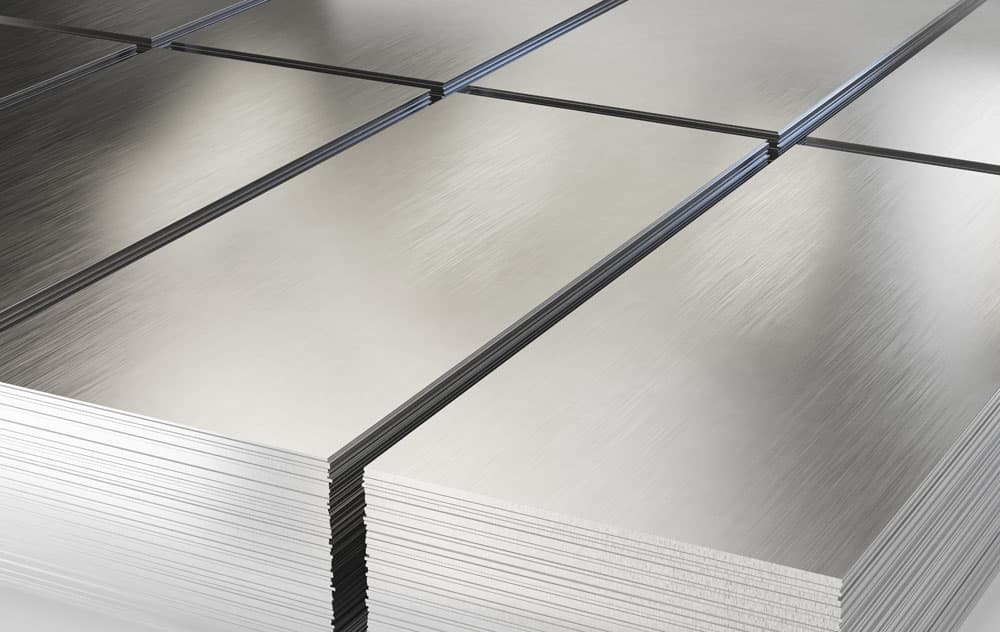
Лист из нержавеющей стали 304/304L
Самый популярный сплав в семействе нержавеющих сталей. Отличная коррозионная стойкость и формуемость.
Рулон нержавеющей стали 316/316L
Сплав с молибденом и повышенной стойкостью к хлоридам.
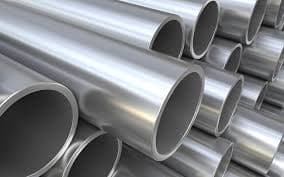
Круглая труба из нержавеющей стали 201/304
Универсальная круглая труба из сталей 201/304 с хорошей коррозионной стойкостью и формуемостью для конструкционных и декоративных задач.