


Stainless Steel Grade Selection for High-Temperature Applications
Why Thermal Performance Matters in Material Procurement
For industrial buyers sourcing stainless steel for furnaces, exhaust systems, heat exchangers, or chemical reactors, selecting the right grade isn’t just about corrosion resistance—it’s about structural integrity under sustained thermal load. Overestimating temperature tolerance leads to premature failure; underestimating it drives unnecessary cost and weight. This post clarifies how metallurgical composition, microstructure stability, and oxidation behavior inform real-world grade selection—based on ASTM A240, EN 10088-1, and ISO 15510 standards.
1. Understanding Key Thermal Limitations
Stainless steels behave differently above 500°C. Critical concerns include:
- Oxidation resistance: Chromium forms a protective Cr₂O₃ layer—but above ~800°C, this layer degrades unless supplemented by silicon (e.g., 309S, 310S) or aluminum (e.g., 446).
- Creep strength: Long-term exposure to stress at elevated temperatures causes gradual deformation. Austenitic grades like 310S and 253MA retain higher creep resistance up to 1100°C due to nitrogen and rare-earth additions.
- Sigma phase embrittlement: In duplex and super-austenitic grades, prolonged exposure between 600–900°C can precipitate brittle intermetallic phases—reducing impact toughness and weldability.
Avoid relying solely on ‘maximum service temperature’ tables. Those values assume static, low-stress, clean-atmosphere conditions—not cyclic loading, sulfur-bearing flue gas, or thermal shock from rapid cooldown.
2. Matching Grades to Application Profiles
| Temperature Range | Recommended Grades | Key Rationale |
|---|---|---|
| 500–750°C | 304H, 316H, 321 | Stabilized with Ti (321) or Nb (347) to resist sensitization during welding and service; H-grades have controlled carbon (0.04–0.10%) for improved creep strength. |
| 750–1000°C | 309S, 310S | Higher Cr (22–25%) and Ni (12–20%) improve scale adhesion and austenite stability. 310S is preferred where sulfur or reducing atmospheres are present. |
| 1000–1150°C | 253MA®, 314, HR120® | Nitrogen-enhanced austenitics with cerium or yttrium improve oxide spallation resistance. Used in radiant tube linings and burner nozzles. |
| >1150°C | Alloy 600, 625, or ceramic-clad solutions | Standard stainless steels lack sufficient creep ductility. Consider nickel-based alloys—or hybrid designs using stainless as substrate + ceramic insulation. |
Note: For intermittent use (e.g., batch annealing), short-term excursions above continuous limits may be acceptable—but require validation via time-temperature-transformation (TTT) data and strain-life analysis.
3. Fabrication Considerations That Impact Thermal Life
A well-chosen grade fails early if fabrication introduces vulnerabilities:
- Welding: Use matching filler metals and strict interpass temperature control (<150°C for 309S/310S). Avoid excessive heat input, which promotes grain growth and reduces creep rupture life. Post-weld heat treatment (PWHT) is rarely beneficial—and often harmful—for most high-temperature austenitics.
- Surface finish: Pickled surfaces outperform mechanically polished ones in oxidizing environments because they remove embedded iron and restore uniform chromium distribution.
- Cold working: Work-hardened 304 or 316 increases yield strength but lowers thermal fatigue resistance. Anneal before high-temperature service if cold reduction exceeds 10%.
Fabricators should request mill test reports (MTRs) confirming actual chemistry—not just grade designation—especially for Cr, Ni, Si, N, and minor stabilizers. Trace elements matter: 0.15% Si in 309S improves scaling resistance by ~30% versus standard 309.
4. When Duplex and Super Duplex Fall Short
Buyers sometimes consider 2205 or 2507 for high-temperature duty due to their high strength and chloride resistance. Don’t. Their upper service limit is ~300°C for sustained loads. Above that, ferrite decomposition accelerates, and sigma phase formation begins within hours—not years. Even lean duplex grades like LDX 2101 are unsuitable beyond 250°C. Reserve duplex steels for ambient-to-moderate temperature applications where stress corrosion cracking (SCC) or pitting resistance is the primary driver.
5. Verifying Supplier Capability Beyond the Mill Certificate
Procurement teams should evaluate supplier readiness for high-temperature projects—not just inventory. Ask for:
- Evidence of heat-treatment traceability (furnace logs, thermocouple calibration records)
- Weld procedure specifications (WPS) qualified per ASME IX for the target grade and thickness
- Third-party verification of intergranular corrosion resistance (ASTM A262 Practice E) when specifying stabilized grades
- Batch-level TTT or creep rupture data—not generic datasheet curves
Reputable suppliers maintain grade-specific process controls: e.g., separate annealing lines for H-grades to prevent carbon diffusion issues; dedicated pickling tanks for high-Si grades to avoid contamination.
Conclusion
Selecting stainless steel for high-temperature service requires balancing metallurgy, fabrication practice, and operational reality. Start with your actual maximum metal temperature—not gas temperature—and factor in thermal cycling, atmosphere composition, and mechanical loading. Favor proven grades like 309S, 310S, or 253MA over generic ‘high-temp’ marketing claims. Partner with suppliers who provide chemistry transparency, fabrication documentation, and thermal performance context—not just compliance checkboxes. When specified correctly, stainless steel delivers decades of reliable service far beyond its nominal rating—if you let the material data guide the decision, not the catalog headline.
Готовы заказать нержавеющую сталь?
Свяжитесь с производителем, который отвечает в течение 24 часов.
Получите заводской расчет цены, экспортную упаковку и консультацию по листам, рулонам и трубам.
Избранные продукты
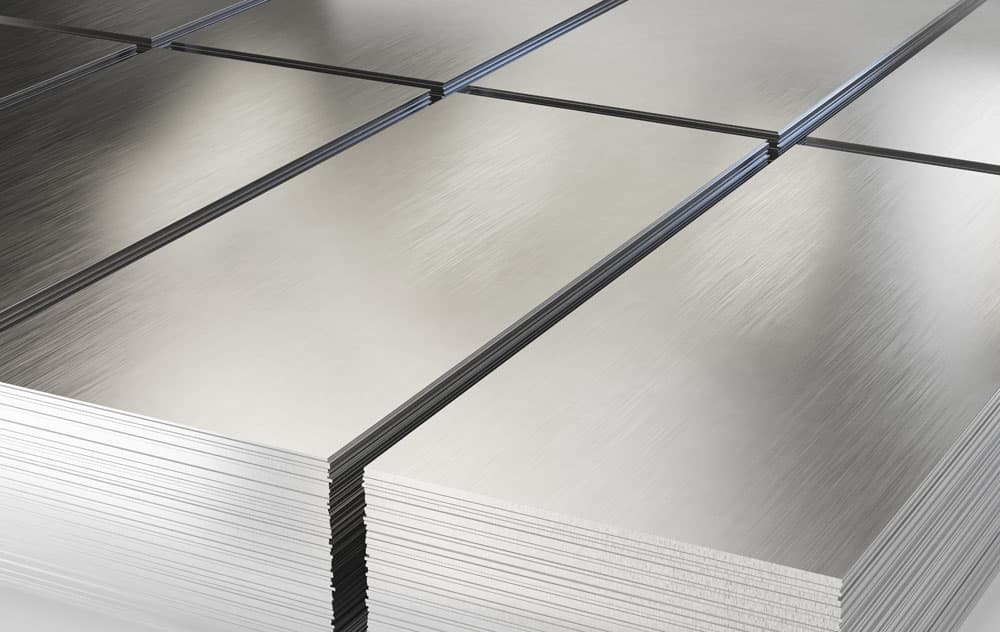
Лист из нержавеющей стали 304/304L
Самый популярный сплав в семействе нержавеющих сталей. Отличная коррозионная стойкость и формуемость.
Рулон нержавеющей стали 316/316L
Сплав с молибденом и повышенной стойкостью к хлоридам.
Круглая труба из нержавеющей стали 201/304
Универсальная круглая труба из сталей 201/304 с хорошей коррозионной стойкостью и формуемостью для конструкционных и декоративных задач.