

Stainless Steel Machining: Tool Selection and Process Optimization
Stainless Steel Machining: Tool Selection and Process Optimization
Stainless steel is widely specified for industrial components due to its corrosion resistance, strength, and temperature stability. Yet for fabricators and OEMs running high-volume or precision machining operations, stainless presents consistent challenges — work hardening, built-up edge, thermal conductivity mismatch, and rapid tool wear. These aren’t theoretical concerns; they directly impact cycle time, dimensional repeatability, scrap rates, and total cost per part. This post focuses on actionable, field-tested approaches to machining austenitic (e.g., 304, 316), ferritic (e.g., 430), and duplex (e.g., 2205) stainless steels in CNC milling, turning, and drilling — with emphasis on decisions that matter most to production buyers and shop floor engineers.
Why Stainless Steel Machining Differs From Carbon Steel
Stainless steels lack free graphite and have higher nickel/chromium content, resulting in lower thermal conductivity (about 30–50% that of carbon steel) and higher strain-hardening rates. When a cutting tool displaces material, the surface layer rapidly hardens — often exceeding the hardness of the bulk material. This leads to accelerated flank wear, premature chipping, and inconsistent surface finish. Unlike carbon or alloy steels, feed rate and depth-of-cut adjustments alone rarely resolve these issues. Successful machining requires coordinated changes to tool geometry, coating, coolant delivery, and machine rigidity.
Tooling: Geometry and Coating Strategies
Carbide remains the standard for stainless machining, but not all carbide is equal. Use inserts with positive rake angles (6°–12°) to reduce cutting force and heat generation. Sharp, honed edges are essential — avoid excessive edge preparation that increases contact area and friction. For austenitic grades, PVD-coated (TiAlN or AlCrN) tools outperform CVD alternatives in interrupted cuts and low-to-medium speeds due to superior adhesion and oxidation resistance above 800°C. In high-speed continuous turning of 316, multi-layer AlTiN coatings demonstrate up to 25% longer tool life versus monolayer TiN. For duplex grades, where abrasive chromium nitrides increase wear, consider sub-micron grain carbide substrates with nanostructured coatings to resist micro-chipping at the cutting edge.
Drill geometry also matters. Standard HSS twist drills struggle with work hardening and poor chip evacuation. Use cobalt-alloy or solid-carbide drills with parabolic flutes, 135° point angles, and through-coolant capability — especially for holes deeper than 3× diameter. Peck drilling cycles should be adjusted: dwell time must be minimized to prevent re-cutting of hardened chips, and retract distance kept just enough to clear the flute.
Coolant and Lubrication: Beyond Flood Application
High-pressure coolant (70–100 bar) delivered through the tool is non-negotiable for deep milling and drilling in stainless. It improves chip breaking, reduces localized heating at the tool-work interface, and flushes away abrasive particles before they recut. Water-soluble coolants with ≥10% oil content and sulfur-free EP additives perform best across austenitic and duplex grades — avoiding chloride-induced pitting on finished surfaces. Avoid chlorine-based additives, particularly when machining 316 or super duplex alloys in wet environments. For dry or near-dry machining (e.g., in sealed enclosures or where coolant disposal is constrained), use MQL (minimum quantity lubrication) with ester-based oils at 50–100 ml/h. MQL reduces misting, improves visibility, and maintains surface integrity — though tool life drops ~15–20% versus high-pressure flood.
Speed, Feed, and Rigidity: Practical Settings
Recommended cutting parameters vary significantly by grade and condition:
- 304 Annealed: Surface speed (Vc) 90–120 m/min; feed per tooth (fz) 0.05–0.10 mm; axial depth ≤0.5× cutter diameter.
- 316 Cold-finished: Reduce Vc by 10–15% vs. 304; increase fz slightly to avoid rubbing; maintain rigid setups to suppress chatter.
- 2205 Duplex: Vc 70–90 m/min; fz 0.06–0.09 mm; avoid shallow radial engagements (<10%) which cause rubbing and rapid edge degradation.
Rigidity is often underestimated. Deflection under load increases heat buildup and accelerates tool failure. Verify spindle runout <0.005 mm, use hydraulic or shrink-fit toolholders (not ER collets), and minimize overhang — especially for end mills >12 mm diameter. On older CNC lathes, consider adding tailstock support for bars >20 mm diameter and >6× length-to-diameter ratio.
Post-Machining Considerations for Functional Integrity
Machined stainless parts often require additional processing — deburring, passivation, or electropolishing — before assembly or service. Burrs left on edges can initiate stress corrosion cracking in aggressive environments, particularly in chloride-exposed applications. Mechanical deburring risks smearing and embedding abrasive particles; thermal or electrochemical methods yield cleaner edges. Passivation after machining removes free iron contamination and restores the passive chromium oxide layer — critical for medical, food, and pharmaceutical components. Specify ASTM A967 (Method A or B) with verification via copper sulfate test or ferroxyl test. Electropolishing further improves corrosion resistance and surface roughness (Ra reduction of 30–50%), but adds cost and lead time — justify only when functional requirements demand it.
Conclusion
Stainless steel machining isn’t about finding a single ‘best’ tool or parameter — it’s about aligning tool selection, coolant strategy, machine capability, and post-process validation to your specific grade, geometry, and volume requirements. Fabricators who treat stainless as a distinct material class — rather than a drop-in replacement for carbon steel — gain measurable improvements in throughput, tooling cost control, and first-pass yield. As supply chains stabilize in 2026, optimizing internal machining practices offers one of the highest ROI levers for reducing landed cost without compromising specification compliance. For OEMs sourcing machined stainless components, verify suppliers’ documented process controls — especially for coolant type, tool life tracking, and post-machining surface verification — before finalizing purchase agreements.
Готовы заказать нержавеющую сталь?
Свяжитесь с производителем, который отвечает в течение 24 часов.
Получите заводской расчет цены, экспортную упаковку и консультацию по листам, рулонам и трубам.
Избранные продукты
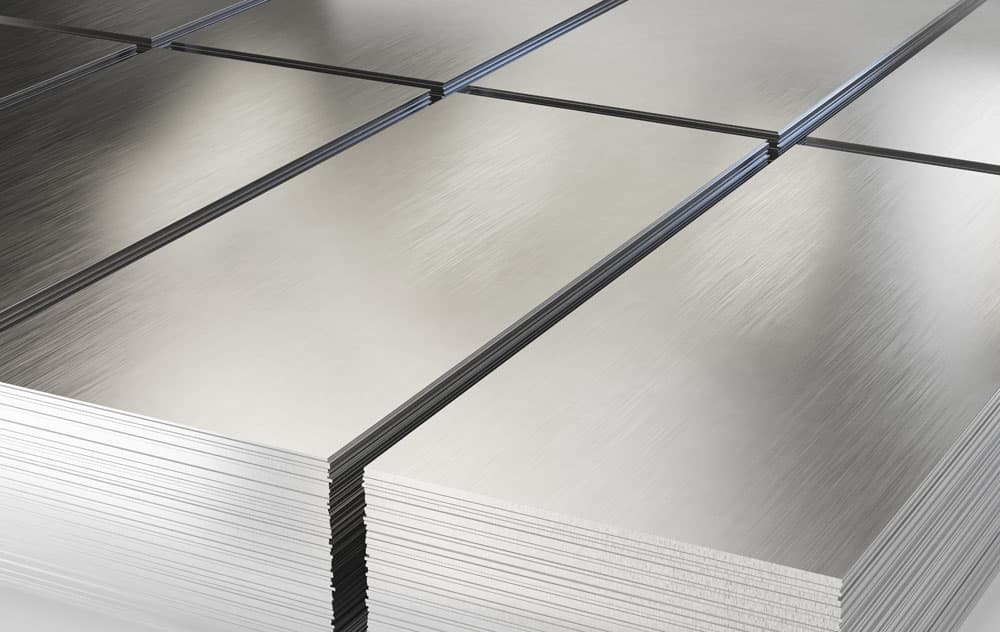
Лист из нержавеющей стали 304/304L
Самый популярный сплав в семействе нержавеющих сталей. Отличная коррозионная стойкость и формуемость.
Рулон нержавеющей стали 316/316L
Сплав с молибденом и повышенной стойкостью к хлоридам.
Круглая труба из нержавеющей стали 201/304
Универсальная круглая труба из сталей 201/304 с хорошей коррозионной стойкостью и формуемостью для конструкционных и декоративных задач.