

Stainless Steel Recycling in Industrial Supply Chains
Stainless steel is among the most recycled industrial materials globally—over 80% of all stainless steel ever produced remains in active use or has been recovered. For buyers, importers, fabricators, and OEMs, this high circularity isn’t just an environmental footnote; it directly affects material availability, pricing stability, alloy consistency, and supply chain resilience. This post outlines what procurement and operations teams need to know—not about recycling as a sustainability initiative alone, but as a functional lever in sourcing strategy.
Why Recycled Content Matters Beyond ESG Reporting
Unlike many metals, stainless steel retains its full metallurgical properties after repeated melting and reforming. Its primary alloying elements—chromium, nickel, molybdenum, and nitrogen—do not degrade during standard electric arc furnace (EAF) remelting. That means a grade like 304 made from 100% scrap performs identically to one from virgin ore—if the input scrap is properly sorted and controlled.
However, inconsistent scrap composition introduces real technical risk. Mixed batches containing unknown alloys (e.g., 430 blended with 316) can dilute corrosion resistance or cause unexpected hot cracking during welding. Buyers specifying high-performance grades must therefore verify not only final chemistry but also the origin and segregation practices of the melt shop supplying their material.
Scrap Sources: From Mill Scale to Offcuts to End-of-Life
Industrial stainless scrap falls into three main categories:
-
Home scrap: Generated internally by mills and fabricators—e.g., edge trimmings from coil slitting, turnings from machining, or rejected billets. This is the most chemically consistent source due to tight internal controls.
-
Prompt scrap: Waste generated downstream during fabrication—cut-offs, drop pieces, or rejected weldments—returned to mills within weeks or months. Traceability is often retained via mill purchase orders or grade stamps.
-
Obsolete scrap: End-of-life products such as decommissioned heat exchangers, food processing equipment, or architectural cladding. This stream carries the highest variability—and greatest potential for contamination (e.g., paint, insulation, or galvanized fasteners).
For critical applications (e.g., pharmaceutical piping or aerospace components), specify that material originates from ≥95% home or prompt scrap. Avoid obsolete-heavy melts unless full batch traceability and certified assay reports are provided.
How Recycling Affects Pricing and Lead Times
Stainless steel pricing is closely tied to nickel and molybdenum markets—but scrap premiums add another layer. When nickel prices rise sharply, mills increase scrap intake to limit expensive alloy additions. Conversely, during nickel dips, some mills reduce scrap use to preserve margin, shifting supply toward higher-cost primary routes.
This dynamic creates periodic volatility in lead times. For example, in Q2 2025, European mills extended delivery windows by 3–5 weeks when nickel surged above $22,000/tonne and scrap availability tightened. Buyers who maintain relationships with mills using stable scrap streams—or who hold strategic stock of commonly used grades—avoid these disruptions.
Also note: recycled-content material is not inherently cheaper. Premium-grade scrap sorting, assay verification, and tighter process controls often offset raw-material savings. Evaluate total landed cost—not just unit price—when comparing suppliers.
Specifying Recycled Content in Purchase Orders
Vague terms like “recyclable” or “contains recycled content” offer no operational value. Instead, include enforceable language in purchase specifications:
- “Material shall be produced from ≤10% obsolete scrap, with full chemical assay and melt log traceability provided prior to shipment.”
- “Mill certificate shall list % home, % prompt, and % obsolete scrap used in the heat.”
- “For 316L, maximum allowable copper content shall be 0.10% to limit risk of residual contamination from brass fittings in obsolete streams.”
These clauses empower quality teams to audit supplier claims and reject nonconforming heats before fabrication begins.
Supplier Due Diligence: Questions That Reveal Real Practice
When evaluating new stainless suppliers, ask:
- What percentage of your annual stainless output comes from EAF vs. AOD/BOP routes? (EAF relies more heavily on scrap.)
- Do you maintain segregated scrap yards by alloy family (austenitic, ferritic, duplex)?
- Can you provide third-party validation (e.g., SCS Global or Bureau Veritas) of your scrap sourcing and assay protocols?
- How do you handle off-spec heats? Are they downgraded, re-melted, or sold externally without disclosure?
Suppliers unable to answer concretely—or who treat scrap origin as proprietary—signal weak process control. Prioritize partners transparent about both inputs and outcomes.
Conclusion
Stainless steel recycling is not a peripheral concern—it’s a core dimension of material integrity, cost predictability, and supply continuity. For procurement and engineering teams, treating scrap origin as a technical specification—not just a marketing claim—reduces risk across the value chain. Start by reviewing current mill certificates for scrap-source disclosures, then work with trusted suppliers to define realistic, verifiable thresholds for your applications. In an era of tightening resource access and rising compliance expectations, precision in recycling data delivers measurable operational advantage.
Готовы заказать нержавеющую сталь?
Свяжитесь с производителем, который отвечает в течение 24 часов.
Получите заводской расчет цены, экспортную упаковку и консультацию по листам, рулонам и трубам.
Избранные продукты
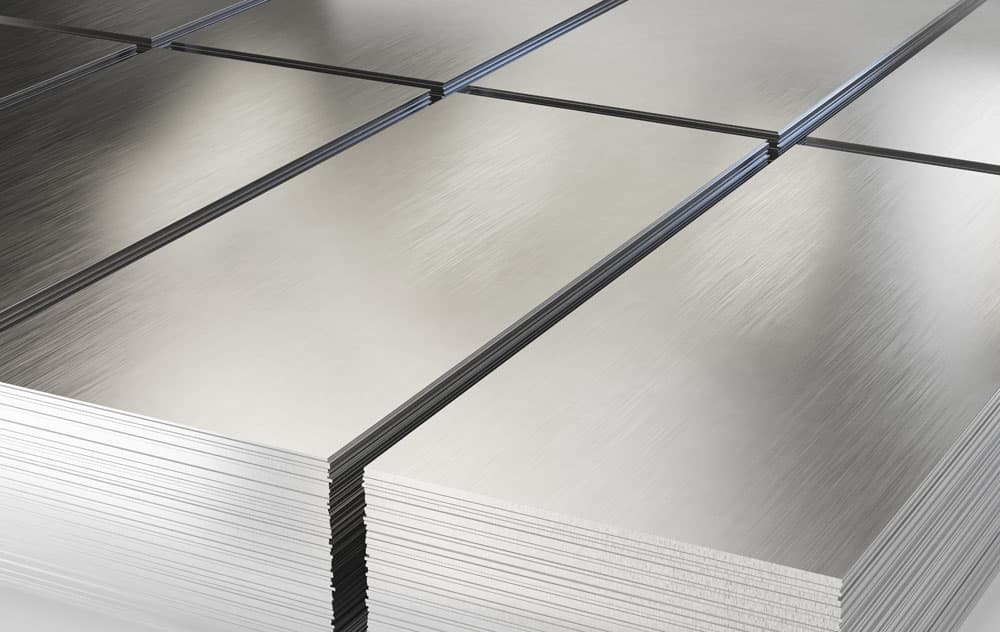
Лист из нержавеющей стали 304/304L
Самый популярный сплав в семействе нержавеющих сталей. Отличная коррозионная стойкость и формуемость.
Рулон нержавеющей стали 316/316L
Сплав с молибденом и повышенной стойкостью к хлоридам.
Круглая труба из нержавеющей стали 201/304
Универсальная круглая труба из сталей 201/304 с хорошей коррозионной стойкостью и формуемостью для конструкционных и декоративных задач.