

Stainless Steel Surface Finishes: Functional Selection Guide
Why Surface Finish Matters Beyond Aesthetics
For industrial buyers, importers, and OEMs, stainless steel surface finish is rarely just about appearance. It directly influences corrosion resistance, cleanability, wear behavior, weld visibility, galling risk in sliding contact, and even regulatory compliance—especially in food, pharmaceutical, or semiconductor applications. Yet many procurement specifications still default to generic terms like "brushed" or "mill finish" without defining functional requirements. This ambiguity leads to rework, delays, or suboptimal performance in service.
This guide focuses on finishes commonly supplied in sheet, coil, and plate form—not decorative or high-polish mirror finishes used in architecture. We’ll clarify how standard finish designations map to real-world functionality, where tolerances matter most, and what to specify when sourcing.
Understanding the Standard Finish Designations
The ASTM A480/A480M and EN 10088-2 standards define common stainless steel surface finishes. Key ones include:
-
2B: Cold-rolled, heat-treated, pickled, and lightly rolled. Offers a smooth, semi-gloss, uniform surface. Most common for general fabrication—good formability, moderate corrosion resistance, and consistent weld appearance. Not recommended for high-wear or ultra-clean environments without additional passivation.
-
No. 4 (Brushed): Linear grain produced by abrasive belt finishing (typically 120–180 grit). Provides good scratch concealment and tactile consistency. Widely used in food processing equipment, architectural cladding, and medical carts. Grain direction must be specified if part orientation affects flow or cleaning—e.g., vertical grain on wall panels to minimize particle trapping.
-
BA (Bright Annealed): Cold-rolled and annealed in a controlled-atmosphere furnace. Produces a reflective, non-directional, oxide-free surface. Higher reflectivity than 2B but less than mirror finishes. Commonly used for tubing in hygienic systems and thin-gauge enclosures where low outgassing matters.
-
No. 1: Hot-rolled, annealed, and pickled. Rougher, matte texture with lower dimensional consistency. Typically used for structural components not requiring corrosion resistance or visual appeal—e.g., support frames or internal brackets.
Note: Terms like "mill finish" are ambiguous—some suppliers use it for 2B; others for No. 1. Always reference the standard designation, not descriptive language.
Functional Trade-offs: When to Choose What
Selecting a finish requires balancing three criteria: performance, manufacturability, and total cost.
Corrosion & Cleanability: In aggressive environments (e.g., chlorine exposure in water treatment), smoother finishes (2B, BA) generally outperform coarser ones (No. 4) because they reduce micro-crevices where chlorides can accumulate. However, in food-grade applications, a controlled No. 4 finish (with Ra ≤ 0.8 µm) may be preferred over 2B because its directional grain aids mechanical cleaning and inspection—provided the grain is continuous and free of cross-hatching.
Forming & Fabrication: 2B offers the best drawability and stretch-forming characteristics due to its low surface friction and consistent cold-work response. No. 4 finishes introduce higher friction and variable grain depth, which can increase tool wear and cause inconsistent bending springback—especially in tight-radius bends. For deep-drawn parts, BA or 2B is strongly advised unless surface aesthetics mandate No. 4.
Cost & Lead Time: 2B is the most economical and widely stocked. No. 4 adds $0.35–$0.75/kg depending on grit consistency and verification requirements (e.g., Ra measurement per EN ISO 4287). BA carries a premium of ~15–25% over 2B due to furnace control and handling sensitivity. Specifying tighter Ra tolerances or mandatory grain direction increases lead time by 2–4 weeks for coil-supplied material.
What to Specify—and What to Avoid—in Purchase Orders
Ambiguous specs invite interpretation. To ensure consistency across batches and suppliers, include the following in your purchase documentation:
- Standard designation (e.g., "ASTM A480: 2B" or "EN 10088-2: No. 4")
- Surface roughness range, if critical (e.g., "Ra 0.4–0.6 µm measured per ISO 4288, 5 readings per 1 m²")
- Grain direction requirement, if applicable (e.g., "Grain parallel to length, no cross-grain segments >5 mm")
- Cleaning & passivation status, if needed (e.g., "Pickled and passivated per ASTM A967 Nitric Method 1")
Avoid specifying only "brushed finish" or "standard mill finish." Also avoid referencing proprietary supplier codes (e.g., "Finish X7") unless fully documented in your approved vendor list.
Real-World Verification Tips for Buyers and Fabricators
Receiving inspection doesn’t require a profilometer—but it does require consistency checks:
-
Visual check under angled lighting: Reveals inconsistencies in grain continuity, scratches, or localized dulling that indicate improper descaling or contamination.
-
Tactile comparison: Run a fingernail lightly across adjacent areas. Uneven drag suggests inconsistent belt pressure or grit contamination during No. 4 finishing.
-
Gauge tolerance correlation: Surface finish affects thickness measurement. Magnetic induction gauges may read 0.01–0.03 mm high on No. 4 vs. 2B due to topography. Confirm whether your supplier reports nominal thickness before or after finishing—and verify with micrometer measurements on uncoiled ends.
When auditing suppliers, request evidence of finish process control—not just final inspection reports. Ask for records of belt replacement schedules, grit calibration logs, and furnace atmosphere monitoring (for BA).
Conclusion
Stainless steel surface finish is a functional engineering parameter—not an afterthought. Choosing correctly reduces long-term maintenance, supports regulatory validation, and avoids costly fabrication surprises. Start by matching finish type to core functional demands: 2B for forming and general duty, No. 4 for hygiene-critical visibility and cleanability, and BA for reflectivity and low-outgassing needs. Anchor all specifications to standardized nomenclature, define tolerances where performance depends on them, and verify consistency—not just compliance—at receipt. With precise finish specification, you turn a commodity attribute into a predictable, value-added feature of your finished product.
Готовы заказать нержавеющую сталь?
Свяжитесь с производителем, который отвечает в течение 24 часов.
Получите заводской расчет цены, экспортную упаковку и консультацию по листам, рулонам и трубам.
Избранные продукты
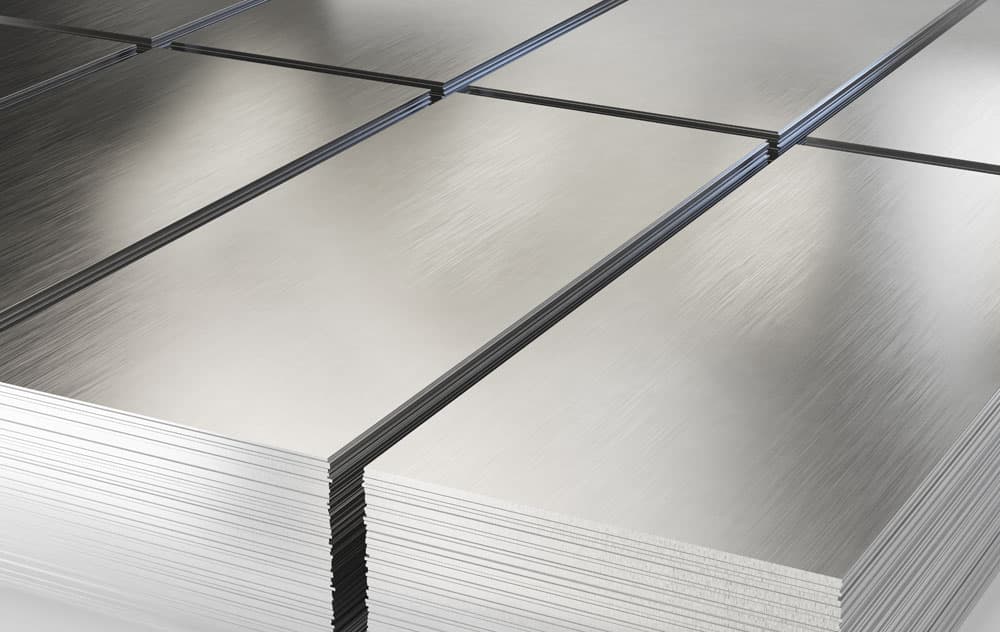
Лист из нержавеющей стали 304/304L
Самый популярный сплав в семействе нержавеющих сталей. Отличная коррозионная стойкость и формуемость.
Рулон нержавеющей стали 316/316L
Сплав с молибденом и повышенной стойкостью к хлоридам.
Круглая труба из нержавеющей стали 201/304
Универсальная круглая труба из сталей 201/304 с хорошей коррозионной стойкостью и формуемостью для конструкционных и декоративных задач.