

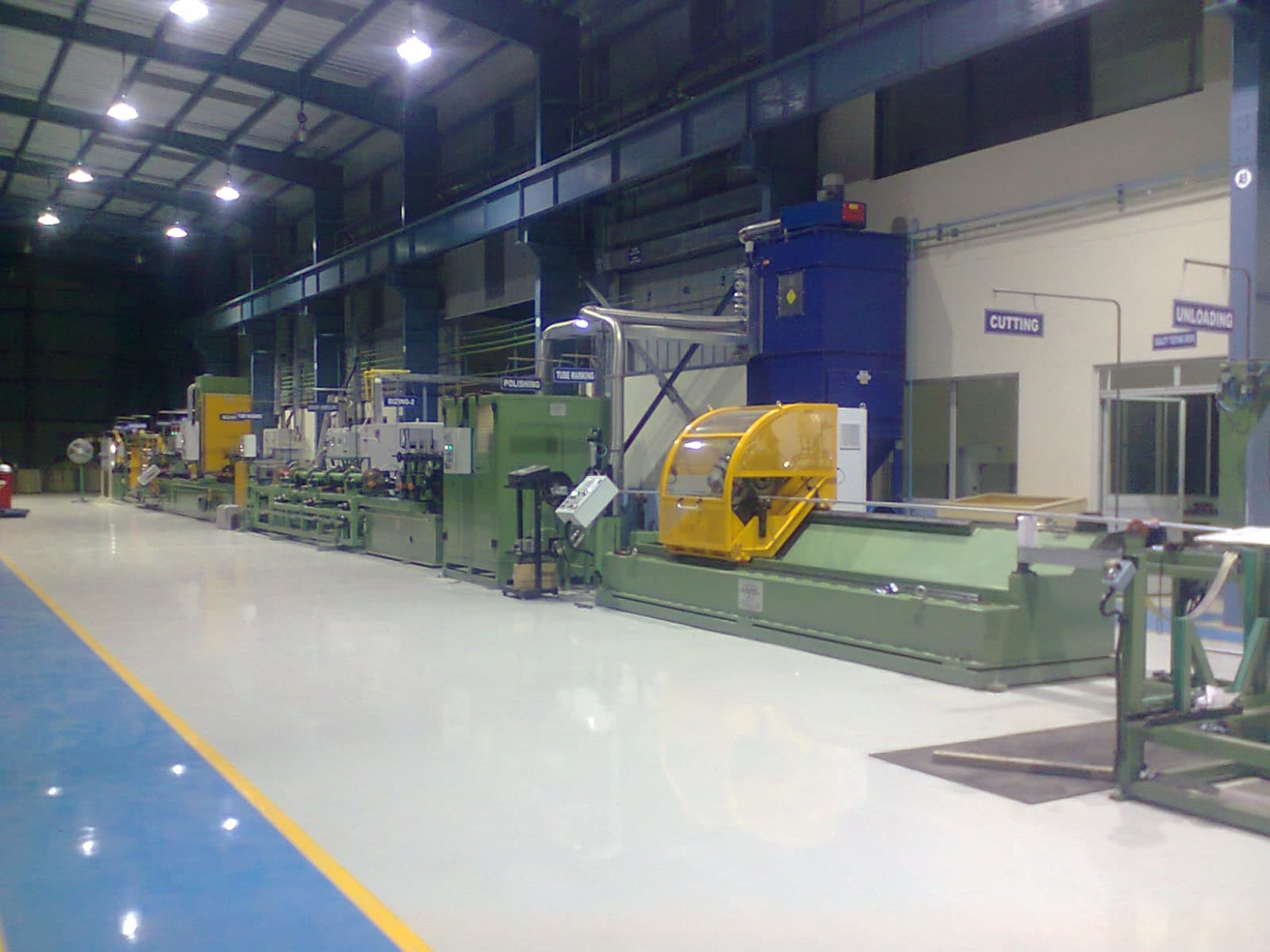
Stainless Steel Tolerances: What Fabricators Must Specify
When sourcing stainless steel for precision fabrication—whether for hydraulic manifolds, food-grade conveyors, or semiconductor tooling—dimensional accuracy is non-negotiable. Yet many buyers rely on generic stock tolerances or defer tolerance decisions to suppliers, risking rework, assembly delays, or performance failure. This post outlines what industrial buyers, importers, and fabricators need to know to specify stainless steel tolerances effectively—not as an afterthought, but as a foundational procurement requirement.
Why Standard Tolerances Aren’t Enough
Mill-standard tolerances (e.g., ASTM A480 for sheets or ASTM A276 for bars) reflect typical production capability—not application-specific needs. For example, ASTM A480 permits ±0.015" thickness variation for 0.125"-thick 304 sheet. That’s acceptable for general enclosures—but unacceptable for a 0.5 mm-thick diaphragm in a pressure sensor where ±0.002" may be required. Similarly, hot-rolled bar diameter tolerances (±0.010" to ±0.030") can’t support tight-clearance shafts or press-fit bearing housings. Assuming mill specs suffice invites misalignment, gasket leakage, or interference fits that compromise fatigue life.
Key Tolerance Types & Where They Matter Most
Three tolerance categories require deliberate specification:
-
Dimensional tolerances (thickness, width, diameter, length): Critical for nesting efficiency, part interchangeability, and downstream machining allowances. Specify tighter limits only where function demands it—tighter isn’t always better if it inflates cost or lead time unnecessarily.
-
Straightness and flatness: Often overlooked, yet vital for laser cutting, welding jigs, or surface-mounted components. Hot-rolled plate may have up to 1/8" deviation over 10 feet; cold-rolled can hold 0.005"/ft flatness—but only if ordered to that spec.
-
Geometric tolerances (e.g., concentricity, perpendicularity, roundness): Required when stainless parts interface with precision-machined assemblies. These are not covered by mill certs and must be defined in engineering drawings—and verified via CMM or optical metrology.
How to Specify Tolerances Without Overengineering
Start with the functional requirement—not the supplier’s default. Ask: What happens if this dimension deviates by X? If a 0.005" variance in flange bolt-hole spacing causes misaligned piping, specify positional tolerance (e.g., ±0.003" per ASME Y14.5). If thermal expansion differentials make ±0.001" critical for mating stainless and Inconel components, call out material-specific expansion allowances in the purchase order.
Use standardized references where possible: ASTM A480 (sheets), ASTM A276 (bars), EN 10058 (flat products), or ISO 2768 for general tolerances. But never assume compliance—state explicitly: “Flatness: ≤ 0.005"/ft, measured per EN 10058 Annex A.”
Also clarify responsibility: Will the supplier verify tolerances and provide test reports? Is inspection required pre-shipment? Define acceptance criteria (e.g., “100% inspection of OD on all 316L shafts ≥ 2" diameter using calibrated micrometers”);
Common Pitfalls & How to Avoid Them
-
Mixing metric and imperial units without conversion checks: A spec calling for “±0.1 mm” on a drawing referencing inch-based GD&T creates ambiguity. Stick to one system end-to-end—or define explicit conversion rounding rules (e.g., “All mm values rounded to nearest 0.01 mm”).
-
Specifying tighter tolerances than your process can hold: If your CNC shop routinely holds ±0.0015", ordering material at ±0.0005" adds cost with no functional benefit. Align material specs with your fabrication capabilities.
-
Omitting tolerance callouts on secondary operations: Mill tolerances apply only to raw material—not cut blanks, sheared edges, or drilled holes. Always reference post-processing tolerances separately (e.g., “Sheared edge squareness: ≤ 0.004" per inch of height”).
Collaboration Between Buyers and Suppliers
Tolerance discussions should begin early—ideally during RFQ stage. Provide your full dimensional control plan (DCP) or critical characteristics list alongside material requests. Reputable suppliers will flag feasibility concerns before quoting and suggest alternatives (e.g., switching from hot-rolled to cold-finished bar to meet straightness needs, or recommending stress-relieving after rough machining to stabilize dimensions).
Importers sourcing overseas should confirm tolerance verification methods used by mills or toll processors—and request third-party inspection reports (e.g., SGS or Bureau Veritas) where high-value or safety-critical applications are involved.
Conclusion
Stainless steel tolerances are not passive attributes—they’re active design parameters that influence manufacturability, reliability, and total cost of ownership. By specifying them deliberately—grounded in functional requirements, aligned with fabrication processes, and clearly communicated in purchase documentation—buyers reduce risk, avoid costly surprises, and ensure stainless components perform as intended across their service life. Don’t wait for the first rejected shipment to revisit tolerance strategy. Review your next stainless PO against this checklist: Are tolerances functional, verifiable, and traceable? If not, now is the time to refine them.
Готовы заказать нержавеющую сталь?
Свяжитесь с производителем, который отвечает в течение 24 часов.
Получите заводской расчет цены, экспортную упаковку и консультацию по листам, рулонам и трубам.
Избранные продукты
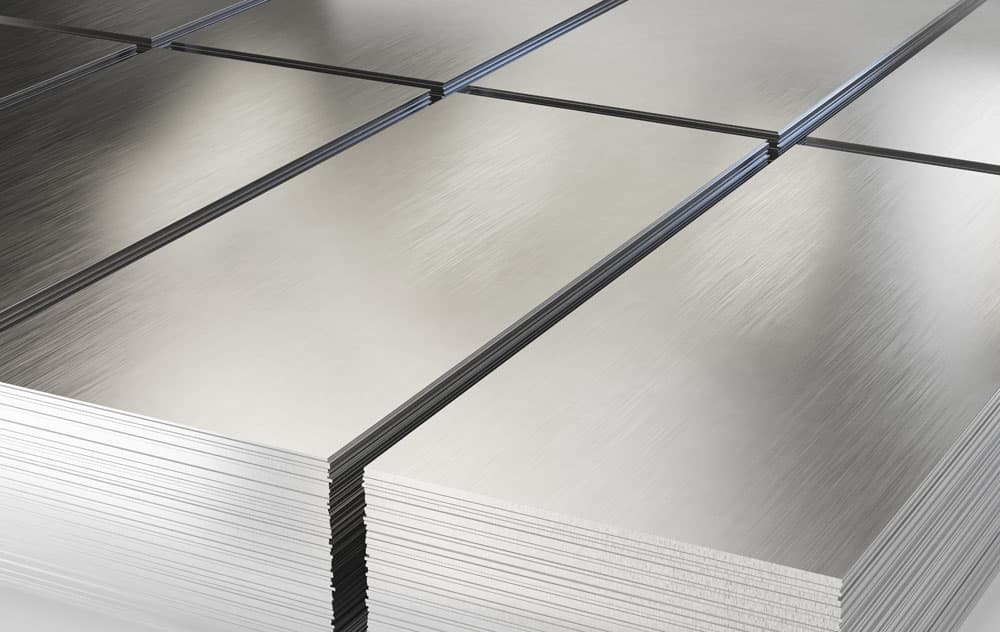
Лист из нержавеющей стали 304/304L
Самый популярный сплав в семействе нержавеющих сталей. Отличная коррозионная стойкость и формуемость.
Рулон нержавеющей стали 316/316L
Сплав с молибденом и повышенной стойкостью к хлоридам.
Круглая труба из нержавеющей стали 201/304
Универсальная круглая труба из сталей 201/304 с хорошей коррозионной стойкостью и формуемостью для конструкционных и декоративных задач.