


Stainless Steel Weldability: Practical Guidelines for Fabricators
Stainless Steel Weldability: Practical Guidelines for Fabricators
Welding stainless steel is not simply a matter of substituting it for carbon steel. Its metallurgical properties—higher thermal resistance, lower thermal conductivity, and alloy-dependent phase transformations—demand deliberate process control. For fabricators producing pressure vessels, conveyors, food-grade equipment, or structural components, inconsistent weld quality leads directly to rework, inspection failures, or field failures under service stress. This guide addresses weldability across common austenitic, ferritic, and duplex grades—not as theory, but as actionable input for daily shop-floor decisions.
Why Stainless Steel Weldability Differs from Carbon Steel
Stainless steels retain heat longer due to ~50% lower thermal conductivity than mild steel. This slows heat dissipation, increasing the risk of excessive interpass temperature and sensitization in susceptible grades (e.g., 304 at 425–850°C). Chromium carbide precipitation along grain boundaries reduces localized corrosion resistance—a critical concern for food, pharmaceutical, or chemical applications. Unlike carbon steel, stainless also lacks a clear ductile-to-brittle transition; instead, cracking risks shift toward solidification, liquation, or hydrogen-assisted mechanisms depending on composition and restraint.
Grade-Specific Behavior and Precautions
Austenitic Grades (304, 316, 321, 347)
- 304 and 316 are the most welded—but require strict interpass temperature control (<150°C for thin sections, <200°C for thicker ones) to avoid sensitization. Use low heat input (e.g., pulsed GTAW or short-circuit GMAW) and monitor with contact thermometers—not just visual cues.
- 321 and 347 contain titanium or niobium stabilizers, reducing sensitization risk. They’re preferred where post-weld annealing isn’t feasible—but note: 321’s Ti can form brittle inclusions if base metal cleanliness is poor or welding parameters are too aggressive.
Ferritic Grades (430, 409, 444)
- Prone to grain growth and embrittlement in the heat-affected zone (HAZ), especially above 0.05% C. Limit heat input and avoid preheat unless specified (e.g., 444 may tolerate up to 150°C for >6 mm thicknesses). Post-weld air cooling is standard; slow cooling promotes sigma phase formation in higher-Cr variants.
Duplex Grades (2205, 2507)
- Require balanced heat input to preserve the ~50/50 austenite/ferrite microstructure. Too little heat → excess ferrite → reduced toughness and corrosion resistance. Too much heat → sigma or nitride precipitates → embrittlement. Interpass temperature should stay between 100–150°C, and welds must be inspected via ferritoscope (target 40–45% ferrite in weld metal).
Joint Design and Fit-Up Best Practices
Poor fit-up amplifies distortion and increases residual stress—both detrimental to stainless integrity. Maintain root gaps within ±0.5 mm tolerance for full-penetration joints. Avoid excessive backing gas purge in open-root GTAW; inert gas contamination (e.g., air ingress) causes oxidation and chromium depletion at the weld root. For pipe welding, use internal argon purging with oxygen sensors (<50 ppm O₂) when wall thickness exceeds 3 mm—especially for 316L used in sanitary systems. Square-groove joints are acceptable for ≤3 mm sheet; beyond that, use single-V or U-grooves with controlled land width (1–1.5 mm) to prevent lack-of-fusion.
Filler Metal Selection: Matching vs. Overmatching
Filler choice affects mechanical performance, corrosion resistance, and crack susceptibility—not just chemistry matching. For 304 base metal, ER308L (≤0.03% C) is standard. For 316 base, ER316L prevents molybdenum dilution-related pitting loss. In high-restraint applications (e.g., heavy-section frames), consider overmatching fillers like ER309L for dissimilar joints or to suppress cracking—but verify compatibility with service environment (e.g., 309L’s higher ferrite content may reduce chloride resistance). Always verify filler lot certification (EN 1668 or AWS A5.9) and store rods in dry cabinets (<30% RH) to prevent moisture-induced porosity.
Post-Weld Considerations: Cleaning, Inspection, and Stress Relief
Mechanical cleaning (stainless steel wire brushing, non-ferrous abrasives) removes embedded iron particles that initiate rust staining—even on passivated surfaces. Chemical cleaning (nitric-hydrofluoric acid blends or citric-based alternatives) restores passive film continuity. For critical welds (ASME BPVC Section VIII, FDA 21 CFR Part 110), perform dye penetrant or phased-array UT per ASTM E165/E1065—not just visual inspection. Stress relief is rarely recommended for austenitics (risk of sigma phase), but may be justified for thick-section ferritics (>10 mm) or duplex weldments subjected to cyclic thermal load. When applied, hold at 750–800°C for 1 hr/inch of thickness, then cool rapidly in air or water.
Conclusion
Stainless steel weldability isn’t defined by a single parameter—it emerges from coordinated control of material grade, joint geometry, thermal management, filler selection, and post-weld treatment. Fabricators who treat weld procedure qualification (WPQ) as a static document rather than a living reference risk inconsistent results across shifts and batches. Review your WPS annually—or sooner if changing suppliers, equipment, or application requirements. Maintain traceable records for filler lots, interpass temperatures, and purge gas purity. These steps don’t add cost—they prevent cost: scrap, rework, NCRs, and warranty claims. When stainless performs as intended in service, the weld wasn’t invisible—it was correctly engineered.
Готовы заказать нержавеющую сталь?
Свяжитесь с производителем, который отвечает в течение 24 часов.
Получите заводской расчет цены, экспортную упаковку и консультацию по листам, рулонам и трубам.
Избранные продукты
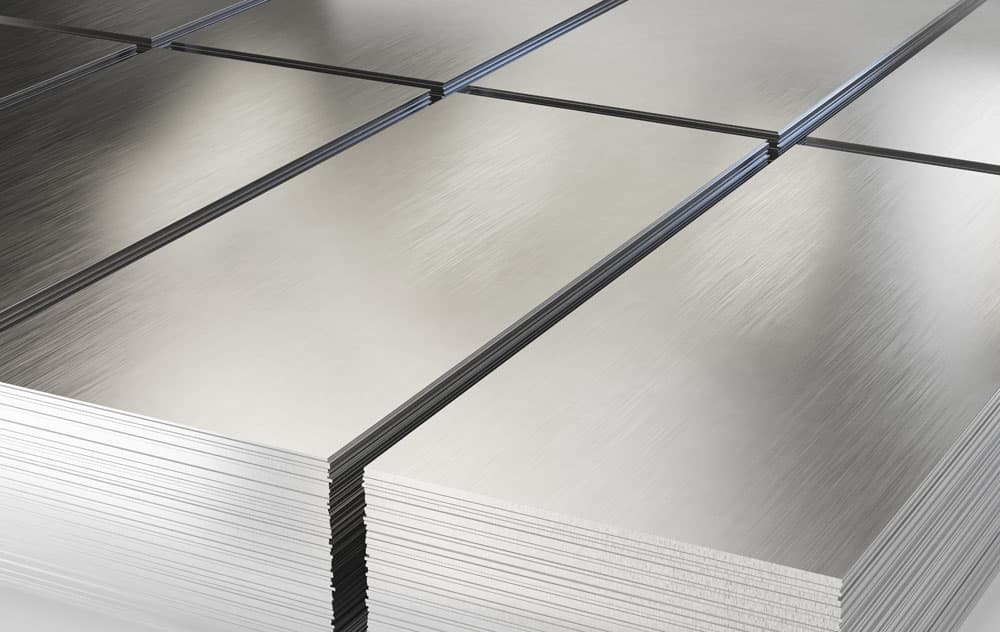
Лист из нержавеющей стали 304/304L
Самый популярный сплав в семействе нержавеющих сталей. Отличная коррозионная стойкость и формуемость.
Рулон нержавеющей стали 316/316L
Сплав с молибденом и повышенной стойкостью к хлоридам.
Круглая труба из нержавеющей стали 201/304
Универсальная круглая труба из сталей 201/304 с хорошей коррозионной стойкостью и формуемостью для конструкционных и декоративных задач.