


Stainless Steel Welding: Joint Integrity and Post-Weld Requirements
Stainless Steel Welding: Joint Integrity and Post-Weld Requirements
Welding stainless steel is not simply about joining two pieces—it’s about preserving metallurgical integrity, maintaining corrosion resistance, and meeting dimensional and surface requirements downstream. For industrial buyers, importers, and fabricators sourcing or specifying stainless components, understanding the interplay between welding process, filler selection, heat management, and post-weld treatment directly impacts part reliability, service life, and compliance with industry standards (e.g., ASME B31.3, ISO 15614-1, EN 1090-2).
This article focuses on actionable considerations—not theory—drawing from current 2026 supply chain realities, common fabrication pain points, and verified field performance data.
Why Stainless Steel Welding Differs From Carbon Steel
Stainless steels conduct heat poorly (~1/3 the thermal conductivity of carbon steel) and expand more (~50% greater coefficient of thermal expansion). These properties concentrate heat near the weld zone, increasing distortion risk and promoting sensitization in austenitic grades (e.g., 304, 316) when held between 425–850°C for extended time. Unlike carbon steel, where visual inspection often suffices, stainless welds require attention to both microstructure (e.g., ferrite content in duplex joints) and surface chemistry (e.g., chromium oxide layer restoration).
Matching Process to Joint Geometry and Grade
No single method suits all cases. Selection depends on wall thickness, access, tolerances, and required finish:
-
GTAW (TIG) remains the default for thin-wall tubing (<3 mm), sanitary fittings, and critical pressure parts. Its low heat input minimizes distortion and allows precise control over filler addition—critical for avoiding underfill or excessive reinforcement. Use ER316L filler for 316 base metal; avoid ER308L on 316 unless explicitly qualified, due to dilution-induced microsegregation.
-
GMAW (MIG) is efficient for thicker sections (>4 mm) and open-position structural welds—but requires pulsed waveform equipment to limit heat input. Standard short-circuit MIG risks excessive spatter, poor fusion at the root, and inconsistent shielding gas coverage. Always verify gas mix: 98% Ar / 2% CO₂ works for general fabrication; 98% Ar / 2% O₂ improves wetting for flat-position welds but increases oxidation risk in sensitive environments.
-
SAW (Submerged Arc) applies only to thick-section, straight-bead applications (e.g., rolled tanks, large-diameter pipe seams). It delivers high deposition rates but demands strict joint preparation and flux handling. Flux residues must be fully removed post-weld—especially in chloride-exposed service—to prevent under-deposit corrosion.
Avoid laser and plasma welding for non-automated shops: tight tolerances, high capital cost, and sensitivity to fit-up make them impractical outside high-volume OEM lines.
Managing Heat Input and Interpass Temperature
Heat input (kJ/mm) = (Voltage × Amperage × 60) / Travel Speed. Exceeding 1.2 kJ/mm for 304 or 316 increases sensitization risk and residual stress. For duplex grades (e.g., UNS S32205), keep interpass temperature below 150°C to preserve phase balance—excessive heat promotes sigma phase formation above 300°C, degrading toughness and corrosion resistance.
Practical controls include:
- Using copper backing bars for root pass cooling on pipe welds;
- Staggering weld passes in multi-pass joints instead of continuous stringer beads;
- Monitoring with infrared thermometers—not guesswork—before applying subsequent passes.
Post-Weld Surface Restoration: More Than Aesthetic
Weld discoloration (straw, blue, purple hues) signals chromium depletion in the heat-affected zone (HAZ). This reduces localized corrosion resistance—even if the bulk alloy meets spec. Mechanical cleaning (e.g., stainless steel wire brushing) alone is insufficient and risks embedded iron contamination.
Required steps:
- Pickling: Immersion or gel-based nitric-hydrofluoric acid treatment removes oxides and restores passive layer. Verify pH-neutral rinse water conductivity <10 µS/cm to confirm full acid removal.
- Passivation: Only after pickling—or on unwelded surfaces—using citric or nitric acid per ASTM A967. Do not substitute passivation for pickling on welded areas.
- Testing: Conduct ferroxyl test (per ASTM A380) on random samples to detect free iron; use copper sulfate test for small batches.
Note: Electropolishing post-weld is viable for high-purity applications (pharma, food) but adds cost and lead time. It does not replace pickling for oxide removal.
Documentation and Traceability for Buyers
Specify welding procedure specifications (WPS) and procedure qualification records (PQR) upfront—especially for ASME, PED, or FDA-regulated work. Require mill-test reports (MTRs) that include heat number traceability from raw material through final weld. Fabricators should document welder qualifications (e.g., AWS D18.1), filler lot numbers, and post-weld treatments applied—not just “as per standard.”
When importing welded assemblies, audit supplier capability before order placement: verify certified welders, calibrated heat-input monitoring tools, and documented pickle/passivation cycle parameters—not just certificates on file.
Conclusion
Stainless steel welding success hinges on disciplined process control—not just skill. For buyers and fabricators, aligning weld method, heat management, and post-treatment with actual service conditions prevents premature failure, rework, and warranty claims. In today’s environment—where material lead times remain tight and quality expectations are rising—investing time in weld specification clarity and verification pays measurable dividends in first-pass yield and long-term asset integrity. Focus on what preserves the stainless advantage: corrosion resistance, strength retention, and dimensional stability—not speed alone.
Готовы заказать нержавеющую сталь?
Свяжитесь с производителем, который отвечает в течение 24 часов.
Получите заводской расчет цены, экспортную упаковку и консультацию по листам, рулонам и трубам.
Избранные продукты
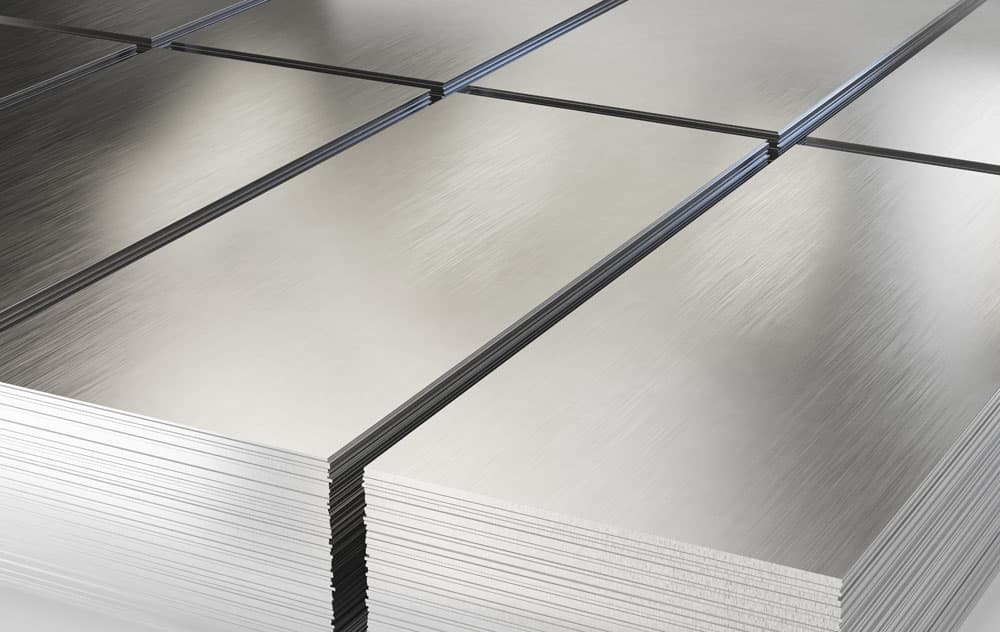
Лист из нержавеющей стали 304/304L
Самый популярный сплав в семействе нержавеющих сталей. Отличная коррозионная стойкость и формуемость.
Рулон нержавеющей стали 316/316L
Сплав с молибденом и повышенной стойкостью к хлоридам.
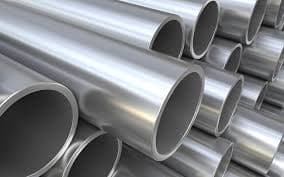
Круглая труба из нержавеющей стали 201/304
Универсальная круглая труба из сталей 201/304 с хорошей коррозионной стойкостью и формуемостью для конструкционных и декоративных задач.