
Stainless Steel Corrosion Resistance: Real-World Performance Factors
Stainless Steel Corrosion Resistance: Real-World Performance Factors
Corrosion resistance is the primary reason industrial buyers specify stainless steel — but it’s not an absolute property. It depends on specific interactions between material composition, surface integrity, environmental exposure, and mechanical condition. This post clarifies what drives real-world performance for procurement managers, importers, OEM engineers, and fabricators who need predictable service life without over-specifying or under-protecting.
It’s Not Just About the Grade
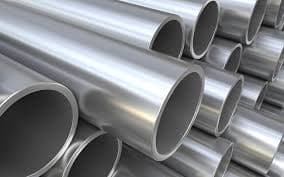
While grade selection (e.g., 304 vs. 316) sets the baseline, it doesn’t guarantee immunity. A 316 pipe in a chloride-rich indoor cooling loop may outperform a 304 pipe outdoors in dry inland air — yet both could fail if improperly installed or maintained. Chromium content (≥10.5%) enables passive film formation, but molybdenum (in 316, 2205, etc.) enhances resistance specifically to pitting and crevice corrosion in chloride environments. However, even high-molybdenum super duplex grades can suffer stress corrosion cracking (SCC) under sustained tensile load in warm, oxygenated brines. Buyers must match grade and microstructure to the dominant corrosion mechanism expected — not just general ‘corrosiveness’.
Surface Condition Matters as Much as Chemistry
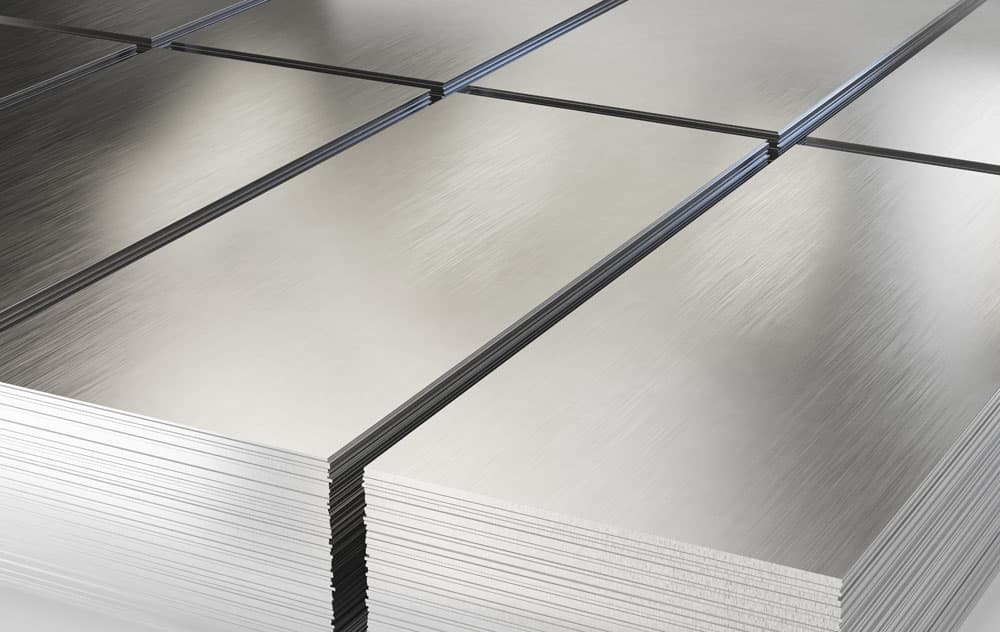
A mill-finished 316 sheet may corrode faster than a properly passivated and electropolished 304 component in the same food processing line. Mill scale, embedded iron particles from cutting tools, heat tint from welding, or grinding debris all disrupt passive film continuity. Fabricators often overlook this: abrasive blasting with carbon steel grit contaminates surfaces; improper cleaning leaves chlorinated residues; inadequate pickling after welding leaves chromium-depleted zones. For critical applications — pharmaceutical piping, semiconductor wet benches, marine hydraulic manifolds — surface preparation isn’t a finishing step; it’s a functional requirement. Specify ASTM A967 (chemical passivation) or ASTM B912 (electropolishing) where applicable, and verify compliance via ferroxyl testing or copper sulfate spot testing per ASTM A380.
Environment Defines the Threat — Not Just ‘Wet’ or ‘Dry’
Industrial environments vary widely in aggressiveness, and assumptions mislead. Consider:
- Coastal/marine: Chloride deposition isn’t only from sea spray — airborne salts accumulate on sheltered horizontal surfaces and accelerate under cyclic wet-dry conditions. Atmospheric corrosion rates increase exponentially above 20°C and 70% RH.
- Industrial atmospheres: SO₂ from combustion processes combines with moisture to form sulfurous acid, attacking lower-alloyed grades more aggressively than chlorides in some cases.
- Process fluids: pH, temperature, velocity, and oxidizer presence (e.g., dissolved O₂, hypochlorite) dictate whether uniform corrosion, pitting, or SCC dominates. Stagnant zones in stainless-lined tanks promote microbiologically influenced corrosion (MIC), especially when biofilm forms over scratches or weld spatter.
- Thermal cycling: Repeated heating and cooling can cause condensation in insulated piping, trapping chlorides against the metal — a common failure mode in HVAC chillers using seawater-cooled condensers.
Buyers should map exposure conditions by location, phase (gas/liquid/solid), and time — not just label a system ‘corrosive’.
Fabrication Practices Directly Influence Long-Term Integrity
How stainless steel is cut, welded, bent, and assembled changes its local corrosion behavior. Cold bending a 304 tube beyond 3% strain introduces dislocation density that reduces localized passivity. Weld heat input affects grain growth and ferrite distribution in duplex grades — too little ferrite increases susceptibility to SCC; too much reduces toughness. Heat-affected zones (HAZ) in austenitic welds often show reduced chromium carbide precipitation, but only if post-weld heat treatment (PWHT) is applied — which is rarely feasible for field-assembled systems. Instead, use low-carbon grades (304L, 316L) or stabilized grades (321, 347) where sensitization risk is high. Importers sourcing from multiple mills should require mill test reports (MTRs) confirming actual carbon content and ferrite numbers — not just grade designation.
Maintenance and Inspection Are Part of Material Specification
Corrosion resistance degrades over time — not due to inherent material failure, but due to operational neglect. Build inspection intervals into procurement specs: visual checks for staining or etching every 6 months in aggressive zones; periodic ultrasonic thickness measurements in piping subject to erosion-corrosion; scheduled cleaning protocols to remove salt deposits or process residue. Specify surface finish requirements (e.g., Ra ≤ 0.8 µm for sanitary tubing) not just for hygiene, but because smoother surfaces resist initiation of pitting. When procuring replacement parts, insist on traceability to original heat number and fabrication history — particularly for pressure-containing components where localized corrosion can initiate at undocumented repairs.
Conclusion
Stainless steel corrosion resistance is a systems property — not a material data sheet value. Buyers and fabricators gain reliability not by selecting the highest-grade alloy available, but by aligning grade, surface condition, fabrication method, and maintenance plan with the actual service environment. Clarify these interdependencies early in sourcing and design reviews. Request documented evidence — not just declarations — for passivation, surface roughness, and thermal history. Doing so reduces field failures, avoids unplanned downtime, and supports long-term total cost of ownership — especially in capital-intensive infrastructure serving energy, chemical, marine, and food sectors.