

Stainless Steel Cut-to-Length Services: What Buyers Should Specify
Stainless Steel Cut-to-Length Services: What Buyers Should Specify
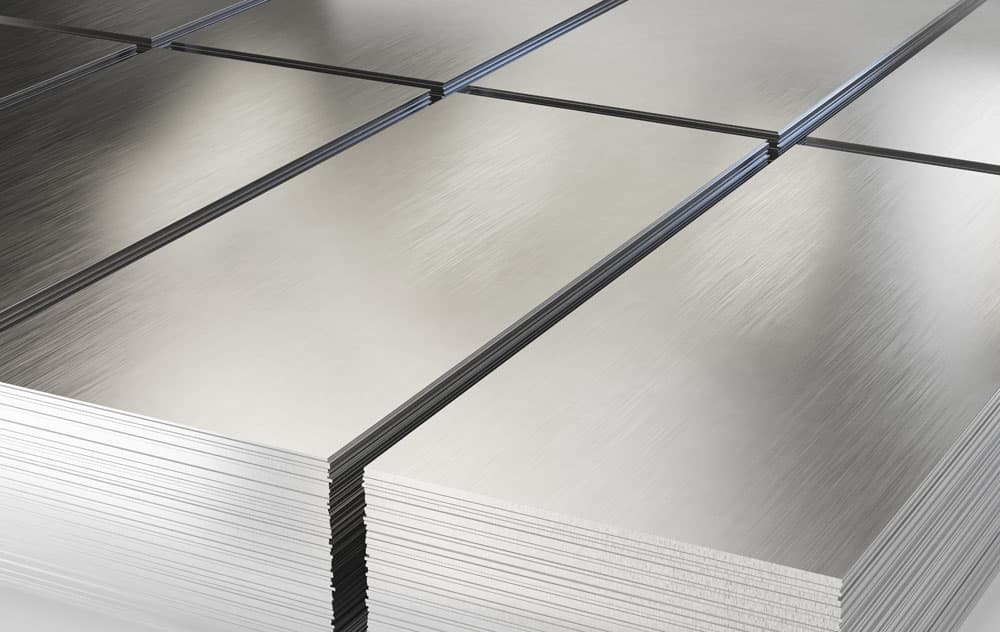
For industrial buyers, importers, and OEMs sourcing stainless steel for fabrication or assembly, cut-to-length (CTL) services are often essential—but frequently under-specified. Unlike standard mill lengths, CTL material is processed to exact dimensions before shipment, reducing in-house handling and improving throughput. Yet inconsistent communication between buyer and supplier leads to rejected shipments, production bottlenecks, and unplanned secondary operations. This post outlines the five critical parameters buyers must define before placing a CTL order—and why each matters operationally.
1. Dimensional Tolerances: Beyond ‘±1 mm’
Tolerance callouts like “±1 mm” are insufficient without context. Specify whether tolerances apply to:
- Length only, or also to width (for slit edge strips) or thickness (if leveling or tension leveling is involved);
- Single-piece tolerance (e.g., each piece ±0.5 mm) versus batch tolerance (e.g., average length across 20 pieces ±0.3 mm);
- Measurement condition: room temperature (20°C), after uncoiling, or post-stress-relieving?
Fabricators using automated feeding systems require tighter length consistency than those performing manual layout. For example, a ±0.3 mm tolerance may be needed for progressive die stamping, whereas ±1.0 mm suffices for structural bracket cutting. Always reference ISO 404 or ASTM A480 where applicable—and confirm whether your supplier measures with calibrated laser scanners or mechanical calipers.
2. Edge Condition and Surface Protection
Cutting alters edge geometry and introduces micro-burrs, oxide layers, or localized work hardening—especially in austenitic grades like 304 and 316. Specify:
- Edge type: as-cut (sheared), deburred (mechanical or tumbling), or edge-trimmed (with controlled radius);
- Burrs: maximum height (e.g., ≤0.05 mm per ASME B46.1), and whether removal applies to both top and bottom edges;
- Surface protection: required film type (e.g., PE blue, static-dissipative), adhesive residue limits (<0.01 mg/cm²), and whether film remains during shipping or is applied post-cutting.
Unspecified edges can clog CNC feeders or damage downstream tooling. One automotive Tier-1 supplier recently reported a 12% increase in tool wear after receiving 316L strips with uncontrolled shear burrs—despite nominal dimensional compliance.
3. Packaging, Bundling, and Identification
CTL orders often ship in bundles, not coils. Clarify:
- Bundle configuration: max weight per bundle (e.g., ≤1,200 kg for safe forklift handling), orientation (flat-stack vs. interleaved), and strapping method (steel vs. PET strap, number and spacing);
- Marking requirements: permanent ink or laser etching on each piece (e.g., heat number, grade, thickness, length), or bundle-level labeling only;
- Moisture barriers: VCI paper wrapping, desiccant inclusion, or sealed plastic shrouding for marine transit or humid storage.
A lack of standardized bundling caused three separate delays at a European heat exchanger fabricator last quarter—two bundles exceeded crane capacity, and one lacked traceable heat IDs, triggering full re-inspection.
4. Straightness and Flatness Specifications
Unlike coiled material, CTL pieces are typically leveled prior to cutting. But ‘leveled’ isn’t standardized. Define:
- Flatness limit: e.g., ≤1.5 mm deviation over 1 m length (per ASTM A480, Table 7);
- Measurement method: contact profilometer vs. optical scan, and whether measured on support or free-standing;
- Straightness tolerance for long parts: especially relevant for extrusion blanks or tube preforms (>3 m). Specify bow (max deviation from chord) and twist (angular deviation per meter).
Unverified flatness leads to misalignment in laser welding jigs or inconsistent roll-forming gaps—costing up to 8 labor hours per ton in corrective hand-finishing.
5. Traceability and Documentation Alignment
Each CTL bundle should retain full mill traceability—but documentation format matters. Require:
- Mill test reports (MTRs) linked to individual heat numbers—not batch averages;
- Cut log data: timestamp, operator ID, machine ID, and verification method (e.g., barcode scan + photo validation);
- Format compatibility: PDF/A-1b for archival, or CSV exports for ERP integration (e.g., SAP QM module).
One medical device OEM discovered that 17% of its 304L CTL shipments lacked MTRs tied to actual cut pieces—only to the parent coil—delaying FDA audit readiness by six weeks.
Conclusion
Cut-to-length stainless steel delivers efficiency gains—but only when procurement teams treat it as an engineered service, not just a sizing step. The five specifications above—dimensional tolerances, edge condition, packaging, flatness, and traceability—are interdependent and directly impact fabrication yield, equipment uptime, and regulatory compliance. Work with suppliers who offer pre-order engineering reviews, not just price quotes. And always validate the first lot against your full spec—not just length—before approving volume production. Clear specification is the lowest-cost quality control you’ll implement this year.
Published: 2026-05-05