
Stainless Steel Mechanical Properties: What Buyers Must Verify
Stainless Steel Mechanical Properties: What Buyers Must Verify
When sourcing stainless steel for industrial applications—whether for pressure vessels, conveyor frames, pump housings, or structural supports—mechanical properties are non-negotiable. Unlike aesthetic or surface-related criteria, these properties directly determine whether a material will safely bear load, resist deformation under stress, or survive cyclic loading over time. Yet many procurement teams rely solely on grade designation (e.g., “304” or “2205”) without verifying actual mechanical test data—risking mismatched performance, field failures, or unnecessary cost premiums.
This post clarifies which mechanical properties matter most for industrial buyers, fabricators, and OEMs—and how to validate them in supplier documentation.
Why Grade Alone Isn’t Enough
Stainless steel grades define chemical composition—not mechanical behavior. A 316L coil supplied by Supplier A may meet ASTM A240’s minimum tensile strength of 485 MPa, while another from Supplier B may deliver 540 MPa due to differences in hot rolling reduction, annealing temperature, or cooling rate. Similarly, duplex grades like UNS S32205 can vary significantly in yield strength depending on ferrite-austenite phase balance and thermal history.
Without verified mechanical test reports (MTRs), buyers risk:
- Specifying insufficient strength for dynamic loads,
- Over-engineering with unnecessarily high-strength (and higher-cost) material,
- Accepting material that fails fatigue or impact resistance requirements.
Always request MTRs per ASTM A683 (for sheet/strip) or ASTM A691 (for pipe), with certified values—not just “conforms to spec.”
Key Properties and Their Real-World Impact
Tensile Strength (UTS)
Tensile strength is the maximum stress a material withstands before fracture. For structural components (e.g., support brackets or flanges), UTS informs ultimate load capacity. But note: high UTS alone doesn’t guarantee ductility. Some high-strength cold-worked grades (e.g., 301 Full Hard) exceed 1,200 MPa UTS but offer only ~2% elongation—making them unsuitable for bending or forming after delivery.
Yield Strength (YS)
Yield strength indicates where permanent deformation begins. In piping systems or pressurized tanks, YS governs allowable design stress per ASME BPVC Section VIII. For example, duplex stainless steels (e.g., S32750) offer yield strengths >550 MPa—nearly double that of standard 304—enabling thinner walls and weight savings. However, YS must be paired with consistent uniform elongation; inconsistent YS across a heat lot can cause uneven springback during fabrication.
Elongation at Break
Reported as a percentage over a defined gauge length (e.g., 50 mm), elongation measures ductility—the ability to deform plastically before failure. Low elongation (<15%) in austenitic grades may signal improper solution annealing or excessive intergranular carbide precipitation. Fabricators need ≥30% elongation for deep-drawing operations; OEMs specifying welded assemblies should verify elongation remains stable across heat-affected zones.
Hardness
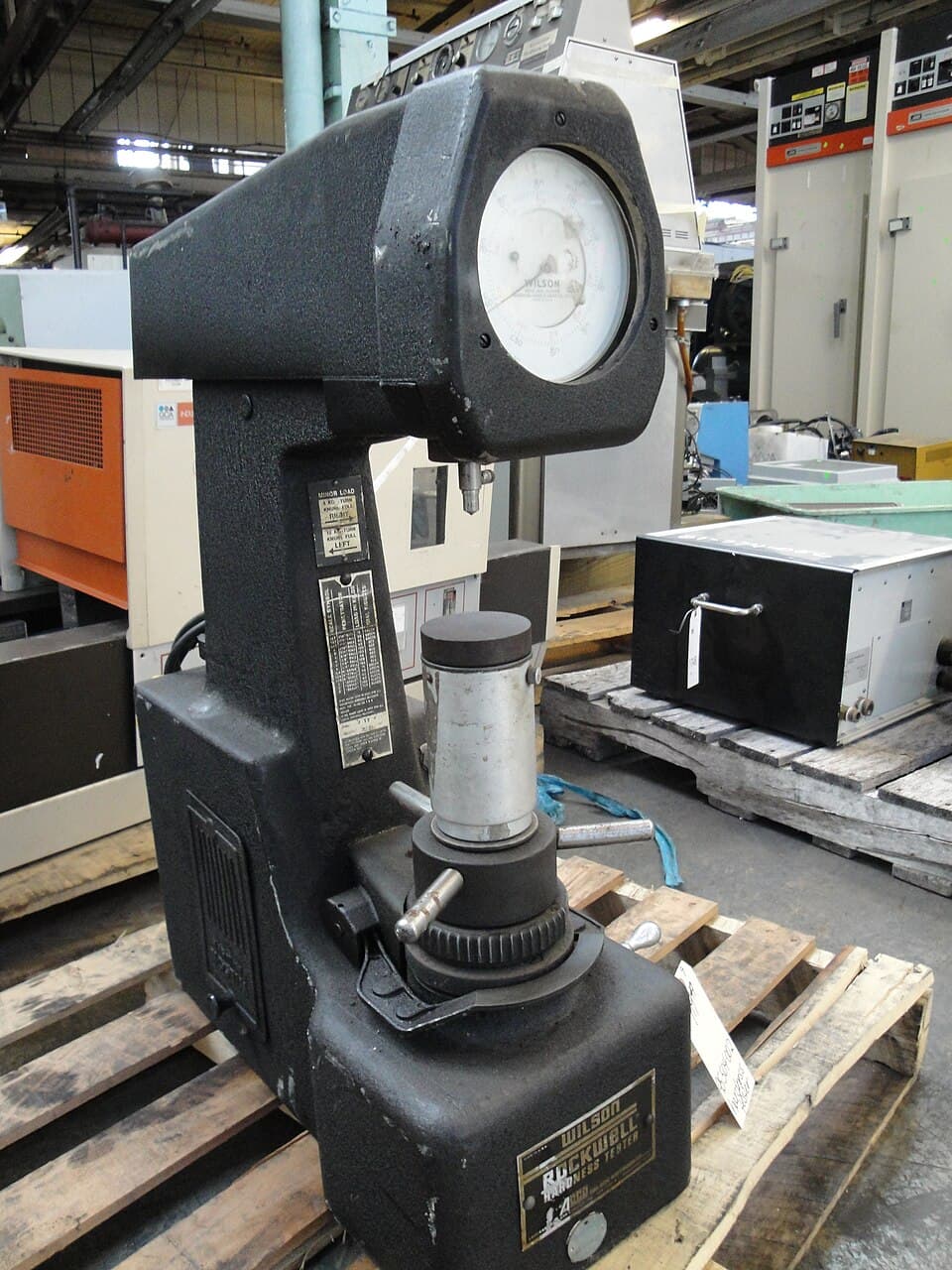
Hardness (typically measured as Rockwell B or Vickers) correlates with wear resistance and machinability. While not a direct substitute for tensile or yield data, it serves as a fast, non-destructive verification tool. A sudden hardness deviation (>15 HRB) within a single coil may indicate localized cold work or thermal variation—and warrants full mechanical retesting.
How to Read and Validate Mechanical Test Reports
A compliant MTR includes: heat number, product form (e.g., hot-rolled plate), thickness, applicable specification (e.g., ASTM A240), test method (e.g., ASTM E8), and individual test results—not just pass/fail statements. Look for:
- Test location: Results should reflect actual product—not mill-test coupons removed from a different billet.
- Sampling frequency: Per ASTM A240, one tension test per 25 tons (or per heat, if smaller) is required for sheet/plate.
- Traceability: Heat number must match shipping documents and physical mill labels.
Avoid MTRs missing test temperature (ambient vs. elevated), strain rate, or original cross-section dimensions—these omissions limit engineering validation.
Beyond Standard Specs: When to Request Additional Testing
Standard specifications set minimums—but your application may demand more. Consider requesting supplemental tests when:
- Operating temperatures exceed 300°C (ask for creep-rupture data per ASTM E139),
- Components undergo repeated impact (request Charpy V-notch impact tests at service temperature),
- Fatigue life exceeds 10⁶ cycles (request S-N curve data per ASTM E466),
- Material will be used in sour service (NACE MR0175/ISO 15156 requires HIC and SSC testing for duplex and super-austenitics).
These tests add lead time and cost—but prevent far greater expenses downstream.
Conclusion
Mechanical properties are foundational—not optional—inputs for stainless steel selection. Relying on grade names alone introduces variability that undermines design margins, fabrication efficiency, and long-term reliability. Industrial buyers should require full, traceable mechanical test reports aligned to their specific application demands—not just compliance checkboxes. At our facility, every shipment includes MTRs validated against ISO/IEC 17025-accredited testing protocols, with full transparency on test conditions and uncertainty ranges. If your current supplier provides only summary tables or generic certificates, ask for the raw data sheet. It’s the simplest step toward ensuring material performance matches engineering intent.
Published: 2026-03-26