
Stainless Steel Procurement: Key Considerations for Industrial Buyers
Stainless Steel Procurement: Key Considerations for Industrial Buyers
Sourcing stainless steel is rarely just about price per ton. For industrial buyers—especially importers, OEMs, and fabricators—the procurement process directly impacts production continuity, compliance, quality control, and long-term cost of ownership. In today’s global supply environment—marked by regional trade policies, raw material volatility, and tightening regulatory scrutiny—how you procure stainless steel matters as much as what grade or finish you select.
This post outlines actionable considerations that go beyond datasheets and quotations. It’s written for procurement professionals who manage multi-site operations, handle regulated end-use sectors (e.g., food processing, pharmaceuticals, energy), or work with tight fabrication tolerances.
1. Demand Full Mill Traceability—Not Just Grade Designation
Stainless steel grades (e.g., 304, 316L, 2205) describe composition—but not consistency. Two batches both labeled “ASTM A240 316L” may differ in carbon content, nitrogen residuals, or inclusion distribution if sourced from different mills or heats. For critical applications, this variation can affect weld integrity, corrosion resistance, or fatigue life.
What to require:
- Heat-specific mill test reports (MTRs) certified to EN 10204 Type 3.1 or 3.2 (not just supplier-issued summaries).
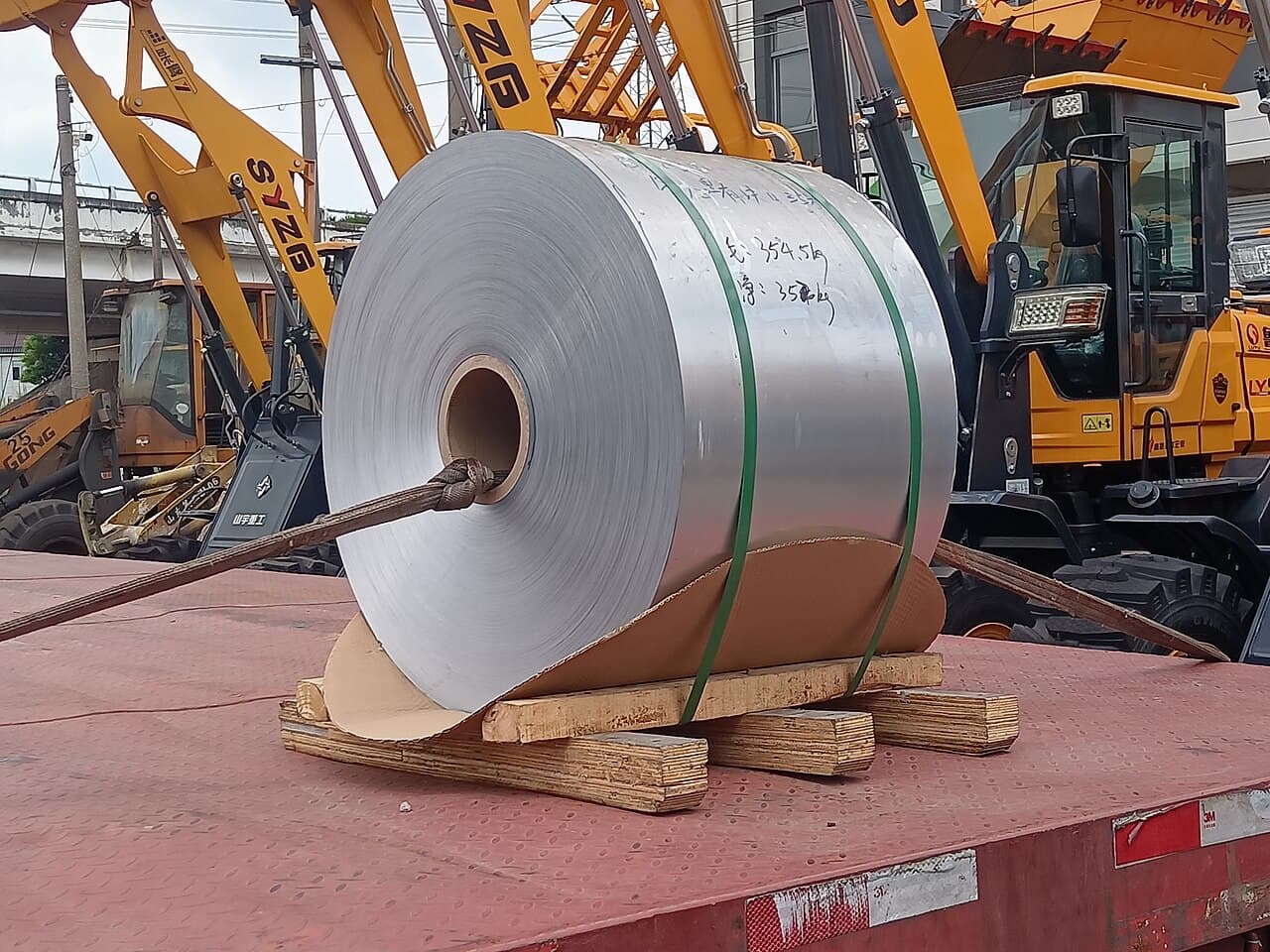
- Traceable heat numbers physically marked on coils, plates, or bars—and cross-referenced in shipping documents.
- Confirmation that the MTR includes actual chemical analysis (not just “typical” ranges) and mechanical test results (tensile, yield, elongation) from the same heat.
Avoid suppliers who consolidate material from multiple heats without full disclosure—even if all meet nominal spec. That practice increases variability and limits root-cause analysis if a part fails during qualification or service.
2. Evaluate Supplier Capacity Beyond Lead Times
Lead time quotes are useful—but incomplete. A quoted 6-week delivery means little if the supplier cannot guarantee consistent lot sizing, minimum order quantities (MOQs), or dimensional repeatability across shipments.
Key questions to ask:
- Can they hold inventory of your most-used grades/thicknesses in stable, climate-controlled conditions? (Oxidation or surface contamination during storage affects downstream cleaning and finishing.)
- Do they maintain dedicated slitting, leveling, or cut-to-length lines—or outsource those steps? Outsourced processing adds handoffs, potential delays, and inconsistent QC.
- What’s their policy on partial shipments? If your order spans multiple heats, can they ship complete heats together—or do they split heats across deliveries, complicating your internal traceability?
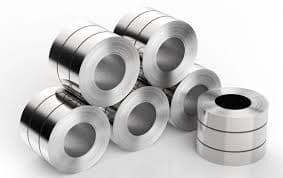
Fabricators especially benefit from suppliers offering “just-in-sequence” delivery options—where coils arrive pre-slit to exact widths and weights aligned with press-feed schedules. This reduces in-plant handling and scrap from width adjustments.
3. Understand Certification Scope—and Where Gaps Occur
Certifications like ISO 9001 or AS9100 confirm a supplier’s quality management system—but not the stainless steel itself. Similarly, a CE marking applies only to certain construction products under EU CPR—not general industrial stock.
More relevant for procurement:
- EN 10204 compliance level: Type 3.1 (supplier-certified) vs. Type 3.2 (third-party verified). Choose 3.2 when supplying to regulated industries or when contractual liability rests with your organization.
- NACE MR0175/ISO 15156 compliance: Required for sour-service oil & gas components. Verify that testing was performed on the actual heat—not extrapolated from similar chemistries.
- Food-grade compliance: For equipment in contact with consumables, confirm compliance with FDA 21 CFR 178.3710 and that surfaces were passivated per ASTM A967 (not just pickled).
Note: Some suppliers offer “certification packages” that bundle MTRs, dimensional reports, and packaging declarations. Request samples before committing—ensure formats match your ERP or QA documentation requirements.
4. Assess Supply Chain Resilience—Not Just Geography
Nearshoring or dual-sourcing sounds prudent—but doesn’t automatically improve resilience. A single-source mill in one region may have stronger raw material contracts, deeper metallurgical expertise, or better contingency planning than two smaller suppliers spread across jurisdictions.
Look for evidence of:
- Raw material hedging strategies (e.g., nickel or molybdenum forward contracts).
- Inventory buffers at key nodes (e.g., bonded warehouses near ports with customs pre-clearance).
- Redundant logistics partners—not just one freight forwarder or carrier.
Also clarify responsibility for customs classification (HS code), origin documentation (EUR.1, Form A), and antidumping duty verification. Misclassified stainless steel shipments have triggered costly delays and penalties—especially for grades subject to Section 232 tariffs or EU anti-dumping measures.
5. Align Contract Terms with Your Risk Profile
Standard terms often default to FOB origin or EXW—shifting inspection, insurance, and damage risk upstream. For high-value or precision-grade orders, consider:
- Pre-shipment inspection clauses requiring third-party verification (e.g., SGS or Bureau Veritas) against agreed specifications—including surface quality and dimensional tolerances.
- Penalty clauses tied to MTR discrepancies (e.g., >0.02% carbon variance in 316L), not just non-conformance.
- Right-to-audit language for mills supplying >50% of your annual volume—especially where proprietary alloy modifications or tighter tolerances apply.
Finally, ensure your contract defines “conformance” clearly. Does it refer to the MTR alone—or also to real-world performance criteria (e.g., intergranular corrosion resistance per ASTM A262 Practice E after welding)? Ambiguity here invites disputes later.
Conclusion
Effective stainless steel procurement balances technical rigor with operational pragmatism. It requires looking past unit price to assess how well a supplier supports your quality system, traceability needs, and production cadence. The strongest partnerships emerge when buyers specify what evidence they need—not just what material they want—and when suppliers treat documentation and logistics as integral to product specification—not add-ons. Start with one improvement: require heat-specific MTRs on your next order. From there, build traceability upward—not downward.
Published March 24, 2026.