

Stainless Steel Stock Forms: Choosing Bars, Sheets, and Tubes for Fabrication
Stainless Steel Stock Forms: Choosing Bars, Sheets, and Tubes for Fabrication
When sourcing stainless steel for industrial use, buyers and fabricators must move beyond alloy grade selection and consider how material is supplied. Stock form—whether bar, sheet, plate, or tube—directly affects lead time, cost, processing efficiency, yield, and part integrity. This post clarifies key distinctions among common stainless steel stock forms, outlines procurement considerations, and highlights real-world trade-offs relevant to importers, OEMs, and job shops.
Why Stock Form Matters Beyond Grade
A 316 stainless steel bar isn’t interchangeable with a 316 sheet—even when chemical composition and mechanical properties match. Differences in manufacturing history (hot-rolled vs. cold-finished), dimensional tolerances, surface condition, and residual stress influence how material behaves during cutting, bending, welding, and machining. For example, cold-drawn round bars offer tighter diameter tolerances and improved surface finish over hot-rolled equivalents but may require annealing before deep drawing. Likewise, coil-based sheet offers better width consistency than sheared plate—but coil edge quality can affect laser-cut part accuracy. Selecting the wrong stock form adds rework, scrap, or delayed delivery—not just upfront cost.
Bars: Solid Sections for Machined and Structural Use
Bars are supplied in rounds, squares, hexagons, and rectangles—typically hot-rolled, cold-drawn, or ground finished. Hot-rolled bars suit structural applications where tight tolerances aren’t critical (e.g., support frames, anchor bolts). Cold-drawn bars deliver higher strength, smoother surfaces, and ±0.05 mm diameter tolerance—ideal for precision turned parts like valve stems or hydraulic fittings. Ground bars add dimensional stability and surface uniformity for high-accuracy applications (e.g., shafts in food-grade pumps). Buyers should specify finish type, straightness (e.g., ≤1.5 mm/m), and whether descaling or pickling is required—especially for weld prep or direct surface exposure in hygienic environments.
Sheets and Plates: Flat Products for Forming and Fabrication
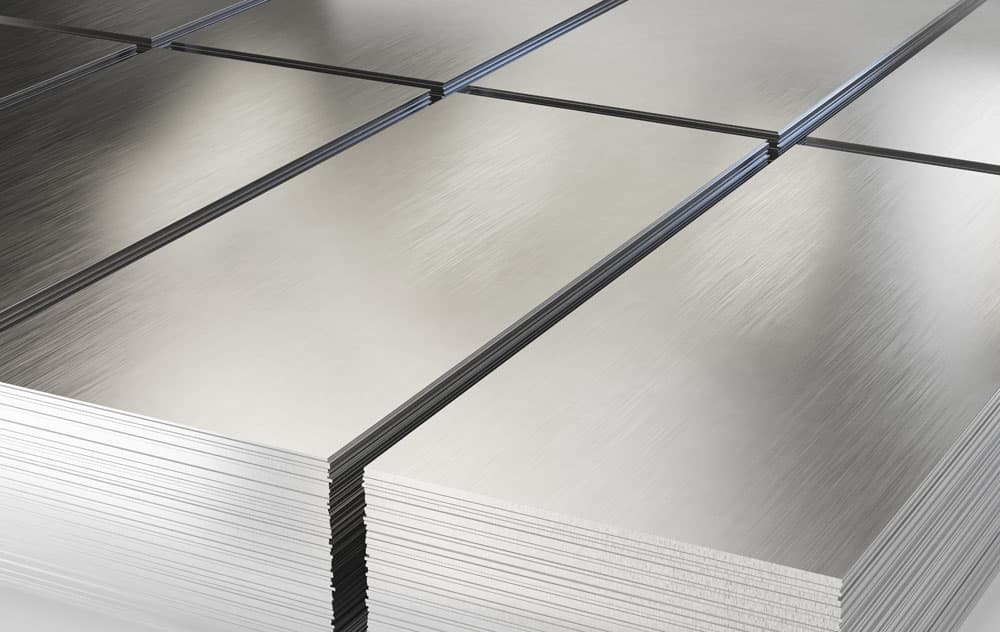
The distinction between sheet (<6 mm thick) and plate (≥6 mm) remains relevant for handling, tooling, and forming limits. Most stainless steel sheet is supplied in coil or cut-to-length sheets; plate is almost always sheared or flame-cut from hot-rolled slabs. Coil-fed sheet enables high-speed stamping and laser cutting with consistent thickness across large quantities—but requires compatible uncoiling and leveling equipment. Sheared sheet offers easier handling for small-batch fabricators but may have edge burrs and slight camber. Plate users should verify flatness (typically ≤3 mm/m for mill-plate, tighter for leveled options) and confirm whether thermal cutting edges need grinding prior to welding. Note that 2B finish dominates sheet supply, while No. 1 (hot-rolled, annealed, pickled) remains standard for plate—each influencing subsequent finishing or coating steps.
Tubes and Pipes: Seamless vs. Welded Considerations
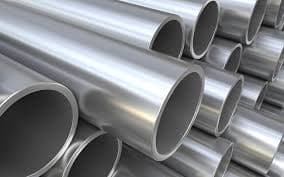
Tubes (mechanical/structural) and pipes (pressure-rated) both serve critical roles—but their production methods create distinct performance profiles. Seamless tubes are extruded or pierced from solid billets, offering uniform wall thickness and no weld seam—making them preferred for high-pressure, high-temperature, or cyclic loading applications (e.g., heat exchanger tubing, hydraulic cylinders). Welded tubes (ERW or laser-welded) provide tighter OD/tolerance control, lower cost, and broader size availability—suitable for framing, conveyors, or non-critical fluid lines. For welded tube buyers, request mill test reports verifying seam tensile strength ≥90% of base metal, and confirm whether the weld has been solution-annealed and pickled—especially if corrosion resistance at the seam is mission-critical.
Procurement Practicalities: Lead Time, Minimum Order Quantities, and Traceability
Stock form impacts procurement logistics more than many realize. Bar and tube mills often require minimum order quantities (MOQs) of 500–2,000 kg per size, especially for less common grades or finishes. Sheet coil MOQs are typically 2–5 metric tons—smaller batches may trigger surcharges or extended lead times. Conversely, plate is frequently available from distributor inventory in standard sizes (e.g., 1,500 × 3,000 mm), enabling faster turnaround for prototypes or urgent repairs. Traceability is non-negotiable: every shipment should include full mill test reports (MTRs) referencing heat number, chemical analysis, mechanical test results, and applicable standards (e.g., ASTM A276 for bars, A240 for sheet, A213 for tubes). Importers should verify MTR alignment with country-of-origin documentation and ensure lot traceability extends to final part level where required (e.g., FDA, ASME BPVC).
Conclusion
Selecting stainless steel stock forms is not a secondary decision—it’s a foundational specification that shapes downstream fabrication, quality assurance, and total landed cost. Buyers and fabricators benefit most by aligning stock form choice with process capability, part function, and supply chain constraints—not just nominal grade or price per kilogram. When evaluating suppliers, prioritize those who offer clear technical data per form, support custom cutting or finishing, and maintain auditable traceability from heat number to shipment. Doing so reduces variability, avoids costly last-minute substitutions, and supports consistent, compliant output across production runs.
Published April 11, 2026.