
Stainless Steel Surface Finishes: Functional Selection Guide
Why Surface Finish Matters Beyond Appearance
For industrial buyers, importers, fabricators, and OEMs, stainless steel surface finish is rarely just about visual appeal. It directly affects corrosion performance, cleaning efficiency, galling resistance in sliding contact, weld appearance, and even downstream coating adhesion. Yet many procurement specifications default to generic terms like 'mill finish' or 'brushed'—leaving room for interpretation, inconsistency, and functional mismatch. This guide clarifies how to specify finishes purposefully.
Key Finish Types and Their Functional Roles
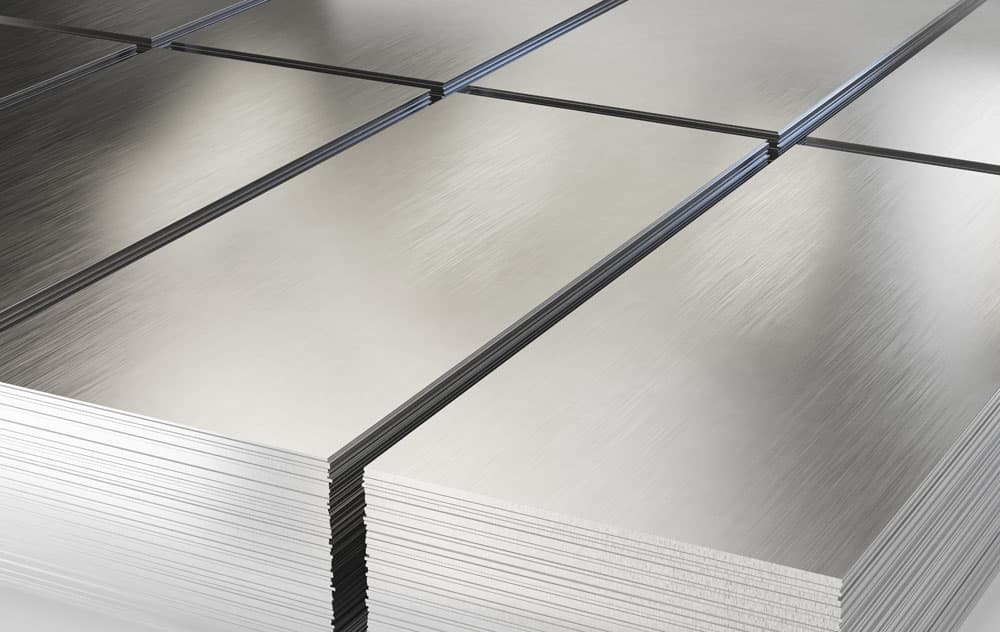
Stainless steel finishes fall into two broad categories: mill finishes, applied during rolling, and mechanical or chemical finishes, added post-mill. Each carries distinct metallurgical and functional implications.
-
2B Finish: The most widely available cold-rolled finish. Achieved via annealing and pickling, then light skin-pass rolling. Offers uniform matte appearance, good formability, and consistent corrosion resistance. Ideal for enclosures, tanks, and parts requiring subsequent polishing or coating. Not recommended for high-touch or hygienic surfaces where fingerprint retention or cleaning frequency matters.
-
No. 4 Finish: A linear grain finish produced by abrasive belt polishing (typically 120–180 grit). Provides moderate reflectivity, hides minor scratches, and improves cleanability over 2B in food processing or pharmaceutical equipment. However, grain direction must be specified—and maintained—during fabrication to avoid inconsistent appearance across welded assemblies.
-
BA (Bright Annealed): Produced in a controlled-atmosphere furnace followed by temper rolling. Delivers a highly reflective, mirror-like surface without mechanical abrasion. Used in architectural trim, reflectors, and heat exchanger components where optical consistency or low surface energy matters. BA is softer than 2B and more prone to scratching during handling—requiring protective film and careful logistics planning.
-
Etched and Passivated Surfaces: Chemical treatments—not mechanical—that modify surface topography and oxide layer composition. Etching (e.g., with ferric chloride) creates micro-roughness for improved paint adhesion or non-slip properties. Passivation (per ASTM A967) removes free iron and enhances chromium oxide formation but does not alter visible texture. Both require precise process control and verification via copper sulfate testing or salt spray validation.
Matching Finish to Application Environment
Function drives finish selection—not vice versa. Consider these real-world alignment principles:
-
Hygienic Environments (Food, Pharma, Biotech): Prioritize smooth, non-directional, easily cleanable surfaces. No. 4 is common, but electropolished (EP) finishes—often specified as Ra ≤ 0.5 µm—are increasingly required for sterile applications. EP removes microscopic peaks and embeds, reducing bacterial adhesion sites. Note: Electropolishing reduces thickness slightly (typically 3–8 µm per side) and requires post-treatment passivation.
-
Outdoor or Coastal Exposure: Avoid coarse mechanical finishes that trap chlorides or moisture in valleys. 2B or BA are preferred where drainage is assured; if aesthetics demand texture, specify fine-grit No. 4 (180+ grit) with longitudinal grain orientation to promote runoff.
-
Sliding or Galling-Prone Interfaces (e.g., linear rails, fastener seats): Smooth finishes reduce friction-induced wear. BA or electropolished surfaces outperform 2B or No. 4 here. For threaded components, consider dry-film lubricants applied after final finishing—not as a substitute for appropriate base texture.
-
Architectural Cladding: Reflectivity, color consistency, and long-term weathering behavior dominate. BA and No. 8 (mirror) finishes require stringent handling and installation protocols. Specify batch-to-batch brightness tolerance (e.g., ΔE < 1.5 per CIE Lab*) if color matching across deliveries is critical.
Specification Best Practices for Buyers and Fabricators
Ambiguous finish calls lead to rework, delays, and disputes. Use these concrete practices:
-
Reference Standards: Always cite ASTM A666 (for general finishes), ASTM A480/A480M (for tolerances and definitions), or EN 10088-2 (for European grades). Avoid vague terms like 'polished' or 'brushed' without grit or Ra reference.
-
Define Directionality: For directional finishes (No. 4, HL), state grain orientation relative to part geometry (e.g., 'grain parallel to long axis of panel'). Include tolerance for deviation (±5°).
-
Require Verification Data: Ask suppliers for surface roughness reports (Ra, Rz) per ISO 4287, measured at three locations per lot. For electropolished parts, request EP process parameters (voltage, time, electrolyte temp) and post-passivation test results.
-
Clarify Responsibility Boundaries: If finish is applied pre-shipment, define acceptable damage limits (e.g., 'scratches < 0.1 mm wide, not exceeding 2 per m²'). If finish is applied post-fabrication, confirm whether supplier provides the service—or if third-party vendors must be qualified in advance.
Conclusion
Stainless steel surface finish is a functional specification—not an afterthought. Selecting correctly improves longevity, simplifies maintenance, and avoids costly rework in field assembly or commissioning. Start with application demands: corrosion environment, cleaning regime, mechanical interaction, and regulatory expectations. Then align with standardized finish types, verify via measurable parameters, and document requirements unambiguously in purchase orders and fabrication drawings. When finish is treated as engineering data—not just aesthetics—the entire supply chain gains predictability and performance assurance.