
Why Tolerances Matter More Than You Think
In stainless steel procurement for industrial fabrication, grade, finish, and corrosion resistance often dominate discussions. But one critical factor—dimensional tolerance—is frequently under-specified or left to assumption. Unlike commodity materials, stainless steel components used in machinery frames, pressure vessels, food processing equipment, or precision assemblies demand repeatable, verifiable dimensions. Deviations as small as ±0.1 mm can cause assembly delays, require costly rework, or compromise sealing integrity in hygienic or high-pressure applications.
This post is written for fabricators, OEM engineers, and procurement specialists who order cut-to-size plates, bars, tubes, or custom-rolled coils—and need to ensure those pieces integrate seamlessly into downstream processes.
Understanding Tolerance Standards: EN, ASTM, and ISO
Stainless steel products are governed by multiple international standards that define permissible deviations for key dimensions. The most widely referenced include:
-
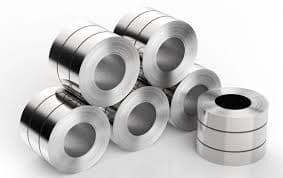
EN 10058 (hot-rolled flat products) and EN 10051 (cold-rolled strip): Define thickness, width, and flatness tolerances based on nominal thickness and width bands. For example, a 2.0 mm cold-rolled 304 coil per EN 10051 has a typical thickness tolerance of ±0.05 mm—but tighter tolerances (e.g., ±0.02 mm) are available on request and may affect lead time and price.
-
ASTM A480/A480M: Covers general requirements for stainless steel sheet, strip, and plate. Table 2 specifies thickness tolerances; Table 3 defines width and length tolerances. Note that ASTM allows wider tolerances for hot-rolled material than cold-rolled—especially above 6 mm thickness.
-
ISO 404:2013: Defines tolerances for stainless steel bars (round, square, hexagonal), including diameter/size deviation, straightness, and twist. For instance, a 25 mm round 316 bar under ISO 404 h9 tolerance has a maximum size deviation of +0.052 mm / −0.000 mm—meaning it must be at least nominal size but no more than 0.052 mm oversized.
Always verify which standard applies to your order. If none is specified, suppliers default to the broadest commercial tolerance—often unsuitable for tight-fit applications.
Where Tolerances Most Commonly Cause Issues
Three areas see the highest frequency of tolerance-related disputes:
-
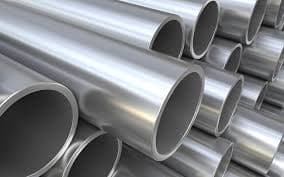
Tube OD and Wall Thickness: Seamless and welded stainless tubes are especially sensitive. A 50.8 mm OD × 2.0 mm wall tube ordered without tolerance specification may arrive with an OD of 50.95 mm and wall of 1.78 mm—within ASTM A269 commercial tolerance, but insufficient for press-fit couplings or thermal expansion allowances in heat exchangers.
-
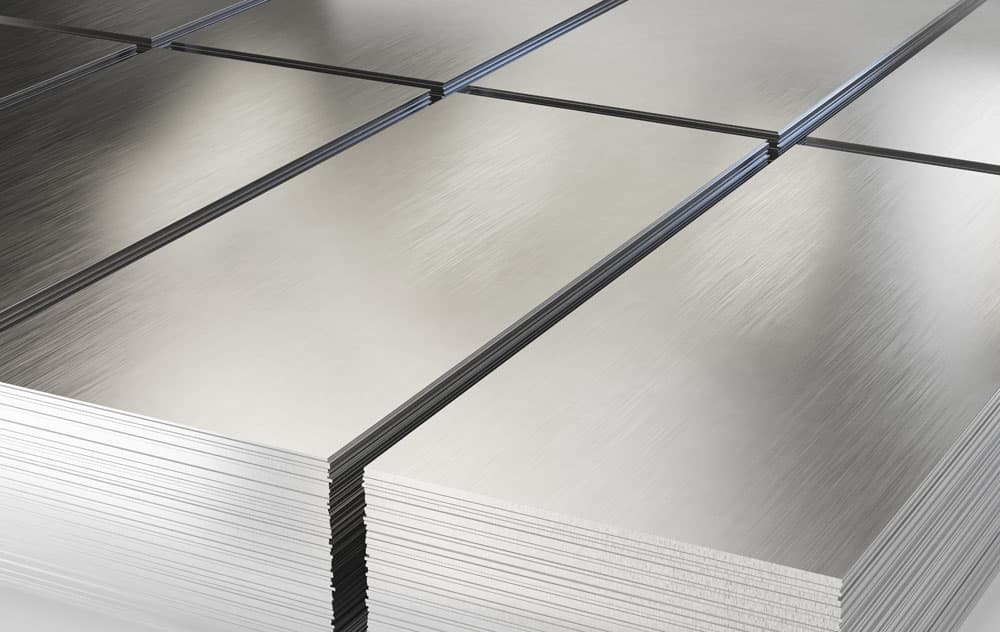
Plate Flatness: Cold-rolled plates thinner than 3 mm often exhibit bow or camber. EN 10051 limits camber to ≤0.2% of length (e.g., ≤2 mm over 1 m). Uncontrolled flatness causes misalignment in laser cutting nests or CNC bending setups—leading to scrap or secondary straightening costs.
-
Cut-to-Length Bars and Profiles: Saw-cut ends rarely meet perpendicularity specs unless explicitly required. A 90° ±1° tolerance ensures consistent weld joint preparation; without it, angular deviation may exceed 3°, forcing manual grinding before welding.
How to Specify Tolerances Effectively
Clarity starts at the RFQ stage. Avoid vague language like "tight tolerance" or "as per drawing." Instead, follow this structure:
- State the applicable standard (e.g., "EN 10051, tolerance class H1 for thickness")
- Define non-standard requirements separately, e.g., "Flatness ≤0.1% over full length," "End squareness: 90° ±0.5°"
- Reference inspection method, if critical: "Thickness verified via ultrasonic gauge at 3 locations per meter; report included with COA"
- Flag tolerance-critical surfaces: Mark drawings with GD&T symbols (e.g., ⌀0.2 mm position tolerance on hole pattern) and note whether measurement occurs pre- or post-heat treatment.
Also consider timing: Tolerances applied after stress-relieving or annealing may differ from as-rolled values due to relaxation. Communicate process sequence expectations with your supplier early.
Cost vs. Precision: Making Informed Trade-offs
Tighter tolerances increase production complexity, inspection burden, and scrap rates—so they carry measurable cost premiums. For example:
- A 304 coil with EN 10051 H1 thickness tolerance (+0.03/−0.03 mm) may cost 8–12% more than standard H2 (+0.05/−0.05 mm)
- Specifying flatness ≤0.05% instead of ≤0.2% on 2 mm thick 316L plate may extend lead time by 10–14 days due to leveling and verification steps
Work with your supplier to assess whether a given tolerance is functionally necessary—or whether design adjustments (e.g., adding clearance, using adjustable mounts) could reduce cost without compromising performance.
Conclusion
Dimensional tolerance is not a secondary detail—it’s a foundational specification that shapes manufacturability, reliability, and total landed cost. By referencing clear standards, identifying tolerance-critical features early, and aligning expectations with your supplier during quoting—not after delivery—you reduce risk across the fabrication chain. Review your next stainless steel RFQ against this checklist: Is the standard named? Are non-standard requirements quantified? Is inspection scope defined? Addressing these three points will significantly improve first-article acceptance and long-term supply consistency.
For technical support specifying tolerances on plates, tubes, or custom profiles, contact our production engineering team—we offer free tolerance review on formal quotations.